
Lahalak Medical PlatformDifferentiate Care
A comprehensive medical guide on scalp alopecia areata, its early signs, approved treatments in Saudi Arabia, and expert daily care tips.
Advertisement
Alopecia areata is a common dermatological condition that primarily affects the scalp but can involve other hair-bearing areas of the body. Characterized by sudden, patchy hair loss, this condition can cause significant emotional and aesthetic concern for those affected. While it does not pose a direct threat to physical health, understanding its clinical nature and available medical interventions is crucial for effective management.
In this comprehensive guide, we will explore the early signs of scalp alopecia, its underlying causes, the latest approved treatment options in Saudi Arabia, and practical daily care and psychological support strategies.
Alopecia areata is an autoimmune disorder. Normally, the immune system protects the body from foreign invaders like bacteria and viruses. However, in individuals with alopecia, a dysfunction causes immune cells to mistakenly attack healthy hair follicles, pushing them prematurely into a resting phase (telogen phase) and causing rapid hair loss.
Importantly, the hair follicles are not permanently destroyed; they remain alive beneath the skin but are temporarily unable to produce hair due to surrounding inflammation. This means that the potential for hair regrowth remains viable once the overactive immune response is controlled.
Alopecia typically begins gradually or suddenly, and its severity varies from person to person. Recognizing early signs helps in obtaining an accurate diagnosis and starting an appropriate treatment plan promptly.
If you notice sudden, patchy hair loss or a significant increase in daily hair shedding, it is essential to book a consultation with a dermatologist for a thorough clinical examination and to rule out other causes of hair loss.
Alopecia areata presents in several clinical forms depending on the extent of hair loss:
While the exact trigger that prompts the immune system to attack hair follicles remains under investigation, several factors increase the likelihood of developing alopecia areata:
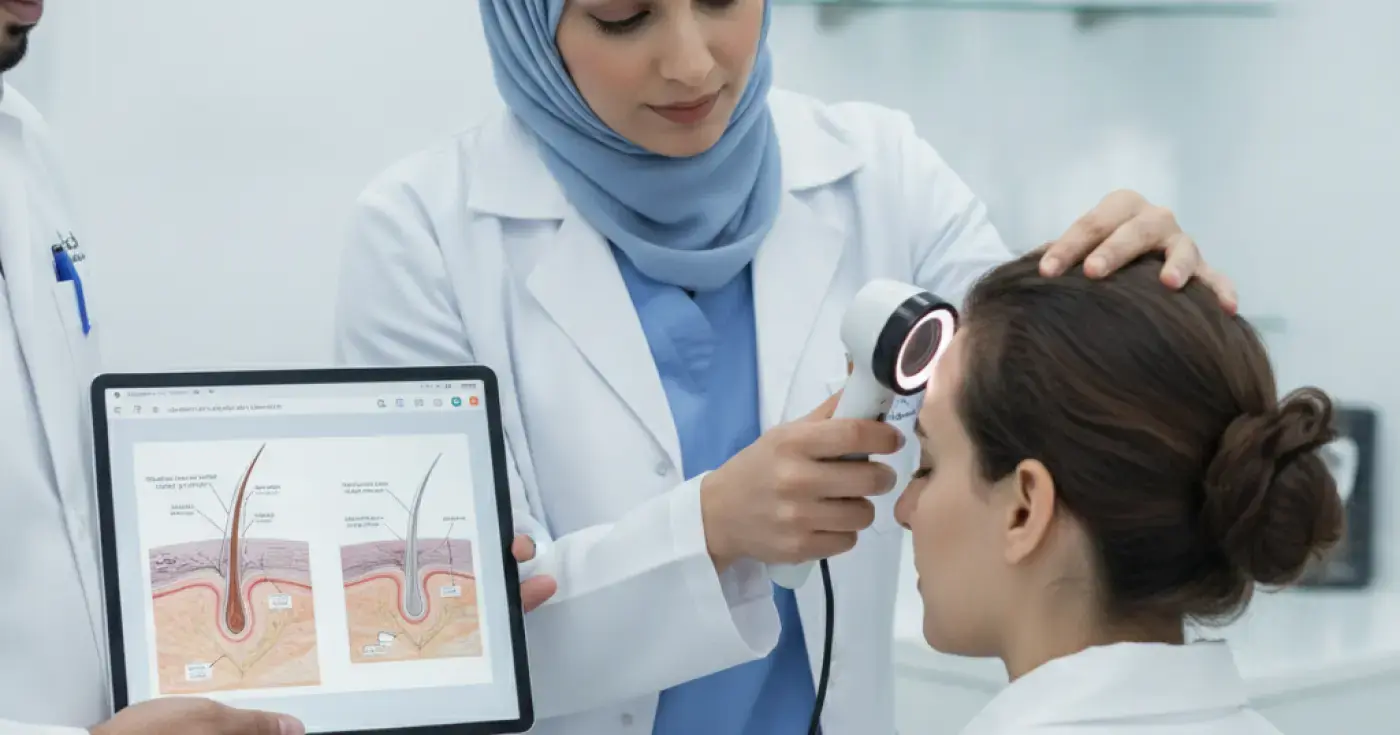
A dermatologist diagnoses alopecia primarily through a clinical examination of the scalp and hair follicles using a dermoscope. In rare or atypical cases, a small scalp biopsy may be performed to confirm the diagnosis and rule out other inflammatory scalp conditions. The physician may also recommend a comprehensive blood test to evaluate thyroid hormones and autoimmune markers.
Current treatments aim to suppress the immune attack on hair follicles and stimulate hair regrowth. The choice of treatment depends on the patient's age, the extent of hair loss, and the location of the patches.
Injecting corticosteroids directly into the bald patches is one of the most effective treatments for localized alopecia areata. Performed in the clinic every 4 to 6 weeks, these injections rapidly reduce local inflammation, allowing hair to regrow within a few months.
Janus kinase (JAK) inhibitors (such as baricitinib and ritlecitinib) represent a major scientific breakthrough for severe, total, or universal alopecia. These oral medications block specific cellular signaling pathways responsible for the autoimmune attack. Approved by global and local regulatory bodies, including the Saudi Food and Drug Authority (SFDA), they are prescribed under strict medical supervision to monitor potential side effects.
The following table provides a simplified comparison of the primary treatment options used for alopecia patients:
| Treatment Type | Mechanism of Action | Suitable Cases | Potential Side Effects |
|---|---|---|---|
| Topical Corticosteroids | Reduces localized inflammation | Mild cases and small patches | Skin thinning, localized skin discoloration |
| Corticosteroid Injections | Suppresses local immunity directly at the follicle | Limited patchy alopecia in adults | Temporary pain at injection site, mild skin atrophy |
| Topical Minoxidil | Stimulates blood flow and hair growth | Adjuvant therapy for all cases | Itching, scalp dryness, unwanted facial hair growth |
| JAK Inhibitors | Suppresses systemic autoimmune pathways | Severe cases, alopecia totalis/universalis | Slightly increased risk of infections, requires lab monitoring |
In addition to medical treatments, proper hair and scalp care is vital to protect the skin and minimize irritation:
Alopecia areata is closely linked to psychological well-being. Sudden hair loss can lead to feelings of self-consciousness, anxiety, or depression. Recognizing that these feelings are entirely valid is the first step. Seeking psychological support through counseling or joining support groups can significantly improve quality of life, reduce stress levels, and positively influence the body's response to medical treatment.
Alopecia areata is a manageable autoimmune condition with various treatment options tailored to individual needs. The most critical step is early diagnosis and starting a personalized treatment plan under the guidance of a qualified dermatologist. Avoid unscientific home remedies that may cause further scalp irritation, and rely on approved medical solutions to ensure safety and efficacy.
Clear, direct answers
Advertisement
Continue exploring
Learn the truth about curing alopecia permanently, explore SFDA-approved treatments like JAK inhibitors in Saudi Arabia, and find coping tips.
Read article
A comprehensive medical guide explaining the differences between alopecia, genetic baldness, and normal hair shedding. Learn symptoms and treatments.
Read article
Learn the truth about alopecia areata transmission. Discover its autoimmune causes, triggers, and how it differs from contagious fungal infections.
Read articleExplore the topic
Can Alopecia Areata Be Cured Permanently? Medical Facts and TreatmentsElixir · Health PanoramaDifference Between Alopecia, Baldness, and Normal Hair Shedding: A Comprehensive Medical GuideElixir · Health PanoramaIs Alopecia Areata Contagious? Facts, Causes, and Medical InsightsElixir · Health Panorama