
Lahalak Medical PlatformDifferentiate Care
Learn about different types of birthmarks in babies, which ones fade naturally over time, when to consult a doctor, and available treatment options.

Advertisement
Birthmarks are incredibly common skin markings that are present at birth or appear shortly thereafter. These marks come in various shapes, sizes, and colors, often prompting parents to wonder: Will this mark last a lifetime, or will it fade away naturally?
Clinically, birthmarks are categorized into two main groups based on their origin: vascular birthmarks, caused by abnormal blood vessels, and pigmented birthmarks, caused by a cluster of pigment cells. Whether a birthmark will disappear on its own depends entirely on its specific type, location, and histological characteristics.
Vascular birthmarks develop when blood vessels do not form correctly. The most common types include:
Salmon patches are the most common and completely harmless vascular birthmarks. They appear as flat, pink, or light red patches, typically on the forehead, eyelids, or the back of the neck. Most salmon patches on the face (angel kisses) fade completely and naturally within the first two years of life without any treatment. Those on the back of the neck (stork bites) may persist longer or remain permanently, but they are usually covered by hair and cause no health issues.
These birthmarks appear as raised, bright red, spongy nodules resembling strawberries. They usually appear a few weeks after birth, undergo a rapid growth phase for several months, stabilize, and then enter a slow, natural involution phase. Clinical data shows that about 50% of hemangiomas disappear by age 5, and up to 90% resolve by age 9. In some cases, they may leave behind a slight skin laxity or discoloration that can be improved using علاج الوحمات بالليزر (laser birthmark treatment).
Port-wine stains are flat, dark red or purple marks present at birth, most commonly on the face or limbs. Unlike other vascular marks, port-wine stains do not disappear on their own. Instead, they grow as the child grows, often becoming thicker and darker over time. This condition requires early evaluation through استشارة طبيب الجلدية للأطفال (pediatric dermatology consultation) to discuss early pulsed-dye laser therapy to prevent complications.
Pigmented birthmarks occur when there is an overgrowth of melanocytes (pigment-producing cells). They include:
These present as flat, blue-gray patches resembling bruises, commonly found on the lower back or buttocks of babies with darker skin tones. These marks are entirely benign and fade away naturally in the vast majority of cases before the child reaches school age (usually between 3 to 5 years), requiring no medical intervention.
These are flat, oval-shaped spots with a light brown color, resembling coffee with milk. Café-au-lait spots do not fade over time; they may actually become darker or larger as the child grows. Having one or two spots is perfectly normal, but the presence of six or more spots of a certain size warrants a medical evaluation to rule out underlying genetic conditions.
These are dark moles present at birth that can range from small to giant sizes. These moles do not disappear naturally and grow proportionally with the child. Congenital nevi, especially larger ones, require regular الفحص السريري للجلد (clinical skin examination) and tools like مراقبة نمو الشامات (mole growth monitoring) to ensure they remain healthy and do not undergo atypical changes.
| Birthmark Type | Clinical Appearance & Color | Likelihood of Fading Naturally | Expected Age of Disappearance | Medical Intervention Required |
|---|---|---|---|---|
| Salmon Patches | Flat, light pink | Very High (especially on face) | Within first 2 years | None (monitoring only) |
| Hemangioma (Strawberry) | Raised, bright red | High (gradual involution) | Between 5 to 9 years | Monitoring, or medication/laser if obstructing vision/breathing |
| Port-Wine Stains | Flat, dark red/purple | None | Does not fade | Early pulsed-dye laser therapy |
| Mongolian Spots | Flat, blue-gray | Very High | By school age (3-5 years) | None |
| Café-au-Lait Spots | Flat, light brown | None | Does not fade | Monitoring count and size only |
| Congenital Nevi | Flat or raised, dark brown/black | None | Does not fade | Regular clinical skin checks, surgical excision in select cases |
While most birthmarks are benign, certain warning signs require a prompt medical evaluation:
The medical and aesthetic dermatology sector in Saudi Arabia offers advanced technologies for managing birthmarks, including:
We advise parents to remain patient and follow these guidelines: avoid attempting to remove or lighten birthmarks using unverified home remedies or traditional herbs to prevent permanent scarring or infection. Always protect the birthmark area from direct sunlight using child-safe sunscreen and protective clothing, and take periodic photos of the mark to help your dermatologist track its size and color changes accurately during routine checkups.
Clear, direct answers
Advertisement
Continue exploring

Discover the best medical treatments for vascular and pigmented birthmarks, including laser therapy, surgery, and essential post-care tips.
Read article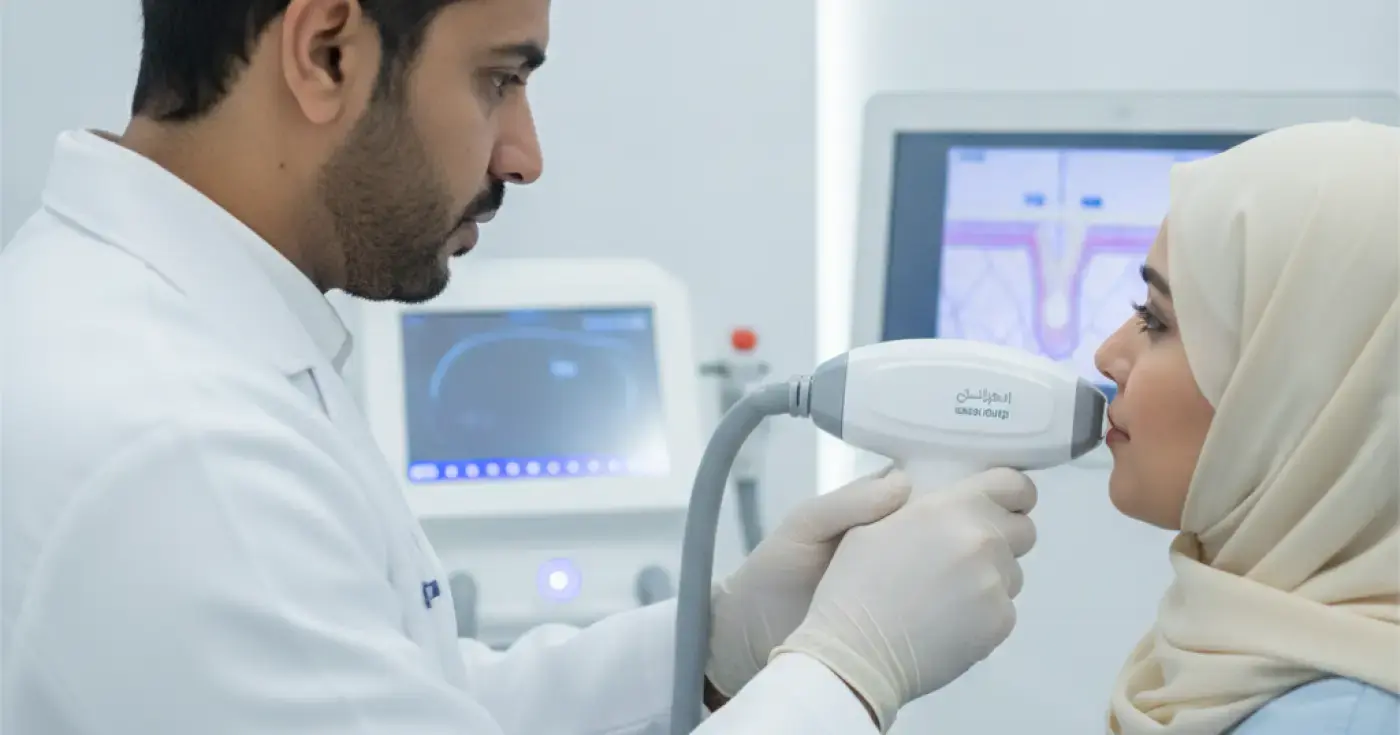
Learn about laser treatment for vascular and pigmented birthmarks, including technologies, expected results, and essential post-treatment care.
Read article
Learn the clinical differences between vascular and pigmented birthmarks, including causes, common types, treatment options, and when to see a doctor.
Read article