
Lahalak Medical PlatformDifferentiate Care
Learn about laser treatment for vascular and pigmented birthmarks, including technologies, expected results, and essential post-treatment care.
Advertisement
Birthmarks are common skin markings present at birth or appearing shortly after. These marks vary widely in size, color, and appearance, and are clinically classified into two main categories: vascular birthmarks (caused by abnormal blood vessels) and pigmented birthmarks (caused by an overgrowth of melanin-producing cells). With significant advancements in dermatological technology, laser birthmark removal has become the primary, non-invasive, and safest option to manage these marks and improve skin appearance without complex surgical interventions.
Before initiating treatment, a qualified dermatologist must accurately classify the birthmark to determine the most appropriate laser wavelength. The main types include:
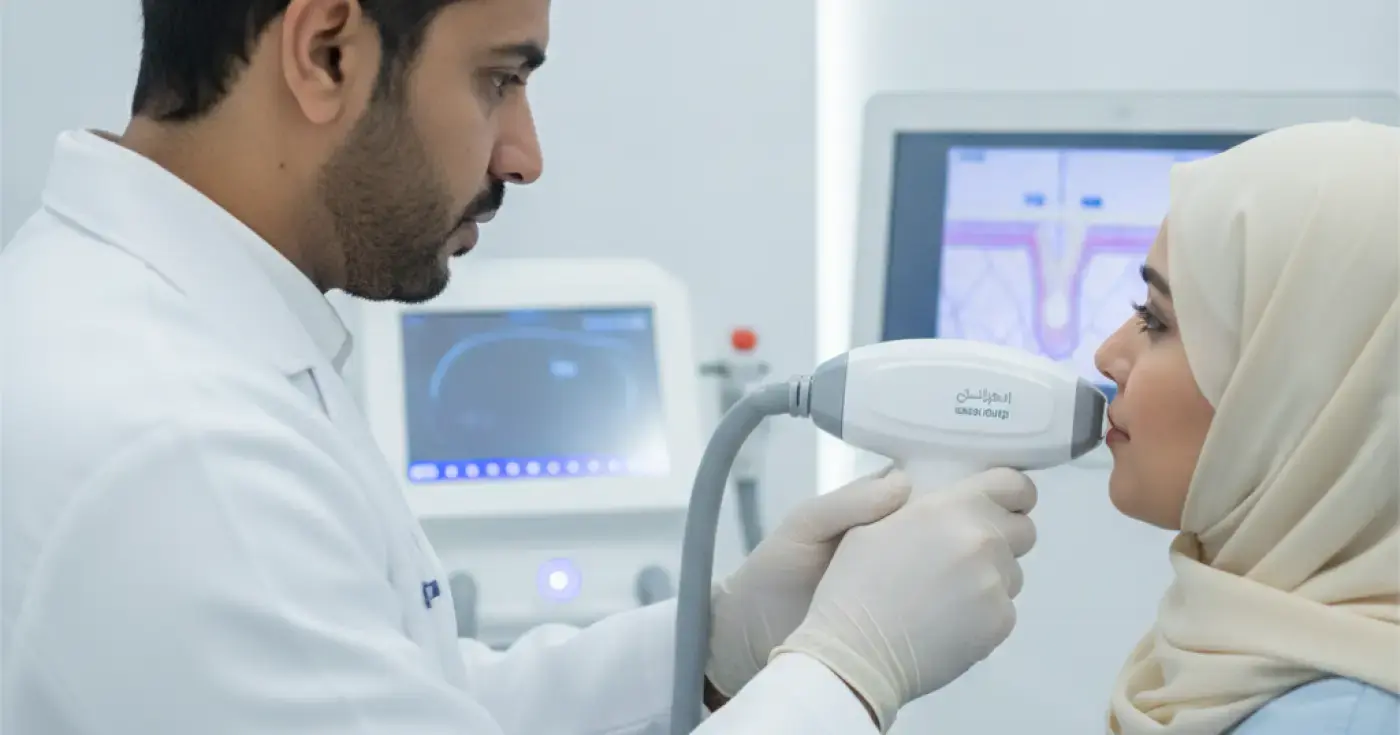
Laser birthmark treatment is based on the principle of selective photothermolysis. The laser device emits precise wavelengths of light targeted specifically at the melanin pigment in pigmented birthmarks, or the hemoglobin within the blood vessels of vascular birthmarks. The target absorbs the laser energy, converting it into heat that safely destroys the pigment or seals the blood vessels without damaging the surrounding healthy skin tissue.
Different laser systems are selected based on the birthmark type, color, and depth:
| Feature | Vascular Birthmarks (e.g., Port-Wine Stains) | Pigmented Birthmarks (e.g., Café-au-Lait Spots) |
|---|---|---|
| Primary Laser Target | Hemoglobin in blood vessels | Melanin pigment in skin cells |
| Common Laser Type | Pulsed Dye Laser (PDL) | Q-Switched / Picosecond Lasers |
| Estimated Sessions | 6 to 10+ sessions | 4 to 8 sessions depending on depth |
| Response Rate | Excellent response with significant fading | Good response, though outcomes can vary |
Undergoing laser treatment requires adherence to specific protocols to ensure safety and optimize clinical outcomes:
The process begins with a thorough dermatological consultation to evaluate the patient's medical history and examine the birthmark. Patients are advised to avoid direct sun exposure and apply broad-spectrum sunscreen for several weeks prior to treatment, and to discontinue any irritating skincare products.
The target area is cleansed, and a topical anesthetic cream is applied to minimize discomfort. Both the patient and the practitioner wear protective eyewear. The dermatologist glides the laser handpiece over the birthmark, delivering pulses that feel like the snap of a rubber band, accompanied by an integrated cooling system to soothe the skin.
Proper post-laser skin care is vital to prevent complications. Temporary redness, mild swelling, or bruising are normal and typically subside within a few days. Post-care instructions include applying prescribed healing ointments, avoiding scrubbing or picking at the treated skin, and strictly avoiding sun exposure without adequate protection.
While laser therapy is highly safe when performed by a board-certified dermatologist, potential side effects can include temporary hyperpigmentation or hypopigmentation, swelling, redness, superficial crusting, and, in very rare instances, scarring if post-treatment care instructions are not followed or if inappropriate energy settings are used.
Laser birthmark removal is a highly advanced and effective option that significantly enhances patient confidence and quality of life. Final results depend on the birthmark type, depth, and the patient's age at the start of treatment, with early intervention often yielding the best outcomes. Always consult a licensed and experienced dermatologist to receive a personalized, safe, and effective treatment plan tailored to your skin type.
Clear, direct answers
Advertisement
Continue exploring

Learn the clinical differences between vascular and pigmented birthmarks, including causes, common types, treatment options, and when to see a doctor.
Read article
Learn the warning signs of suspicious birthmarks and moles, the ABCDE criteria, and when to consult a dermatologist for a professional evaluation.
Read article
Discover the differences between vascular and pigmented birthmarks, their causes, when to see a doctor, and available medical treatments.
Read articleExplore the topic