
Lahalak Medical PlatformDifferentiate Care
Learn the differences between dandruff and dry scalp. Discover causes, symptoms, and effective medical and home treatments for healthy hair.
Advertisement
Maintaining a healthy scalp is the foundation for strong, vibrant hair. However, many individuals experience frustrating scalp issues, such as itching and flaking. A very common mistake is confusing dandruff with a dry scalp. While they may look similar at first glance, they have entirely different underlying causes and require distinct treatment approaches. Misdiagnosing your scalp condition can lead to inappropriate product choices that may worsen the irritation. This comprehensive medical guide will help you understand the key differences and find the right path to relief.
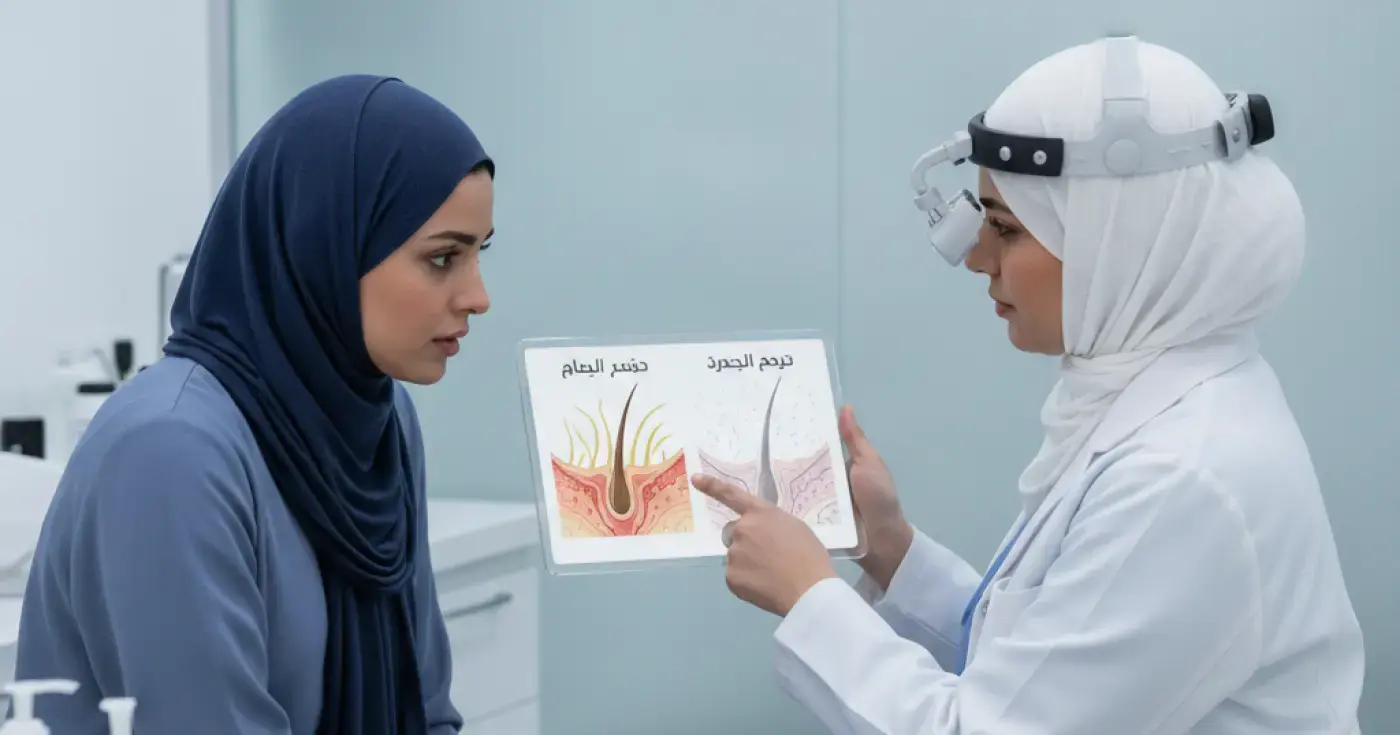
Dandruff (clinically associated with mild seborrheic dermatitis) is a chronic scalp condition characterized by oily, large, and yellowish or white flakes. The primary driver of dandruff is an excess of sebum (scalp oil) combined with the overgrowth of a yeast-like fungus called Malassezia. This fungus naturally lives on the scalp of most adults, but in some individuals, it feeds on the excess oils, producing byproducts that irritate the skin and accelerate cell turnover. This rapid shedding of dead skin cells results in visible dandruff flakes.
In contrast, a dry scalp occurs when the skin lacks sufficient moisture and natural oils. Without proper hydration, the scalp's protective barrier becomes compromised, leading to irritation, tightness, and the shedding of tiny, dry, white flakes. Unlike dandruff, dry scalp is not caused by fungal overgrowth or excess oil. Instead, it is typically triggered by environmental factors, dehydration, or harsh hair care products that strip away the skin's natural moisture barrier.
The table below highlights the clinical differences to help you identify your specific scalp condition:
| Feature | Dandruff (Seborrheic Dermatitis) | Dry Scalp |
|---|---|---|
| Flake Appearance | Large, oily, yellowish or thick white flakes | Small, dry, powdery white flakes |
| Scalp Condition | Oily, greasy, and sometimes red or inflamed | Dry, tight, and lacking moisture |
| Primary Cause | Excess sebum and Malassezia yeast overgrowth | Lack of moisture, dry air, or harsh chemicals |
| Itching | Intense, persistent, and worsens with oil buildup | Mild to moderate, accompanied by tightness |
| Effect of Washing | Improves temporarily with proper washing; worsens if neglected | Worsens with frequent washing and harsh shampoos |
Understanding what triggers these conditions is essential for effective prevention and management:
To accurately identify your condition, pay close attention to how your scalp feels and how the flakes behave. If you have dandruff, your scalp will likely feel greasy, and scratching it may leave a waxy residue under your fingernails. If you have a dry scalp, you will feel a sensation of tightness, especially after showering, and the flakes will fall easily like fine powder when you brush your hair. For an accurate diagnosis, it is highly recommended to seek a dermatologist consultation to rule out other underlying skin conditions.
Treating dandruff requires active ingredients that target fungal growth and regulate oil production:
Resolving a dry scalp focuses on restoring moisture and repairing the skin barrier:
While most scalp flaking can be managed with proper home care, certain symptoms require professional medical evaluation:
A dermatologist can provide a tailored treatment plan and guide you on proper hair and scalp care to restore your scalp's health safely.
Living in arid regions, such as Saudi Arabia and the wider Gulf, presents unique challenges due to extreme heat and heavy reliance on indoor air conditioning. To protect your scalp:
Clear, direct answers
Advertisement
Continue exploring

Discover the primary causes of scalp irritation, from seborrheic dermatitis to contact allergy, and learn effective medical and home remedies.
Read article
Discover the medical causes of dandruff, how to differentiate it from dry scalp, and the most effective clinical treatments and medicated shampoos.
Read article
Explore the latest medical breakthroughs for alopecia and hair loss in Saudi Arabia, including approved JAK inhibitors, PRP therapy, and oral minoxidil.
Read article