
Lahalak Medical Platform
Discover the facts about water birth: differences between immersion during labor vs delivery, benefits, potential risks, and recommendations from ACOG and RCOG.

Water birth has gained interest among expectant mothers as an alternative approach to managing labor discomfort and delivering their baby. This method utilizes a specially designed tub of warm water to promote relaxation, reduce pelvic pressure, and ease stress during uterine contractions. As maternity care options evolve, providing accurate clinical information regarding the safety and parameters of water birth becomes essential for informed maternal decision-making.
Leading professional organizations, including the American College of Obstetricians and Gynecologists (ACOG) and the Royal College of Obstetricians and Gynaecologists (RCOG), emphasize clearly distinguishing between two distinct practices: immersing the body in warm water during the first stage of labor for pain relief and the actual delivery of the infant underwater during the second stage. This article presents an objective medical analysis of the benefits, potential complications, and clinical criteria governing water birth within the context of safe healthcare standards.
It is vital not to conflate using water to soothe pain during labor with the physical delivery of the baby beneath the water surface. Conflating study outcomes from these two separate phases can lead to inaccurate clinical expectations.
In this phase, the pregnant woman relaxes in a sanitized warm water pool covering her abdomen during the first stage of labor while the cervix dilates. The primary goal is leveraging buoyancy and warmth to relax muscles, lower anxiety, and decrease reliance on pharmacological pain relief. Robust evidence demonstrates that water immersion during first-stage labor is safe and effective for women with uncomplicated, low-risk pregnancies.
This process involves the mother remaining in the water tub through the second stage of labor, where the infant is delivered fully beneath the water line before being brought immediately to the surface to breathe. While some mothers report a soothing birth experience, major medical colleges such as ACOG recommend that underwater delivery be conducted under strict safety protocols due to potential neonatal risks.
Medical recommendations vary depending on the stage of labor during which water is utilized:
Warm water exerts physiological effects that support maternal comfort during labor. Documented benefits include:
While water immersion offers comfort, underwater delivery carries specific clinical concerns that require balanced consideration:
The following table summarizes key clinical distinctions between first-stage water immersion, underwater birth, and conventional delivery:
| Feature | Water Immersion (1st Stage Labor) | Underwater Delivery (2nd Stage) | Conventional Vaginal Delivery |
|---|---|---|---|
| Primary Objective | Relaxation and pain relief during dilation | Delivering an infant underwater | Complete birth on a standard delivery bed |
| Eligibility | Low-risk pregnancies, mother's preference | Strict low-risk criteria & specialized setup | All pregnancy risk levels (low to high) |
| Fetal Monitoring | Waterproof doppler or intermittent checks | Requires waterproof continuous monitoring | Direct, continuous, and unrestricted monitoring |
| Emergency Transfer | Rapid exit from tub if complications arise | Immediate maternal evacuation is required. | Immediate access to interventions |
| Blood Loss Assessment | Not applicable (exit tub before delivery) | Challenging due to dilution in water | Direct and precise quantification |
Water birth is not appropriate for all pregnancies. Clinical guidelines dictate specific prerequisites to ensure maternal and fetal well-being:
Patients should immediately avoid or exit the birth pool under the following conditions:
Conducting labor in water requires specialized training for midwives and obstetric staff. Waterproof handheld ultrasound equipment is used to monitor fetal heart rate at regular intervals.
If fetal distress occurs, labor progress stalls, or maternal complications develop, the care team will immediately assist the patient out of the pool to complete labor on a standard delivery bed under direct medical management.
Healthcare facilities across the Kingdom of Saudi Arabia operate under strict safety standards governed by the Ministry of Health and the Saudi Central Board for Accreditation of Healthcare Institutions (CBAHI). While warm water immersion during first-stage labor is offered in select advanced maternity centers for non-pharmacological pain relief, full underwater delivery is not universally available in all hospitals.
Women interested in incorporating water therapy into their birth plan should discuss options with their healthcare provider during routine antenatal care to verify facility equipment and personal medical suitability.
Choosing a birth delivery method requires balancing personal preferences with clinical safety. Warm water immersion during early labor offers significant relief and comfort for low-risk pregnancies, while underwater delivery requires careful clinical selection and specialized equipment. Always consult your obstetrician consultation team to evaluate the safest delivery option tailored to your health and pregnancy needs.
Short answers that help clarify the key points related to this article.
Helpful services
Subscribe for new educational pregnancy and birth content from LahaLak.
Compare hospitals and prices by city and birth type, then continue to booking with clear steps.
From LahaLak guide

Medical article
Learn how nitrous oxide (laughing gas) is used for labor pain relief, its safety profile, benefits, side effects, and how it compares to epidural analgesia.
Read article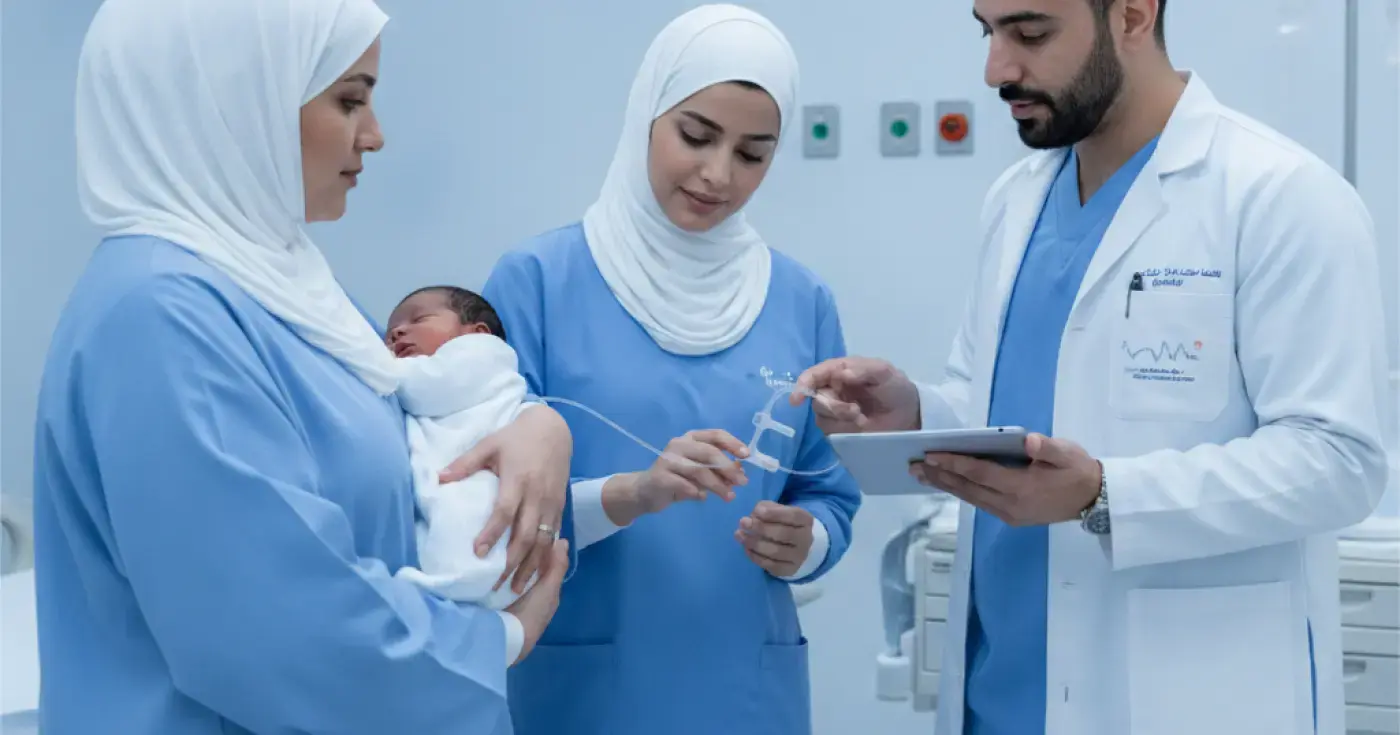
Medical article
Discover the medical benefits of delayed cord clamping for newborns, recommended timing, potential risks, and when early clamping is required.
Read article
Medical article
Learn how to prepare a natural birth plan, discuss pain relief options with your care team in Saudi Arabia, and make safe, informed decisions.
Read articleConnected next steps
 Three Month Obstetric Prenatal Monitoring ProgramEnsure a safe and healthy maternity journey with our tailored 3-month pregnancy monitoring package. LahaLak connects you with top-tier obstetricians and gynecologists across Saudi Arabia for routine check-ups, precise lab tests, and ultrasound scans. Book your comprehensive care package today and enjoy peace of mind for you and your baby.
 Six Month Obstetric Prenatal Monitoring ProgramEnsure a safe and healthy maternity journey with our tailored 6-month pregnancy monitoring package. LahaLak connects you with top-tier obstetricians and gynecologists across Saudi Arabia for routine check-ups, precise lab tests, and ultrasound scans. Book your comprehensive care package today and enjoy peace of mind for you and your baby.
Explore the topic