Lahalak Medical Platform
Learn about fever after vaginal birth, postpartum infections, normal body temp changes vs fever, and when to seek medical evaluation.
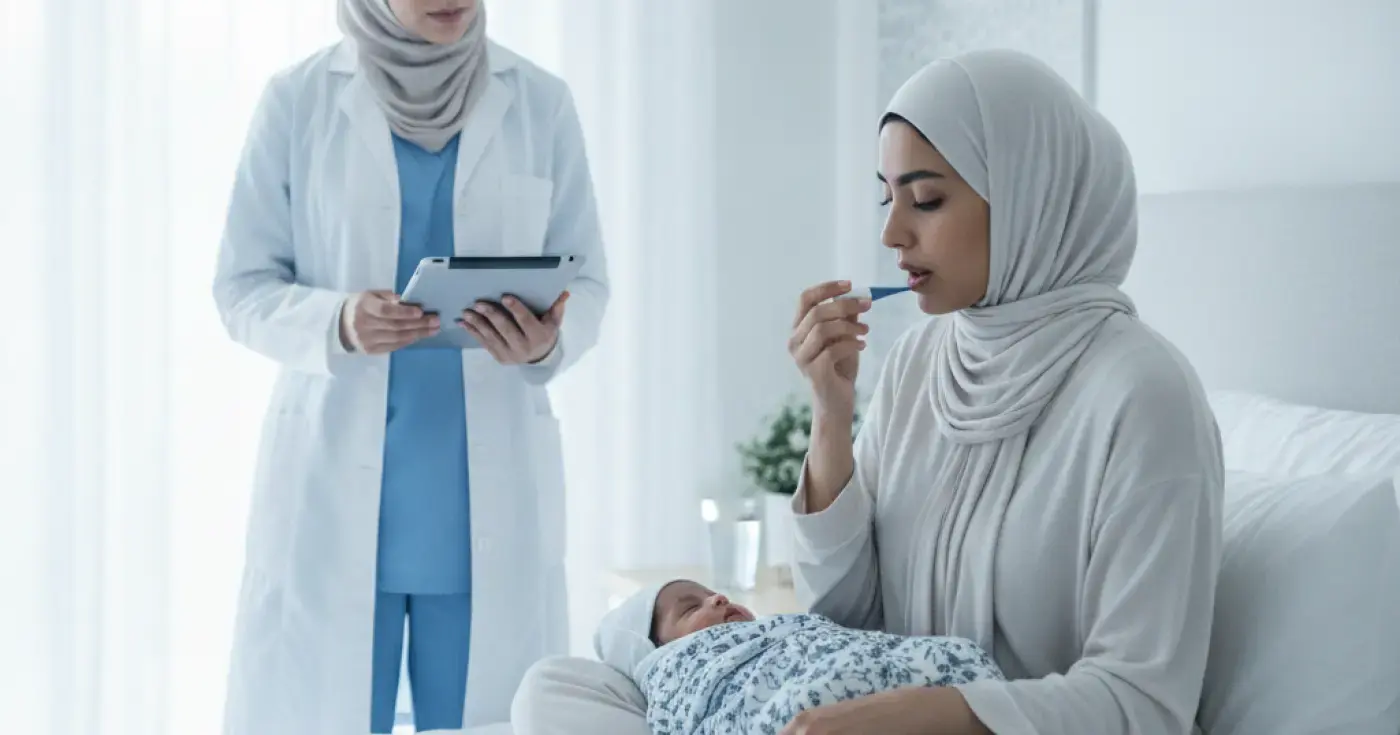
Following a vaginal birth, a mother's body undergoes rapid physiological and hormonal adaptations that directly influence central thermoregulation. It is quite common for new mothers to experience hot flushes or heavy night sweats during the early postpartum period, especially as milk production establishes.
However, a clinical distinction must be drawn between subjective feelings of warmth—caused by abrupt drops in estrogen and progesterone—and a measured rise in core body temperature using a digital thermometer. While postpartum diaphoresis (sweating) is a healthy physiological response to shed excess pregnancy fluid, a true measured fever reflects an immune response that requires clinical evaluation to rule out bacterial infection.
Mild thermal shifts during the immediate postpartum period stem from benign physiological processes, including:
A mother's subjective sensation of feeling "feverish" without an actual elevation on a calibrated thermometer is generally benign. In contrast, an objective core body temperature reading of 38.0°C (100.4°F) or higher serves as the definitive clinical threshold indicating the need for professional evaluation.
In obstetrics, puerperal fever (postpartum infection) is formally defined as a core temperature of 38.0°C (100.4°F) or higher occurring on any two occasions at least 6 hours apart during the first 10 days postpartum, excluding the first 24 hours. Nevertheless, any single temperature reading reaching 38.0°C warrants close monitoring and should not be dismissed solely as hormonal fluctuations.
Timely communication with your healthcare team or scheduling an obstetrical consultation ensures that localized bacterial infections are managed early before secondary complications develop.
Bacterial pathogens can colonize different anatomical sites following vaginal delivery. The most common sources include:
Endometritis is the leading cause of puerperal fever following childbirth. It occurs when ascending vaginal flora colonizes the uterine cavity. Risk factors include prolonged rupture of membranes, multiple cervical examinations during labor, or retained placental fragments.
Bladder or kidney infections frequently occur due to urethral catheterization during labor, bladder trauma during delivery, or incomplete bladder emptying caused by perineal discomfort.
Surgical episiotomy sites or natural perineal lacerations can become infected if contaminated by normal skin or enteric flora. Symptoms include worsening localized pain, purulent discharge, edema, and localized heat.
Distinguishing simple breast engorgement from infectious mastitis is crucial. Engorgement causes bilateral tightness that resolves after nursing or expression, whereas bacterial mastitis produces high fever, rigors, and focal erythema (redness) and warmth in a single breast segment.
| Suspected Cause | Temperature Pattern | Distinctive Associated Symptoms | Typical Onset |
|---|---|---|---|
| Hormonal Flushes / Diaphoresis | Normal (< 38.0°C) | Profuse sweating, no pelvic pain, no chills | Days 1–5 postpartum |
| Milk Engorgement | Low-grade (< 38.3°C) | Bilateral breast fullness, relieved after feeding | Days 2–4 postpartum |
| Endometritis | Elevated (≥ 38.0°C) | Uterine tenderness, foul lochia, systemic chills | Days 2–8 postpartum |
| Urinary Tract Infection | Moderate to high | Dysuria, frequency, urgency, flank tenderness | Days 1–7 postpartum |
| Perineal Wound Infection | Variable | Focal pain, wound breakdown, purulent drainage | Days 3–10 postpartum |
| Infectious Mastitis | High & sudden onset | Focal breast redness, wedge-shaped pain, flu-like aches | Weeks 1–4 postpartum |
Clinicians evaluate body temperature alongside a cluster of key physical signs to pinpoint the source of infection:
Certain red flag symptoms require prompt evaluation at an emergency care center to prevent severe complications such as pelvic sepsis or septic shock:
Physicians utilize targeted diagnostic tools based on physical examination findings rather than ordering unnecessary battery tests:
Practicing proper postpartum self-care helps minimize the risk of ascending infections and promotes optimal healing:
Short answers that help clarify the key points related to this article.
Subscribe for new educational pregnancy and birth content from LahaLak.
Compare hospitals and prices by city and birth type, then continue to booking with clear steps.
From LahaLak guide
Medical article
Explore paternal skin-to-skin contact when maternal contact is delayed after birth. Learn about safety guidelines, benefits, and hospital practices.
Read article
Medical article
Learn how healthcare providers balance skin-to-skin contact with vital newborn assessments, Apgar scores, and routine post-delivery care safely.
Read article
Medical article
Learn about placenta delivery during stage 3 labor, active vs physiological management, signs of retained placenta, and when to seek urgent care.
Read articleConnected next steps
Explore the topic