
Lahalak Medical PlatformDifferentiate Care
Does back labor mean your baby is posterior? Discover the causes, safe comfort techniques, and how your medical team supports you during birth.

Advertisement
Back labor pain, commonly referred to as 'back labor,' is a frequent experience for many laboring mothers. Labor pain can manifest in various areas, including the abdomen, pelvis, or lower back, and in some cases, back pain may persist continuously even between uterine contractions. It is crucial to understand that experiencing pain in the back area alone does not accurately determine the baby's position, nor does it indicate a complication or failure to progress. Only your healthcare team can accurately assess the baby's position, fetal heart rate, and labor progress through standard clinical examinations.
During routine pregnancy care, many women experience back pain due to weight gain, shifts in the center of gravity, and hormonal changes that loosen ligaments. However, back labor pain differs significantly in its onset, intensity, and timing. Pregnant women should not rely on self-diagnosis to determine the nature of their pain; instead, they should always consult their healthcare team.
The following table outlines the general differences between typical pregnancy back pain and back labor pain:
| Comparison Feature | Typical Pregnancy Back Pain | Back Labor Pain |
|---|---|---|
| Onset | Develops gradually over pregnancy and worsens with fatigue. | Begins or intensifies significantly with the onset of active labor. |
| Relationship with Contractions | Continuous or movement-related; not synchronized with regular contractions. | Intensifies in waves alongside uterine contractions and may persist in between. |
| Intensity and Pattern | Mild to moderate, resembling muscle strain. | Sharp, deep, and intense pressure in the lower back. |
| Response to Rest | Usually subsides with rest, position changes, or lying down. | Does not easily resolve with rest; requires active comfort measures or medical support. |
In many instances, severe back pain during labor is associated with an occiput posterior (OP) position, where the back of the baby's head faces the mother's spine instead of her abdomen. This positioning causes the hard skull of the baby to press directly against the mother's sacrum, resulting in a sensation of intense, continuous pressure and pain in the lower back.
However, it must be emphasized that back pain does not guarantee that the baby is in a posterior position. A mother may experience back labor due to her unique pelvic anatomy or individual pain distribution. A careful clinical examination by a doctor or midwife, or an ultrasound scan when necessary, is the only safe and reliable way to confirm the baby's exact position within the pelvis.
A common misconception is that experiencing back labor or having a baby in a posterior position means labor will fail or inevitably end in a Cesarean section. In reality, the female pelvis is highly adaptable, and pelvic bones move to facilitate the baby's descent. Furthermore, the vast majority of babies who begin labor in a posterior position rotate spontaneously to the optimal anterior position as labor progresses. The decision to perform a C-section is always based on a comprehensive assessment of maternal and fetal safety by the clinical team.
Upon admission to the maternity ward, your healthcare team performs continuous assessments to ensure the safety of both you and your baby, including:
Several safe positions and techniques can be discussed with your medical team to alleviate back pain and enhance comfort during labor, depending on your individual clinical status:
Please note that these comfort measures and birth balls are intended to enhance comfort and mobility; there are no medical guarantees that a specific position or ball will 'turn the baby' or guarantee a vaginal birth.
To actively participate in your birth experience, consider asking your care team the following questions:
LahaLak / لها ولك الطبية platform offers specialized educational and consultative services to support your motherhood journey safely:
Do not hesitate to contact the maternity ward or go to the nearest hospital immediately if you experience any of the following red flags:
In case of an urgent, life-threatening medical emergency, call the unified emergency services in Saudi Arabia immediately at 997 or 911.
Short answers that help clarify the key points related to this article.
Advertisement
Subscribe for new educational pregnancy and birth content from LahaLak.
Compare hospitals and prices by city and birth type, then continue to booking with clear steps.
From LahaLak guide

Medical article
Learn what to do if you test positive for GBS and labor starts. Understand the timing of IV antibiotics and when to contact the labor ward.
Read article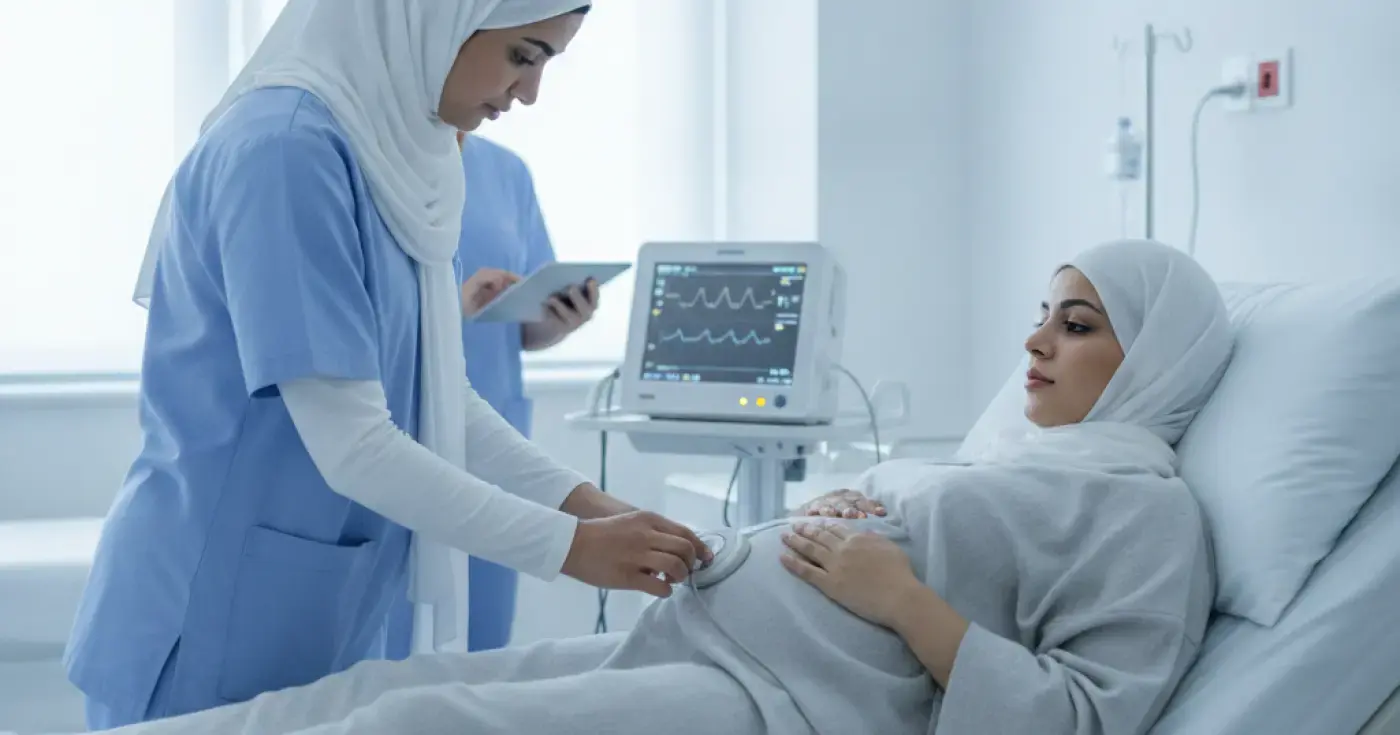
Medical article
Learn the difference between intermittent and continuous fetal heart rate monitoring (CTG) during labor and how decisions are made for your safety.
Read article
Medical article
What should you do when your water breaks without contractions? Learn the difference between term and preterm PROM, emergency signs, and hospital protocols.
Read article