
Lahalak Medical PlatformDifferentiate Care
Learn what to do if you test positive for GBS and labor starts. Understand the timing of IV antibiotics and when to contact the labor ward.

Advertisement
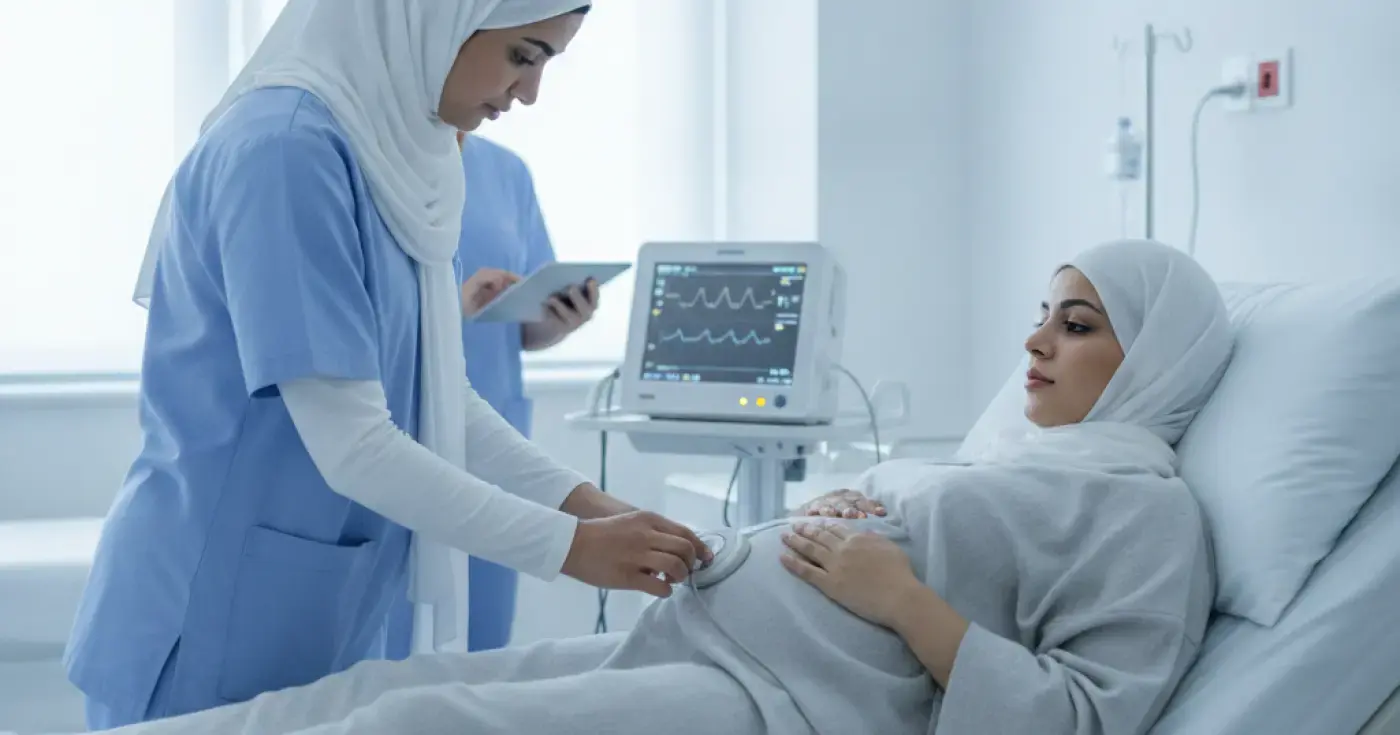
When stages of labor begin or your water breaks (rupture of membranes), contact your maternity unit immediately. Inform the medical team right away that your GBS screening is positive, and clearly state any drug allergies you have (especially penicillin allergy). The team will determine when you should arrive at the hospital to start intravenous (IV) antibiotics during labor to reduce the risk of early-onset GBS infection in your newborn. Do not wait at home for a specific contraction pattern and do not take any oral antibiotics on your own.
You must contact the labor ward immediately or go to the emergency department if labor starts or your water breaks, especially if accompanied by any of the following signs:
In case of immediate danger or extreme emergency, call the ambulance immediately at 997 or 911, where available in Saudi Arabia.
Group B Streptococcus (GBS) is a common type of bacteria that naturally and temporarily lives in the gastrointestinal or vaginal tract of about 25% of healthy pregnant women. It is not a sexually transmitted disease (STD) and usually does not cause any symptoms or health issues for the mother.
The screening is typically performed between weeks 36 and 37 of pregnancy using a simple, quick, and painless swab of the lower vagina and rectum. It is important to know that GBS status can change between pregnancies; you may test positive in one pregnancy and completely negative in the next, as the colonization is transient and comes and goes naturally.
A positive result simply means that the bacteria are present in your body at the time of the test, which is an invitation to take a simple preventive measure to protect your baby during delivery. Here is a clarification of facts versus common misconceptions:
| Misconception About GBS | Medical Fact |
|---|---|
| A positive result means I am sick or have an active infection. | The bacteria are naturally colonizing and rarely cause illness in the mother. |
| A positive result means my baby will definitely get sick. | Most babies born to GBS-positive mothers are born perfectly healthy. |
| Having GBS means I must have a Cesarean section. | Vaginal delivery is completely safe with preventive IV antibiotics. |
| The colonization is due to poor hygiene or sexual contact. | GBS is a natural bacterium found in a quarter of women without external cause. |
At the first signs of labor, such as regular contractions or leaking fluid, contact the labor ward. Ensure you bring your prenatal record (paper or electronic) documenting your GBS result, and make sure to inform the nurse or doctor of your status as soon as you are admitted.
Antibiotics are given intravenously exclusively during labor because the bacteria can multiply rapidly; taking oral antibiotics weeks before delivery will not guarantee that the bacteria won't return by the time of birth. IV antibiotics pass through the placenta quickly to reach the baby's bloodstream, providing direct and highly effective protection as the baby passes through the birth canal.
IV antibiotics significantly reduce the risk of early-onset GBS infection in newborns, but they do not eliminate the risk 100%. However, the medical team will not delay a necessary or urgent delivery just to complete a specific duration of antibiotics; delivery decisions always depend on maternal and fetal safety as the top priority.
If labor progresses too quickly to receive the full course of antibiotics, or if your GBS status is unknown upon admission with risk factors present (such as preterm labor or fever), the medical team is fully trained to manage the situation. They will monitor the newborn closely after birth. If you have a penicillin allergy, describe your allergic reaction clearly so the team can select an appropriate and safe alternative antibiotic.
If you have a scheduled Cesarean section before labor starts and your membranes (water bag) are intact, you do not typically need GBS antibiotics. However, if labor starts or your water breaks before the scheduled C-section date, IV antibiotics will be started. Remember, GBS colonization alone is never a reason to perform a C-section.
Newborn observation after birth depends on several factors, including gestational age, the baby's general health at birth, labor events, and the timing of maternal antibiotic administration. Not all babies born to GBS-positive mothers need to go to the NICU or receive antibiotics; most undergo routine vital sign monitoring in their mother's room.
Inform the medical team immediately if you notice any of the following signs in your baby, without attempting to diagnose them at home:
LahaLak Medical Platform offers a range of educational and advisory services to support your journey toward a safe delivery:
Short answers that help clarify the key points related to this article.
Advertisement
Subscribe for new educational pregnancy and birth content from LahaLak.
Compare hospitals and prices by city and birth type, then continue to booking with clear steps.
From LahaLak guide
Medical article
Learn the difference between intermittent and continuous fetal heart rate monitoring (CTG) during labor and how decisions are made for your safety.
Read article
Medical article
What should you do when your water breaks without contractions? Learn the difference between term and preterm PROM, emergency signs, and hospital protocols.
Read article
Medical article
Learn about the medical assessment process at the labor ward, the stages of labor, and why returning home temporarily during latent labor is safe.
Read articleExplore the topic