
Lahalak Medical PlatformDifferentiate Care
Learn when to consult a dermatologist for acne. Discover severity signs, medical treatments, and how to prevent permanent scarring effectively.
Advertisement
Acne vulgaris is one of the most prevalent dermatological conditions worldwide. Far from being a temporary cosmetic concern limited to teenage years, acne is a complex medical disorder affecting the pilosebaceous units. Many individuals attempt to manage acne using over-the-counter (OTC) skincare products; however, delaying appropriate medical intervention can lead to long-term physical and psychological complications. Understanding when to consult a licensed dermatologist is the critical first step toward restoring skin health and preventing permanent scarring.
Acne develops through the interplay of several biological factors: excess sebum production, follicular hyperkeratinization (which clogs pores), colonization by the bacterium Cutibacterium acnes, and localized inflammation. When these factors persist, acne transitions from mild, transient blemishes into a chronic inflammatory state that requires a structured, medically supervised treatment plan.
There are clear clinical indicators that OTC products are no longer sufficient and professional medical intervention is required. These signs include:
Dermatologists classify acne into three primary severity levels to determine the most effective clinical pathway:
| Acne Severity | Clinical Characteristics | OTC Product Response | Medical Recommendation |
|---|---|---|---|
| Mild | Comedones (blackheads and whiteheads) with few small, non-inflammatory papules. | Generally responsive to topical exfoliants and proper cleansers. | Can be managed with a structured skincare routine; consult a doctor if no improvement in 8 weeks. |
| Moderate | Multiple inflammatory papules and pustules (pus-filled pimples). | Poor or temporary response; improper use can worsen inflammation. | Requires a dermatologist visit for prescription topical or oral antibiotics. |
| Severe | Deep nodules, painful cysts, widespread lesions, and active scarring. | Unresponsive to OTC treatments; self-treatment increases the risk of complications. | Immediate dermatologist consultation is crucial for systemic therapies like Isotretinoin. |
A common misconception is that acne will eventually resolve on its own. However, delaying medical treatment can have lasting consequences on the skin:
Acne scars are highly challenging to treat. Severe inflammation destroys healthy dermal tissue. During the healing process, abnormal collagen production leads to atrophic (depressed) or hypertrophic (raised) scars that are difficult to fully reverse, even with advanced laser therapies.
Inflammatory acne often leaves behind dark brown or red spots, particularly in darker skin types. These spots can persist for months or years, requiring medical-grade chemical peels and melanin-inhibiting topicals under professional guidance.
Attempting to squeeze or pop pimples at home forces bacteria and inflammatory debris deeper into the dermis, leading to larger, more painful lesions and potential secondary bacterial infections.
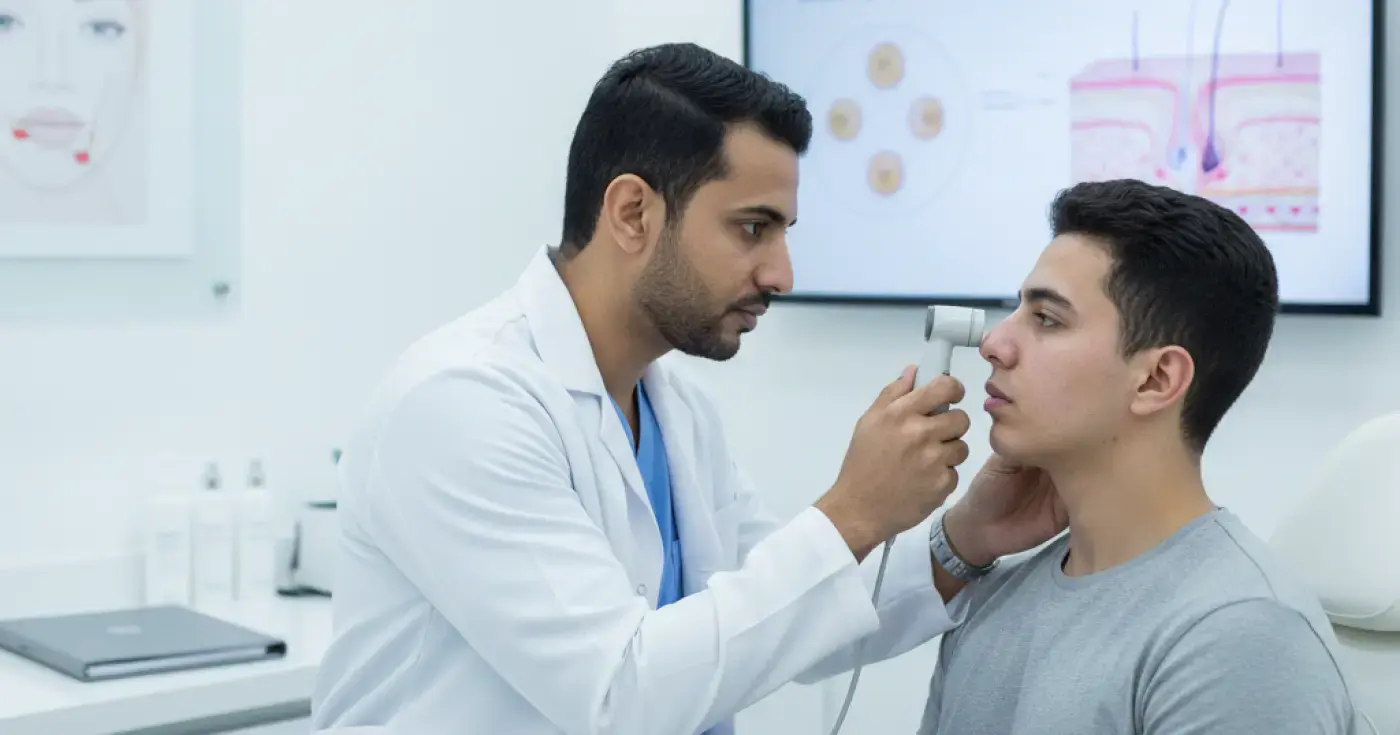
During your initial consultation, your dermatologist will perform a comprehensive evaluation, including:
Dermatologists have access to highly effective prescription-only treatments, including:
These include high-strength topical retinoids to regulate cell turnover and prevent clogged pores, topical antibiotics to reduce bacterial load, and azelaic acid to target both inflammation and hyperpigmentation.
For moderate-to-severe cases, dermatologists may prescribe oral antibiotics to control inflammation, or hormonal therapies to regulate sebum production in women. For severe or refractory acne, oral Isotretinoin is highly effective as it shrinks sebaceous glands, though it requires strict medical monitoring and regular blood tests.
Medical treatments can be accelerated with clinical procedures such as medical-grade chemical peels, علاج حب الشباب بالليزر (laser acne treatment) to reduce active inflammation, or sterile cyst drainage to relieve pain and prevent scarring.
Alongside medical treatments, proper daily care is essential for optimal recovery:
Acne is a treatable medical condition, not a phase you must endure. Early intervention by a licensed dermatologist can prevent permanent physical scarring and hyperpigmentation, saving time and resources spent on ineffective products. If you are struggling with persistent or inflammatory acne, take the proactive step and schedule a professional consultation today.
Clear, direct answers
Advertisement
Continue exploring
A comprehensive medical guide on why adult acne persists after teenage years, exploring hormonal causes, Saudi climate impacts, and clinical treatments.
Read article
Explore the scientific link between diet and acne. Learn how sugar and dairy affect your skin in this comprehensive medical guide.
Read article
Discover the most effective medical and cosmetic treatments for active acne and scar removal. Learn about lasers, peels, and clinical skincare.
Read article