
Lahalak Medical PlatformDifferentiate Care
Comprehensive guide to non-surgical ultrasound face and neck tightening (HIFU). Learn about ideal candidates, procedure steps, and expected outcomes.
Advertisement
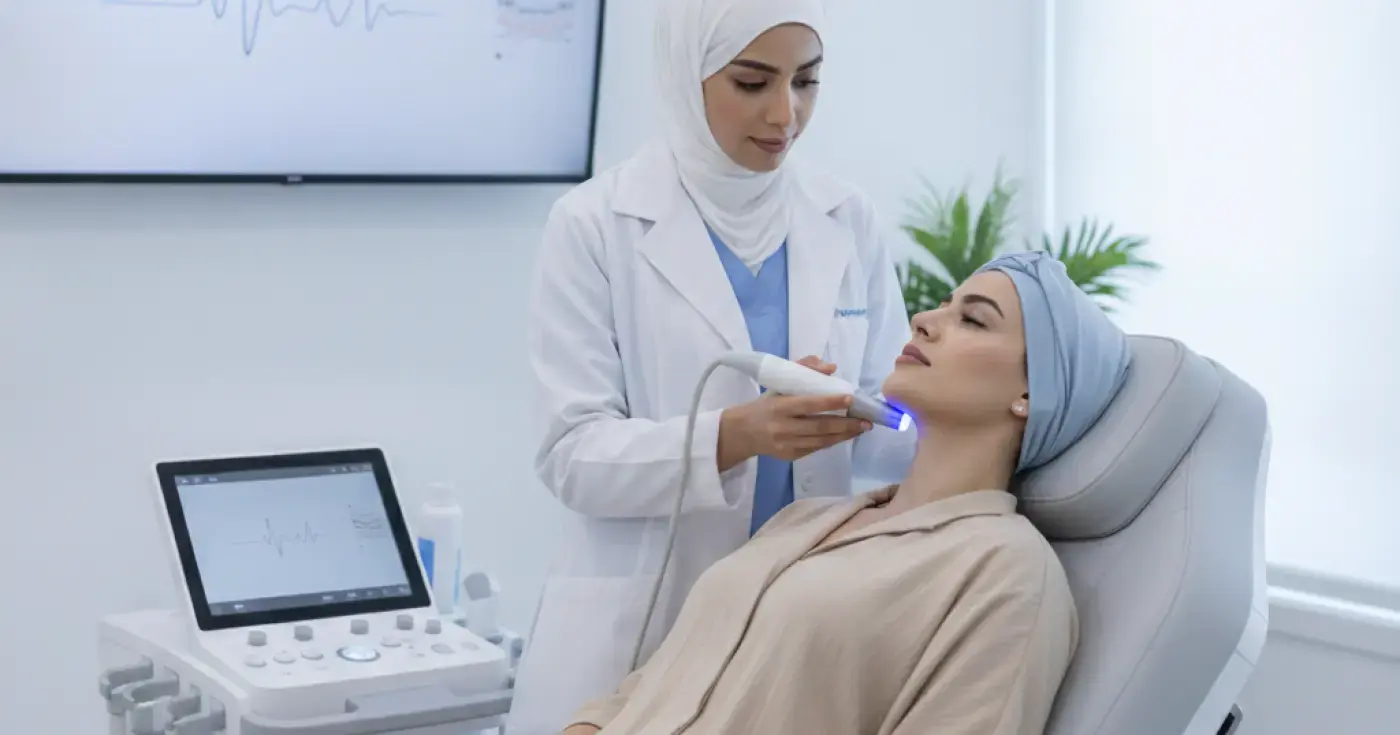
High-Intensity Focused Ultrasound, commonly known as HIFU, represents a major scientific breakthrough in the field of non-surgical aesthetic medicine. This advanced technology aims to stimulate natural collagen production in the deep layers of the skin, leading to tighter, firmer skin on the face and neck without the need for surgery or prolonged downtime. In this comprehensive guide, we will explore how this technology works, who benefits most from it, and its potential benefits and risks.
HIFU technology works by delivering precise, high-intensity focused ultrasound energy to specific depths beneath the skin's surface. It target the Superficial Muscular Aponeurotic System (SMAS) layer, which is the same muscle-fibrous layer targeted by plastic surgeons during traditional facelift surgeries. The ultrasound energy rapidly heats the targeted tissue, causing controlled microscopic thermal damage. This thermal effect triggers the body's natural wound-healing response, resulting in the rapid production of new collagen and elastin fibers, which are essential for skin elasticity and youthfulness.
HIFU is not suitable for everyone, as the outcomes depend heavily on the degree of skin laxity and the patient's age. The ideal candidates generally include:
There are certain medical and skin conditions that contraindicate HIFU treatment, including:
To help you make an informed decision, the following table highlights the key differences between HIFU and traditional surgical facelifts:
| Feature | HIFU Skin Tightening | Surgical Facelift |
|---|---|---|
| Procedure Type | Non-invasive, uses ultrasound waves | Invasive surgery, requires incisions and anesthesia |
| Recovery Time | No downtime, immediate return to daily activities | 14 to 30 days for initial healing |
| Results | Gradual, fully appearing within 2 to 3 months | Immediate, highly visible, and lasts for years |
| Risks | Minimal and temporary (mild redness, slight swelling) | Surgical risks (bleeding, infection, scarring) |
| Cost | Moderate and cost-effective compared to surgery | High, including surgeon, anesthesia, and facility fees |
A typical HIFU session is straightforward and quick, involving the following steps:
Unlike surgical procedures, HIFU results are not fully visible immediately. While some patients notice a slight temporary lifting effect right after the session due to collagen contraction, the true results develop gradually over 2 to 3 months as new collagen grows. The results typically last between 12 to 24 months, depending on skin quality, lifestyle factors, and adherence to proper post-treatment skincare.
HIFU is considered highly safe when performed by a qualified and experienced practitioner. However, some temporary and mild side effects may occur, including:
To maximize your results and prevent complications, follow these essential guidelines:
HIFU is an excellent, safe, and effective option for those looking to restore youthfulness to their face and neck and tighten sagging skin without undergoing surgery. However, a thorough clinical evaluation by a qualified dermatologist or plastic surgeon remains the most important step to determine if HIFU is the right choice for your individual needs and to ensure safe, optimal results.
Clear, direct answers
Advertisement
Continue exploring
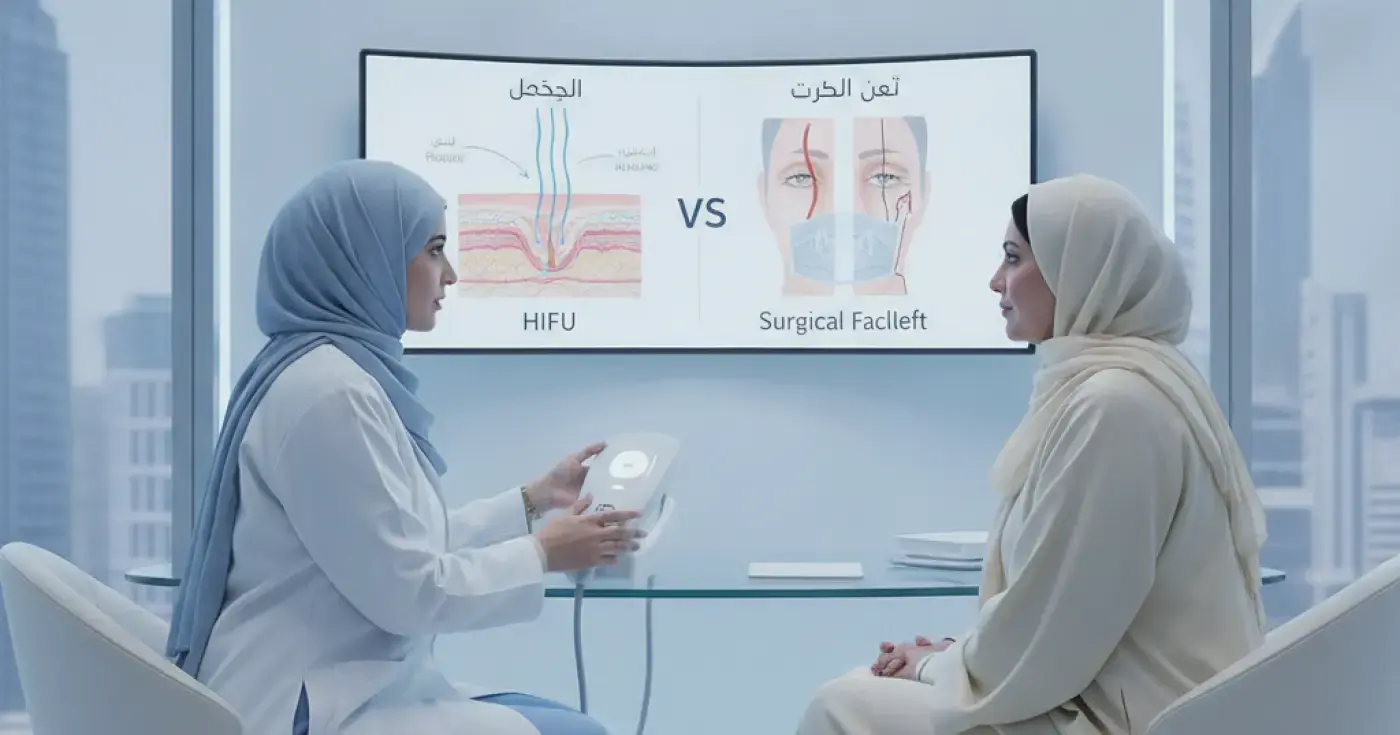
Discover the clinical differences between HIFU ultrasound skin tightening and a surgical facelift. Learn which procedure is best for your skin laxity.
Read article
Compare HIFU and laser face lifting. Learn about target depths, clinical efficacy, recovery times, and how to choose the right treatment.
Read article
Learn how High-Intensity Focused Ultrasound (HIFU) works for non-surgical skin tightening, its benefits, side effects, and when results appear.
Read article