Lahalak Medical PlatformDifferentiate Care
Compare HIFU and laser face lifting. Learn about target depths, clinical efficacy, recovery times, and how to choose the right treatment.
Advertisement
In recent years, aesthetic medicine and dermatology have witnessed a remarkable technological evolution, allowing patients to achieve visible skin tightening and anti-aging results without undergoing invasive surgical procedures. Among the most prominent non-surgical options available in modern clinics are HIFU face lift (High-Intensity Focused Ultrasound) and various laser technologies. While both treatments aim to stimulate collagen production and rejuvenate the skin, they differ fundamentally in their mechanisms of action, depth of penetration, clinical outcomes, and recovery periods.
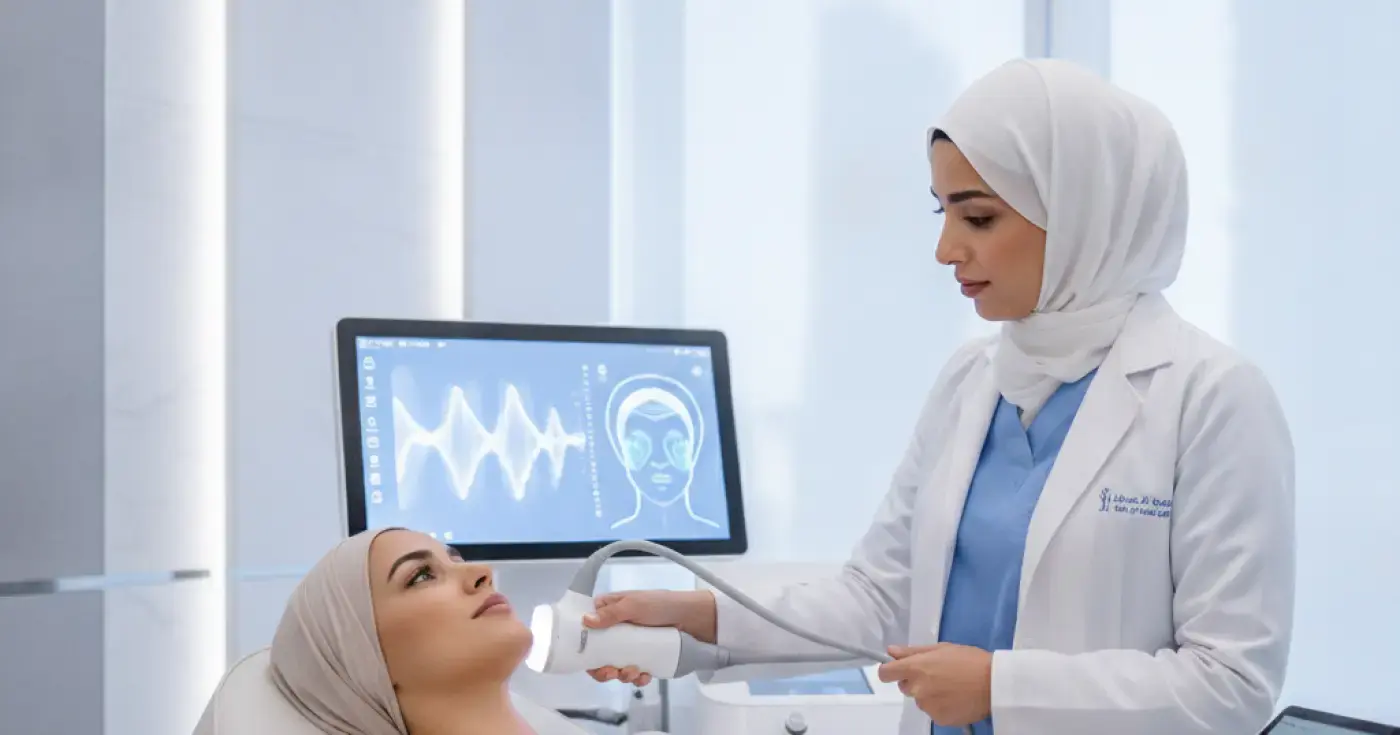
HIFU is a revolutionary non-invasive technology that utilizes focused ultrasound energy to target the deep structural layers of the skin. It is highly regarded in clinical practice for its unique ability to reach depths that were previously only accessible through surgical intervention.
The HIFU device delivers precise, micro-focused ultrasound energy to specific depths beneath the skin's surface. This energy generates thermal coagulation points (TCPs) where temperatures reach 60–70°C. This controlled thermal stress triggers a natural healing response, stimulating the rapid synthesis of new collagen and elastin fibers, which gradually tightens and lifts the overlying tissue.
One of the key advantages of HIFU is its ability to target the Superficial Muscular Aponeurotic System (SMAS) layer, located approximately 4.5 mm beneath the skin. The SMAS is the same fibromuscular layer tightened during a surgical facelift. By delivering energy directly to this layer, HIFU achieves deep tissue lifting and structural support without causing any disruption to the skin's surface.
Laser skin tightening and resurfacing treatments utilize high-energy, monochromatic light beams. Depending on the clinical indication, dermatologists use either ablative lasers (such as Fractional CO2 or Erbium:YAG) or non-ablative lasers.
Ablative lasers work by removing the outer layer of the skin (epidermis) while heating the underlying dermis. This process triggers significant epidermal regeneration and dermal remodeling, making it highly effective for severe wrinkles and texture issues. Non-ablative lasers, on the other hand, penetrate the skin to heat the dermis and stimulate collagen without damaging the surface layer, offering a safer profile with minimal downtime but requiring multiple sessions.
Unlike HIFU, lasers primarily target the superficial and mid-dermal layers of the skin, typically penetrating between 0.5 mm and 1.5 mm. Consequently, laser treatments are highly effective at addressing surface-level concerns, such as fine lines, superficial wrinkles, uneven skin tone, pigmentation, and mild skin laxity.
The following table outlines the key clinical differences between HIFU and laser face lifting technologies:
| Feature | HIFU (High-Intensity Focused Ultrasound) | Laser Skin Tightening / Resurfacing |
|---|---|---|
| Target Depth | Deep (up to 4.5 mm, reaching the SMAS layer) | Superficial to mid-dermis (0.5 mm to 1.5 mm) |
| Primary Indication | Deep tissue lifting, jawline definition, brow and cheek lifting | Texture improvement, fine lines, pigmentation, acne scars |
| Number of Sessions | Typically 1 to 2 sessions per year | 3 to 6 sessions spaced weeks apart (depending on laser type) |
| Downtime | None (immediate return to daily activities) | 2 to 10 days of redness and peeling (for ablative lasers) |
| Skin Type Suitability | Safe for all skin types (Fitzpatrick scale I-VI) | Requires caution on darker skin types to avoid hyperpigmentation |
| Result Longevity | Gradual improvement over 2–3 months, lasting 12–18 months | Visible after healing, lasting several months to a year |
Choosing the right treatment depends heavily on the patient's age, skin condition, and aesthetic goals.
HIFU is highly recommended for individuals aged 30 and older who exhibit mild-to-moderate skin laxity. Ideal candidates are those experiencing early signs of sagging, such as a softening jawline (jowls), mild double chin, or drooping brows. It is also the preferred choice for patients seeking a completely non-invasive treatment with zero downtime.
Laser treatments, particularly laser skin resurfacing, are ideal for patients looking to address photoaging, fine lines around the eyes and mouth, enlarged pores, sun spots, and acne scars. Patients with darker skin tones should consult an experienced dermatologist to select the safest laser modality to prevent post-inflammatory hyperpigmentation (PIH).
With HIFU, while some immediate tightening may be felt due to collagen contraction, the true clinical results develop gradually over 2 to 3 months as new collagen is synthesized. These structural improvements typically last between 12 and 18 months, depending on individual aging processes and lifestyle factors.
For laser treatments, results become apparent once the skin heals and regenerates. The skin appears smoother, brighter, and more youthful. These surface improvements can last for several months to a year, and can be prolonged with a dedicated skincare regimen, including high-SPF sun protection and medical-grade moisturizers.
HIFU is associated with minimal side effects because the epidermis remains completely intact. Patients may experience mild erythema (redness), slight swelling, or transient tenderness to the touch, all of which typically resolve within a few hours to days.
In contrast, ablative laser treatments require a dedicated recovery period. Patients can expect moderate-to-severe redness, swelling, and peeling resembling a sunburn, lasting 5 to 10 days. During this recovery phase, strict adherence to post-laser skin care protocols, including gentle cleansing, intense moisturization, and absolute sun avoidance, is critical to prevent complications.
In modern clinical practice, combining modalities often yields the most comprehensive rejuvenation results. HIFU and lasers can be integrated into a single treatment plan, where HIFU addresses deep structural sagging and lasers refine the superficial skin texture and tone. However, these treatments are rarely performed on the same day. Dermatologists typically recommend spacing them 2 to 4 weeks apart to allow the skin to heal properly between sessions.
To maximize efficacy and ensure patient safety, the following clinical guidelines should be followed:
Ultimately, neither technology is universally superior; rather, they serve complementary roles in non-surgical facial rejuvenation. The optimal choice depends on a thorough clinical evaluation of your skin's unique needs. We highly recommend scheduling a consultation with a board-certified dermatologist or plastic surgeon licensed by the Saudi Commission for Health Specialties (SCFHS) to design a safe, personalized, and effective treatment plan.
Clear, direct answers
Advertisement
Continue exploring
Explore the topic