
Lahalak Medical PlatformDifferentiate Care
Learn when to get a scalp examination (trichoscopy), how it helps diagnose hair loss, dandruff, and scalp conditions, and what to expect at the clinic.
Advertisement
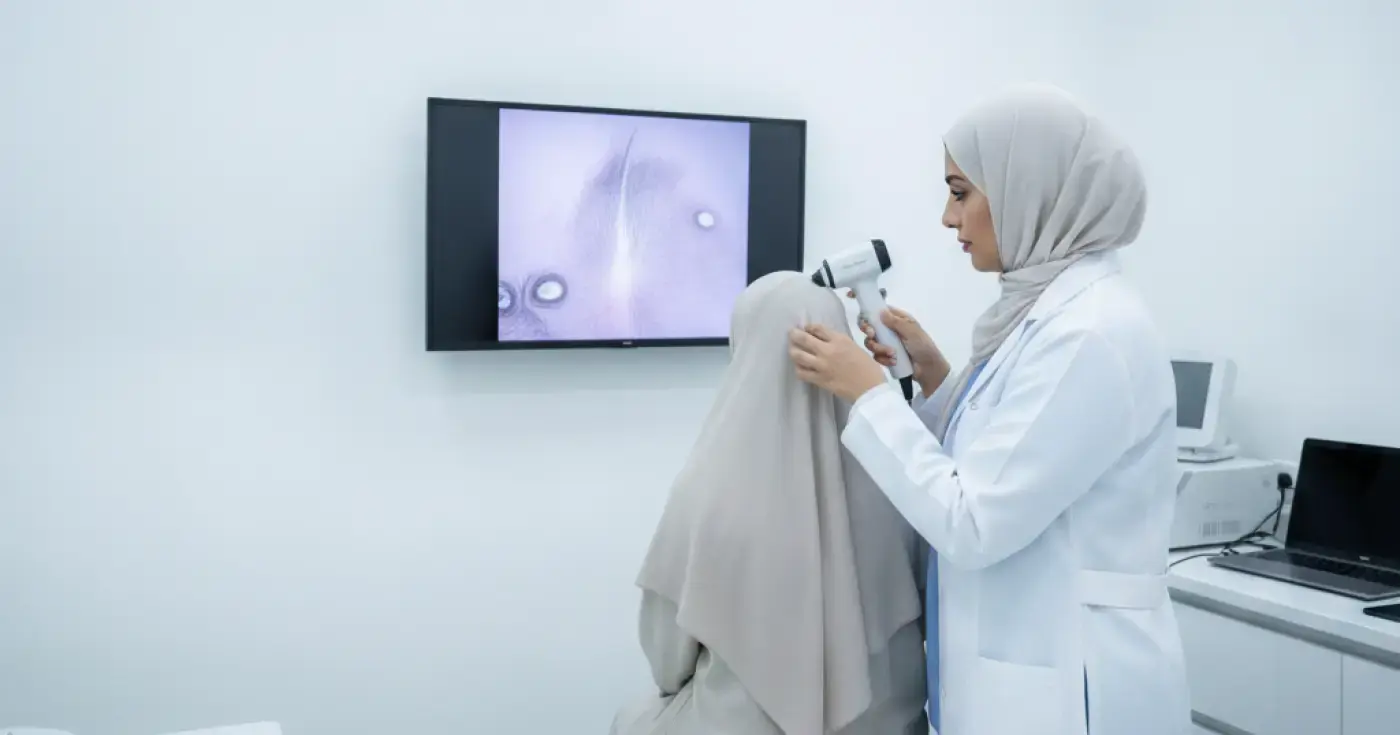
Your scalp is the foundation of healthy, beautiful hair. A scalp examination, clinically known as trichoscopy, is a non-invasive diagnostic procedure used by dermatologists to evaluate the health of your scalp and hair follicles. By magnifying the scalp surface up to 100 times, this technology allows specialists to detect subtle changes in hair structure and skin health that are invisible to the naked eye.
Many women try to address hair thinning or scalp irritation with over-the-counter products without seeing results. This is because effective treatment requires an accurate diagnosis. You should consider scheduling a professional scalp evaluation if you experience any of the following symptoms:
If you notice an unusual amount of hair shedding during washing or brushing, or if your hair has been thinning continuously for several weeks, a trichoscopy can help identify whether the cause is genetic, hormonal, or stress-related.
The sudden appearance of smooth, round bald patches on your scalp is a common sign of alopecia areata. Early diagnosis through a scalp exam is crucial to assess disease activity and start targeted therapy.
Persistent scaling that does not respond to regular anti-dandruff shampoos, especially when accompanied by intense itching or redness, may indicate underlying conditions like seborrheic dermatitis, psoriasis, or fungal infections.
Experiencing pain or tenderness when touching your hair or scalp (trichodynia) is a clinical symptom that warrants a thorough examination to rule out follicle inflammation or nerve sensitivity.
During a clinical consultation, dermatologists use a specialized digital scalp dermatoscope. This handheld device captures high-resolution images of the scalp and transmits them to a monitor. The dermatologist evaluates several key parameters:
Trichoscopy is highly effective in differentiating between various types of hair loss. The table below outlines the typical findings for common scalp and hair conditions:
| Condition | Trichoscopic Findings | Associated Symptoms |
|---|---|---|
| Androgenetic Alopecia (Female Pattern Hair Loss) | Hair diameter diversity, increased percentage of miniaturized (fine) hairs. | Gradual thinning at the crown and widening of the part line. |
| Telogen Effluvium | Empty hair follicles, presence of short, normally growing upright regrowing hairs. | Diffuse, heavy hair shedding following a trigger (e.g., childbirth, illness). |
| Alopecia Areata | Black dots, yellow dots, and characteristic "exclamation mark" hairs. | Sudden, well-demarcated circular patches of hair loss. |
| Cicatricial (Scarring) Alopecia | Absence of follicular openings, perifollicular erythema (redness), and scaling. | Permanent hair loss with localized skin changes or scarring. |
To ensure the most accurate diagnostic results during your dermatologist consultation, please follow these preparation tips:
A scalp examination is a quick, comfortable, and completely painless procedure. The dermatologist will first discuss your medical history, diet, lifestyle, and any recent hormonal changes. Then, using the digital dermatoscope, the doctor will gently examine different areas of your scalp. The images are analyzed in real-time, allowing the specialist to explain the findings and recommend a personalized hair loss treatment plan, which may include topical therapies, nutritional support, or clinical procedures like PRP or mesotherapy.
Ignoring scalp issues or relying on self-diagnosis can lead to worsening hair loss and make treatment more challenging. A professional scalp examination is the essential first step toward restoring your hair's health and density. If you are experiencing changes in your hair volume or scalp comfort, schedule a consultation with a qualified dermatologist to receive an accurate, science-based diagnosis and a tailored treatment plan.
Clear, direct answers
Advertisement
Continue exploring
Wondering about laser lip lightening pain? Learn how topical anesthesia helps, explore the step-by-step procedure, and get expert recovery tips.
Read article
Discover the main causes of dark lips, from sun exposure to lifestyle habits, and explore safe medical treatments like laser and chemical peels.
Read article
Discover if laser lip lightening is right for you. Learn about the procedure, ideal candidates, recovery tips, and potential side effects.
Read article