
Lahalak Medical PlatformDifferentiate Care
Learn about scabies symptoms, transmission methods, and medical treatments. Discover how to treat and prevent scabies effectively under medical guidance.
Advertisement
Scabies is a common, highly contagious skin condition caused by an infestation of microscopic mites. It is a global public health issue that affects people of all ages, races, and socioeconomic groups. Contrary to common misconceptions, scabies is not a reflection of poor personal hygiene. It can spread rapidly in crowded conditions where close body contact is frequent. Understanding how scabies is transmitted, recognizing its symptoms early, and knowing the correct medical treatments are essential steps to managing and preventing the spread of this uncomfortable condition.
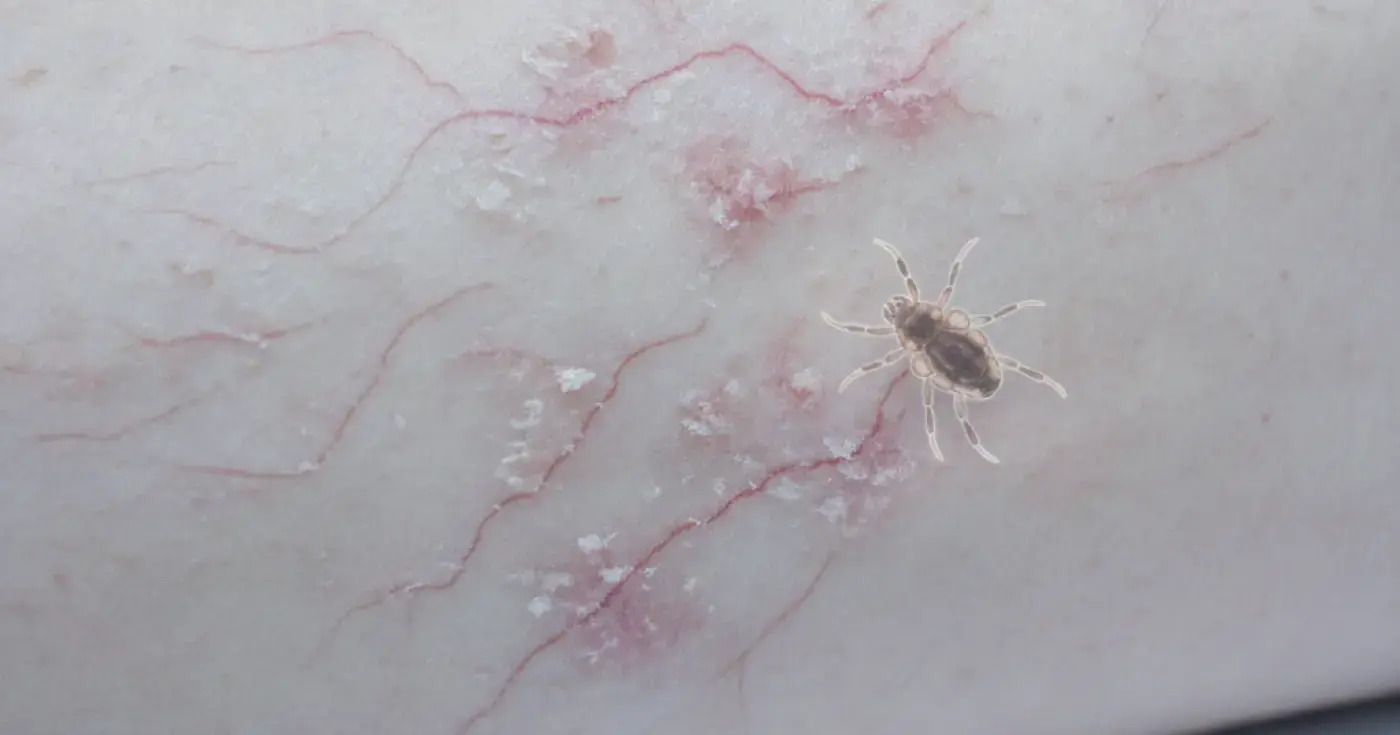
The underlying cause of scabies is the microscopic, eight-legged itch mite known as Sarcoptes scabiei var. hominis. These tiny parasites are invisible to the naked eye. After mating on the skin surface, the fertilized female mite burrows into the upper layer of the skin (stratum corneum) to lay her eggs. The presence of the mites, their eggs, and their waste products triggers an allergic reaction in the host's immune system, resulting in intense itching and a characteristic skin rash.
Scabies mites do not fly or jump; they crawl very slowly. Therefore, transmission occurs primarily through specific pathways:
The most common way to contract scabies is through direct, prolonged, skin-to-skin contact with an infested person. This typically happens among family members living in the same household, sexual partners, or healthcare workers providing close physical care. Brief physical contact, such as a quick handshake or a hug, is generally insufficient to transmit the mites.
Although less common, scabies can be transmitted indirectly through contact with items such as clothing, bedding, towels, or upholstered furniture that have been recently used by an infested person. Scabies mites can survive off the human body for about 48 to 72 hours under normal room conditions, during which they remain capable of infesting a new host.
If a person has never had scabies before, symptoms can take 4 to 6 weeks to develop. However, in individuals who have had scabies previously, symptoms can appear within 1 to 4 days due to rapid immune sensitization.
The hallmark symptom of scabies is severe, unrelenting itching, which characteristically worsens at night. The warmth of the body under bed covers increases mite activity, intensifying the allergic response and the urge to scratch.
Mite burrows appear as tiny, thread-like, wavy, or grayish-white lines on the skin surface, ranging from a few millimeters to a centimeter in length. These burrows are most commonly found in skin folds and crevices.
The rash consists of small, red, pimple-like bumps or blisters. The distribution of the rash varies by age:
Crusted scabies is a severe, highly contagious form of the disease that typically occurs in elderly individuals, immunocompromised patients (such as those with HIV or leukemia), or people with physical disabilities that prevent scratching. Instead of the typical 10 to 15 mites, individuals with crusted scabies are infested with thousands or millions of mites. This condition is characterized by thick, hyperkeratotic crusts over large areas of the body. Because of the massive number of mites, crusted scabies is extremely contagious and can be transmitted through minimal contact or contaminated environments.
Diagnosing scabies requires a thorough clinical skin examination by a qualified dermatologist. The doctor will look for characteristic burrows and rash patterns. To confirm the diagnosis, a skin scraping may be performed: the doctor gently scrapes a suspected burrow and examines the sample under a microscope to look for mites, eggs, or fecal matter. Dermoscopy can also be used to visualize the mite directly within its burrow.
Scabies does not resolve on its own and must be treated with prescription medications called scabicides. Over-the-counter remedies and home treatments are generally ineffective. The primary medical treatments include:
Topical treatments are the standard first-line therapy. They must be applied to clean, dry, cool skin over the entire body from the neck down to the toes, paying special attention to skin folds, webs between fingers and toes, and under the fingernails:
Oral Ivermectin: An oral antiparasitic medication administered as a single dose based on body weight, with a second dose repeated 7 to 14 days later. It is highly effective and is typically reserved for severe cases, crusted scabies, outbreaks in institutional settings, or when topical treatments have failed or cannot be tolerated.
| Feature | Permethrin 5% Cream (Topical) | Ivermectin (Oral) |
|---|---|---|
| Administration | Applied topically from neck to toes | Taken orally as tablets with water |
| Dosing Schedule | Single application, repeated in 7-14 days | Single dose, repeated in 7-14 days |
| Primary Target Group | Adults and children over 2 months old | Severe cases, crusted scabies, or non-compliance with topicals |
| Safety in Pregnancy | Generally safe (consult a doctor) | Not recommended for pregnant women or children under 15 kg |
| Common Side Effects | Mild skin irritation, temporary itching increase | Mild nausea, dizziness, or mild skin reactions |
To ensure successful eradication and prevent reinfection, strict environmental decontamination must be carried out concurrently with medical treatment:
You should always seek a professional medical consultation if you suspect you or a family member has scabies. Self-treating with unverified home remedies can worsen skin irritation and delay proper healing. Seek immediate medical attention if:
Clear, direct answers
Advertisement
Continue exploring

Learn about tinea corporis (ringworm), its causes, symptoms, clinical diagnosis, and effective medical treatments to prevent recurrence.
Read article
Discover the differences between infectious and non-infectious skin conditions, including causes, symptoms, diagnosis, and prevention tips.
Read article
Learn how infectious skin diseases transmit from person to person, common types (bacterial, viral, fungal), and essential prevention tips.
Read articleExplore the topic