
Lahalak Medical PlatformDifferentiate Care
Discover the differences between infectious and non-infectious skin conditions, including causes, symptoms, diagnosis, and prevention tips.
Advertisement
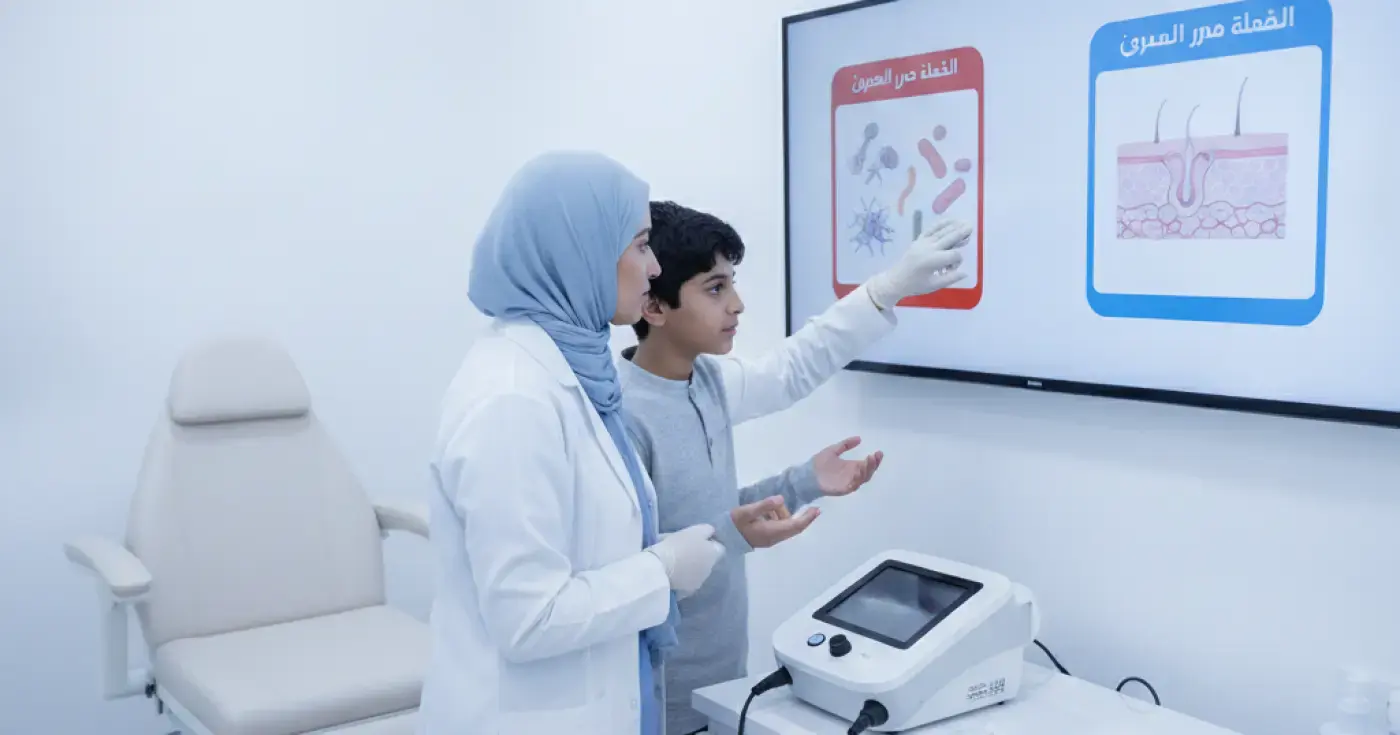
The skin is the body's largest organ, serving as the primary barrier against external threats. Because of its constant exposure to environmental and internal factors, skin conditions are highly prevalent. Clinically, dermatologists categorize these conditions into two primary groups: infectious and non-infectious skin diseases. Understanding the distinction between these two categories is essential for choosing the correct treatment, preventing transmission, and avoiding unnecessary anxiety.
Infectious skin diseases are caused by pathogenic microorganisms that invade and multiply within the skin. These conditions can be transmitted from person to person, from animals to humans, or through contact with contaminated surfaces. The primary causative agents are classified into four groups:
Non-infectious skin diseases are disorders resulting from internal or environmental factors and cannot be transmitted to another person. Common causes include genetic predispositions, immune system dysregulation, allergies, and exposure to environmental irritants.
Key examples of non-infectious conditions include:
The following table outlines the fundamental differences between these two categories based on clinical standards:
| Feature | Infectious Skin Diseases | Non-Infectious Skin Diseases |
|---|---|---|
| Primary Cause | External pathogens (bacteria, viruses, fungi, parasites) | Genetics, immune system dysfunction, allergens, or irritants |
| Transmission | Contagious; spreads via direct contact, surfaces, or vectors | Non-contagious; cannot be transmitted to others |
| Nature of Condition | Often acute; resolves once the pathogen is eradicated | Often chronic; requires long-term management and care |
| Common Examples | Scabies, impetigo, athlete's foot, warts | Eczema, psoriasis, vitiligo, acne, hives |
| General Treatment | Antimicrobial agents (antibiotics, antifungals, antivirals) | Moisturizers, topical corticosteroids, immunomodulators |
An accurate diagnosis begins with a thorough clinical evaluation by a specialist. To confirm the diagnosis, dermatologists may perform specific diagnostic tests, such as a skin biopsy to examine skin layers under a microscope, or skin scrapings and cultures to identify bacterial or fungal pathogens. Proper diagnosis ensures that non-infectious conditions are not mistakenly treated with unnecessary antimicrobials.
Prevention strategies differ significantly depending on the nature of the skin condition:
While many mild skin issues can be managed with basic care, certain warning signs require a professional dermatologist consultation immediately:
Clear, direct answers
Advertisement
Continue exploring
Learn how infectious skin diseases transmit from person to person, common types (bacterial, viral, fungal), and essential prevention tips.
Read article
A comprehensive medical guide on infectious skin diseases: bacterial, viral, fungal, and parasitic types, causes, symptoms, and prevention.
Read article
Learn why recurrent hives (chronic urticaria) return, when to see a doctor, and the essential diagnostic tests and treatments to manage symptoms.
Read articleExplore the topic