Lahalak Medical PlatformDifferentiate Care
Learn about recurrent vaginal yeast infections, causes of itching and discharge, vaginal swab tests, fungal cultures, and when to consult a specialist.

Advertisement
Vaginal itching, burning, and changes in discharge are among the most common gynecological concerns reported by women. While often automatically attributed to vaginal candidiasis (yeast infection), clinical evidence demonstrates that these symptoms are not unique to fungal overgrowth. Conditions such as bacterial vaginosis, non-infectious irritant vaginitis, or other microbial causes can produce strikingly similar discomfort. Therefore, obtaining an accurate diagnosis through structured clinical evaluation and targeted laboratory testing is essential for effective management and preventing distressing recurrences.
It is a widespread misconception that all vaginal itching or thick white discharge indicates a yeast infection. Clinical studies reveal that many women who self-treat with over-the-counter antifungals do not actually have a fungal infection. The vaginal ecosystem relies on a delicate balance of microflora dominated by Lactobacilli, which maintain an acidic pH to protect against pathogens.
When this ecological balance is disrupted, Candida species may overgrow. However, the same disruption can allow anaerobic bacteria to proliferate—causing bacterial vaginosis—or leave tissue vulnerable to chemical irritation. Consequently, symptoms reflect an altered vaginal environment rather than a single specific cause, making proper clinical testing and vaginal discharge analysis vital.
The clinical presentation of various forms of vaginitis frequently overlaps, rendering self-diagnosis unreliable. Common shared symptoms include
The following table outlines general educational comparisons among primary causes of vaginal symptoms and is not intended for self-diagnosis:
| Possible Cause | Typical Discharge | Characteristic Odor | Key Associated Features | Clinical Considerations |
|---|---|---|---|---|
| Vaginal Candidiasis (Yeast) | Thick, white, clumpy (cottage cheese-like) | Usually odorless or bread-like | Intense itching, redness, dysuria | Common after antibiotic use or in unmanaged diabetes |
| Bacterial Vaginosis (BV) | Thin, milky, gray, or off-white | Foul, fish-like odor (notably post-intercourse) | Mild itching, general discomfort | Results from reduced lactobacilli and elevated pH |
| Trichomoniasis | Profuse, frothy, yellow-green | Unpleasant odor | Severe discomfort, dyspareunia, pelvic pain | Requires comprehensive evaluation and partner management |
| Non-Infectious Irritation | Normal to slightly increased | No abnormal odor | Itching, burning immediately following chemical exposure | Triggered by scented soaps, douches, or synthetic fabrics |
During consultation, a healthcare provider reviews medical history and performs a targeted physical examination. In straightforward, first-time cases with classical signs and a normal vaginal pH (below 4.5), clinical evaluation may suffice to initiate standard care.
However, ordering a vaginal swab and microscopic examination becomes necessary under the following circumstances:
Direct microscopic evaluation (Wet Mount / KOH Prep) provides rapid diagnostic insight in clinical laboratories. A sample of discharge collected with a sterile swab is examined under a microscope:
When microscopic results are inconclusive or when dealing with recurrent infections, a vaginal fungal culture is highly beneficial. While basic microscopy confirms fungal presence, a culture offers advanced details:
Advanced multiplex PCR vaginitis panels test for the genetic material (DNA) of multiple pathogens simultaneously. Offering high sensitivity and specificity, these molecular tests are particularly useful in complex cases, recurrent presentations, or suspected mixed infections where traditional methods yield ambiguous results.
Recurrent vulvovaginal candidiasis can stem from several clinical, behavioral, or physiological factors:
To ensure diagnostic accuracy and prevent false-negative results, patients are generally advised to observe the following pre-test guidelines 24 to 48 hours prior to sample collection:
Laboratory findings should always be interpreted alongside clinical evaluation. Low levels of Candida can exist as normal flora without causing active disease; thus, a positive culture without symptoms does not automatically warrant treatment. Medical decision-making synthesizes patient symptoms, physical signs, and lab data to arrive at a balanced plan.
While most vaginal infections are manageable, certain red-flag symptoms necessitate prompt specialized obstetrics and gynecology consultation:
Clear, direct answers
Advertisement
Continue exploring

Discover signs of scalp ringworm in children, how it differs from alopecia and dandruff, and the role of fungal microscopic testing and culture.
Read article
تعرف على الفروق بين فطريات الجلد والأكزيما والصدفية، وأهمية فحص كشط الجلد ومزرعة الفطريات للوصول للتشخيص الدقيق وتجنب العلاج العشوائي.
Read article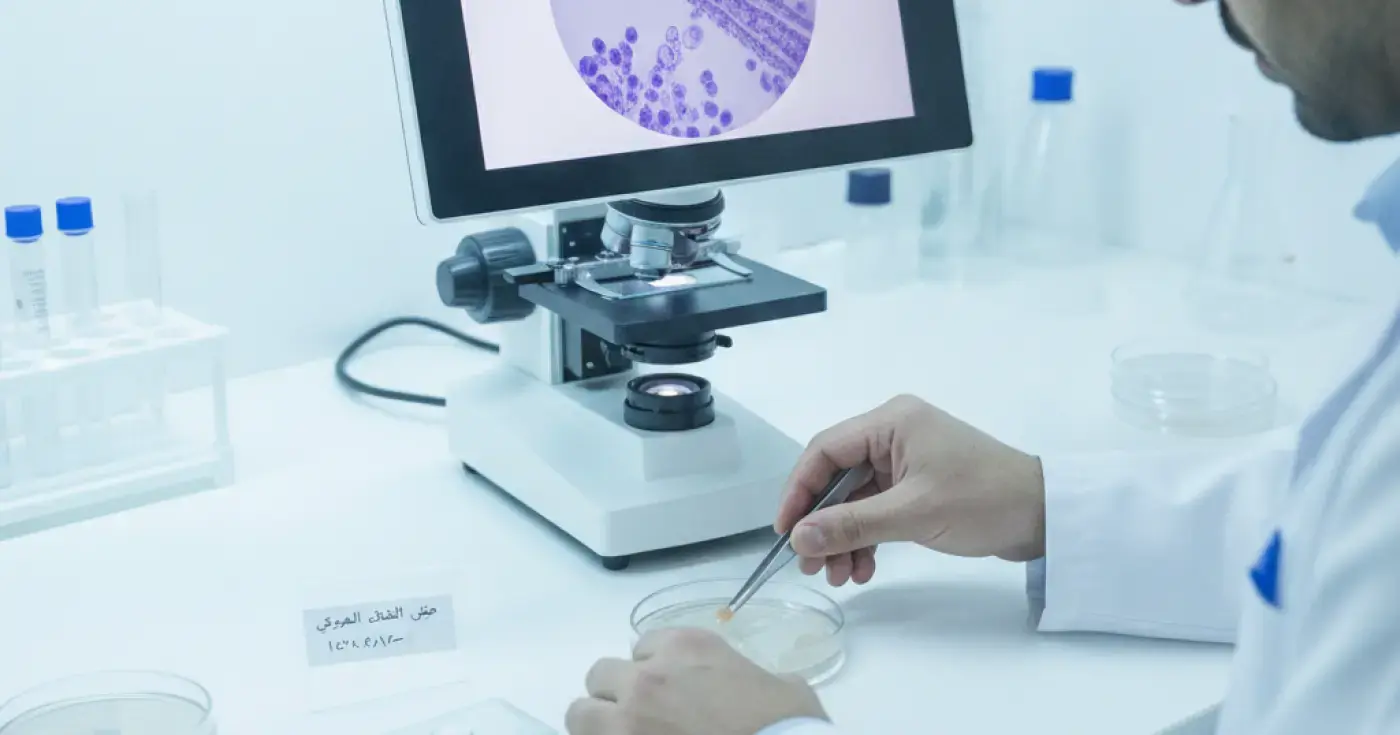
Learn the differences between KOH direct microscopy, fungal culture, and PCR tests for onychomycosis diagnosis before starting antifungal therapy.
Read articleConnected next steps
Explore the topic