
Lahalak Medical PlatformDifferentiate Care
Discover how stress and anxiety trigger hair loss, the types of psychological alopecia (like telogen effluvium), and effective medical treatments.

Advertisement
The connection between the mind and the body is one of the most complex and profound relationships in modern medicine. The impact of psychological state is not limited to internal organs; it also directly affects the skin and hair. This specialized medical field is known as "Psychodermatology," which studies how psychological stress, chronic anxiety, and emotional trauma manifest as dermatological conditions, most notably hair loss and alopecia.
Although "psychological alopecia" is not a distinct standalone classification in strict medical textbooks, it is clinically used to describe hair loss conditions where the primary trigger is emotional stress or acute psychological trauma. When the body undergoes severe stress, it releases hormones that negatively impact vital bodily functions, including the activity of hair follicles and their ability to regenerate.
Normal hair goes through a continuous growth cycle consisting of three main phases: the growth phase (Anagen), the transitional phase (Catagen), and the resting phase (Telogen). Under normal conditions, about 85% to 90% of scalp hair is in the active growth phase.
During chronic stress, the body secretes high levels of the hormone cortisol. Sustained high cortisol levels can inhibit the production of essential proteins required for hair growth and prematurely push hair follicles into the resting phase, leading to noticeable hair shedding several weeks or months after the stressful event.
Stress and anxiety can trigger three primary types of hair loss:
Alopecia areata is an autoimmune disease where the immune system mistakenly attacks hair follicles, causing hair to fall out in distinct round or oval patches. Clinical studies suggest that severe psychological stress acts as a primary trigger for the immune system to attack follicles in genetically susceptible individuals.
This is the most common type of stress-related hair loss. In this condition, acute physical or emotional stress pushes a large number of hair follicles prematurely into the resting phase (Telogen). Approximately two to three months after the stressful event, significant hair shedding occurs during brushing or washing.
This is a compulsive behavioral disorder closely linked to anxiety and stress. Individuals feel an irresistible urge to pull out hair from their scalp, eyebrows, or eyelashes as a way to cope with negative emotions or tension, resulting in irregular patches of hair loss with varying hair lengths.
| Hair Loss Type | Primary Mechanism | Distinct Clinical Presentation | Reversibility & Regrowth |
|---|---|---|---|
| Alopecia Areata | Stress-triggered autoimmune attack | Smooth, completely bald circular patches | Highly possible, often requiring medical hair loss treatment |
| Telogen Effluvium | Cortisol-induced disruption of growth cycle | Diffuse thinning across the entire scalp | Usually spontaneous within 6 to 9 months after stress resolves |
| Trichotillomania | Anxiety-driven compulsive behavior | Irregular patches with broken hairs of different lengths | Depends on behavioral therapy and stopping the habit |
When visiting a dermatologist in Saudi Arabia, an accurate diagnosis requires ruling out other organic causes first. The specialist performs a thorough clinical examination of the scalp using a dermatoscope (Trichoscopy) and may request essential laboratory tests, such as a thyroid hormone test, iron levels, and vitamin D levels, to ensure no other underlying factors are causing the hair loss.
Managing stress-induced hair loss requires a comprehensive approach combining medical therapies and psychological support:
Since stress is the root cause, medical treatment alone may not suffice. Patients are encouraged to practice relaxation techniques such as yoga, meditation, and regular exercise to lower cortisol levels. In some cases, Cognitive Behavioral Therapy (CBT) with a mental health professional is essential to manage chronic anxiety.
To protect your hair from the daily effects of stress, it is recommended to follow these hair care guidelines:
While some cases of telogen effluvium improve spontaneously, you should consult a dermatologist immediately if you notice sudden and heavy hair shedding, the appearance of completely bald circular patches, or if hair loss is accompanied by pain or severe itching on the scalp. Early diagnosis helps establish an effective treatment plan to prevent worsening and accelerate regrowth.
Clear, direct answers
Advertisement
Continue exploring

Learn about Alopecia Areata, its autoimmune causes, symptoms, diagnosis, and the latest medical treatments available.
Read article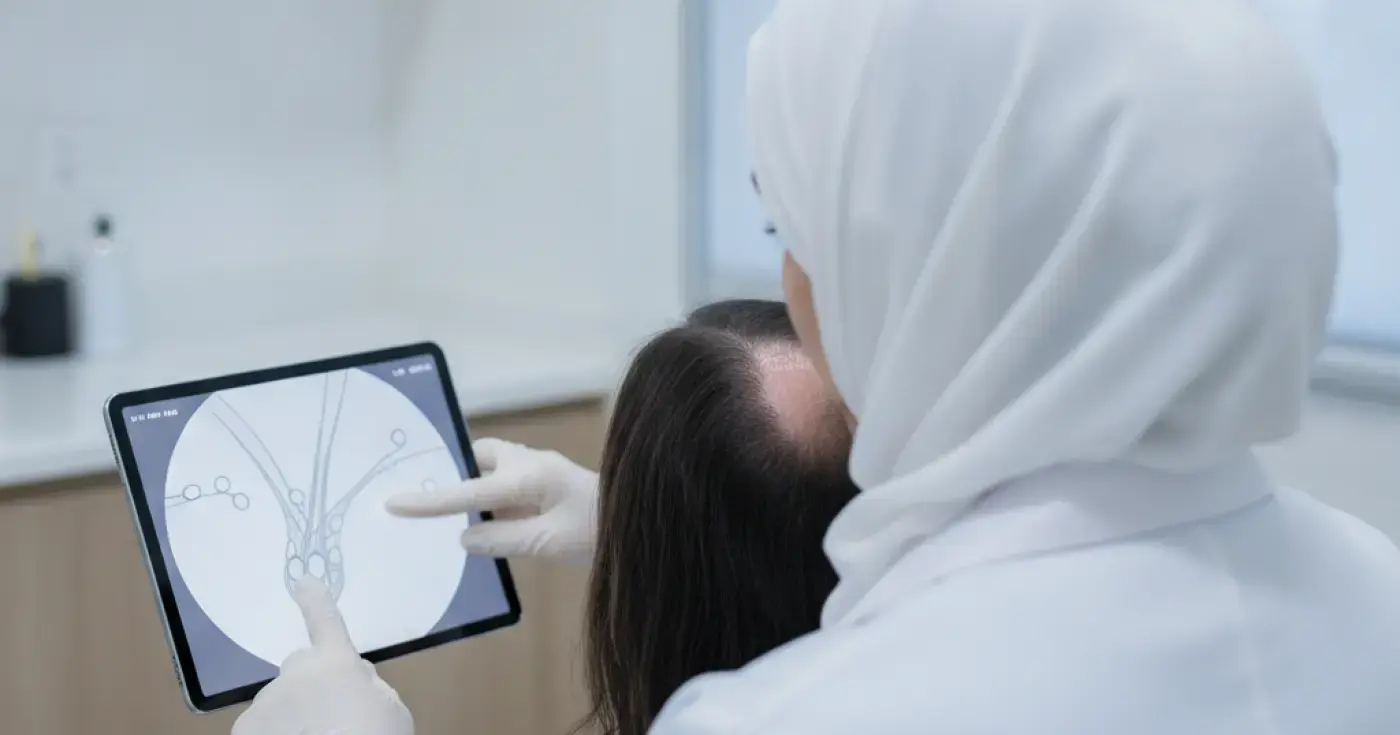
Learn about alopecia areata, its causes, symptoms, and the latest FDA-approved medical treatments to restore hair growth safely.
Read article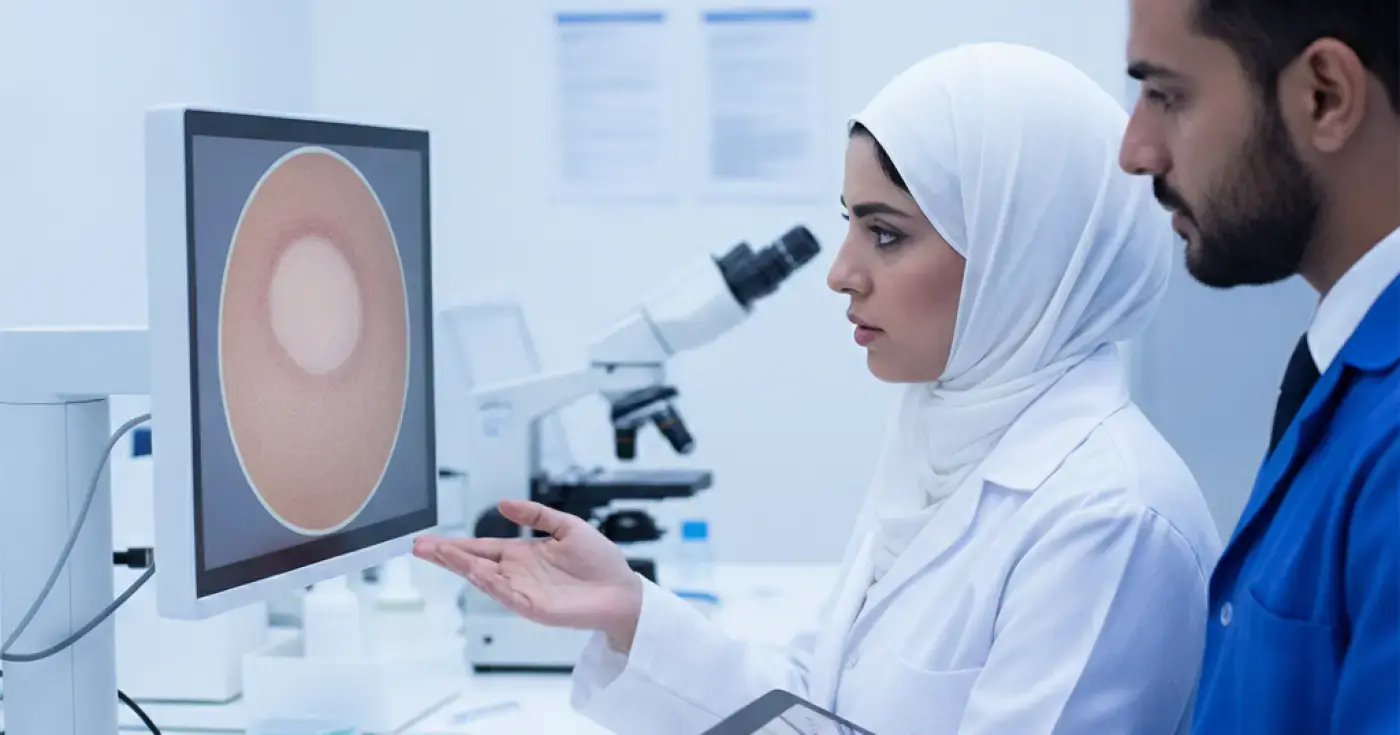
Learn about the scientific causes of sudden alopecia areata, autoimmune triggers, genetics, and the latest medical treatments approved in Saudi Arabia.
Read article