
Lahalak Medical PlatformDifferentiate Care
Learn how many Cryolipolysis sessions are required for optimal results, key factors influencing your treatment plan, and expected timelines.

Advertisement
In recent years, demand for non-invasive body contouring has grown significantly as a safe and effective alternative to surgical options like liposuction. These advanced techniques target stubborn fat pockets that resist diet and exercise. Among these, Cryolipolysis (commonly known as fat freezing) is one of the most widely performed and clinically proven methods approved by medical authorities.
A common question patients ask before starting their aesthetic journey is: "How many sessions will I need to achieve my goals?". The clinical answer depends on several individual factors evaluated during an initial aesthetic medical consultation.
Cryolipolysis works by delivering precisely controlled cooling to target and crystallize subcutaneous fat cells. Because fat cells are more sensitive to cold temperatures than surrounding tissues, this exposure triggers programmed cell death (apoptosis) without damaging the skin, nerves, or muscles. Over the following weeks, the body's lymphatic system naturally processes and permanently eliminates these dead cells.
There is no one-size-fits-all number of sessions. A personalized treatment plan is designed based on several clinical criteria:
Areas with thicker subcutaneous fat deposits typically require more sessions to achieve noticeable reduction compared to areas with minimal fat accumulation.
Different body areas respond uniquely to treatment. For instance, the abdomen may require a different protocol and session count compared to the submental area (double chin) or the arms.
Patient expectations play a major role. Some individuals seek subtle contouring and are satisfied with one session, while others desire maximum fat reduction, which requires multiple treatments.
The rate at which the lymphatic system clears metabolized fat cells varies from person to person, influenced by metabolic rate, physical activity, and overall health.
To help you understand the available options, the table below compares common non-invasive body contouring modalities, their mechanisms, and typical session requirements:
| Technology | Primary Mechanism | Average Recommended Sessions | Interval Between Sessions |
|---|---|---|---|
| Cryolipolysis (Fat Freezing) | Cold-induced fat cell apoptosis | 1 to 3 sessions per area | 6 to 8 weeks |
| Radiofrequency (RF) | Thermal heating and skin tightening | 4 to 8 sessions | 1 to 2 weeks |
| Non-Invasive Laser (WarmSculpting) | Hyperthermic fat cell destruction | 2 to 3 sessions | 6 to 12 weeks |
| Electromagnetic Stimulation (EMS) | Supramaximal muscle contractions | 4 to 6 sessions | 2 to 3 days |
Clinical studies show that most patients achieve optimal results with the following session ranges:
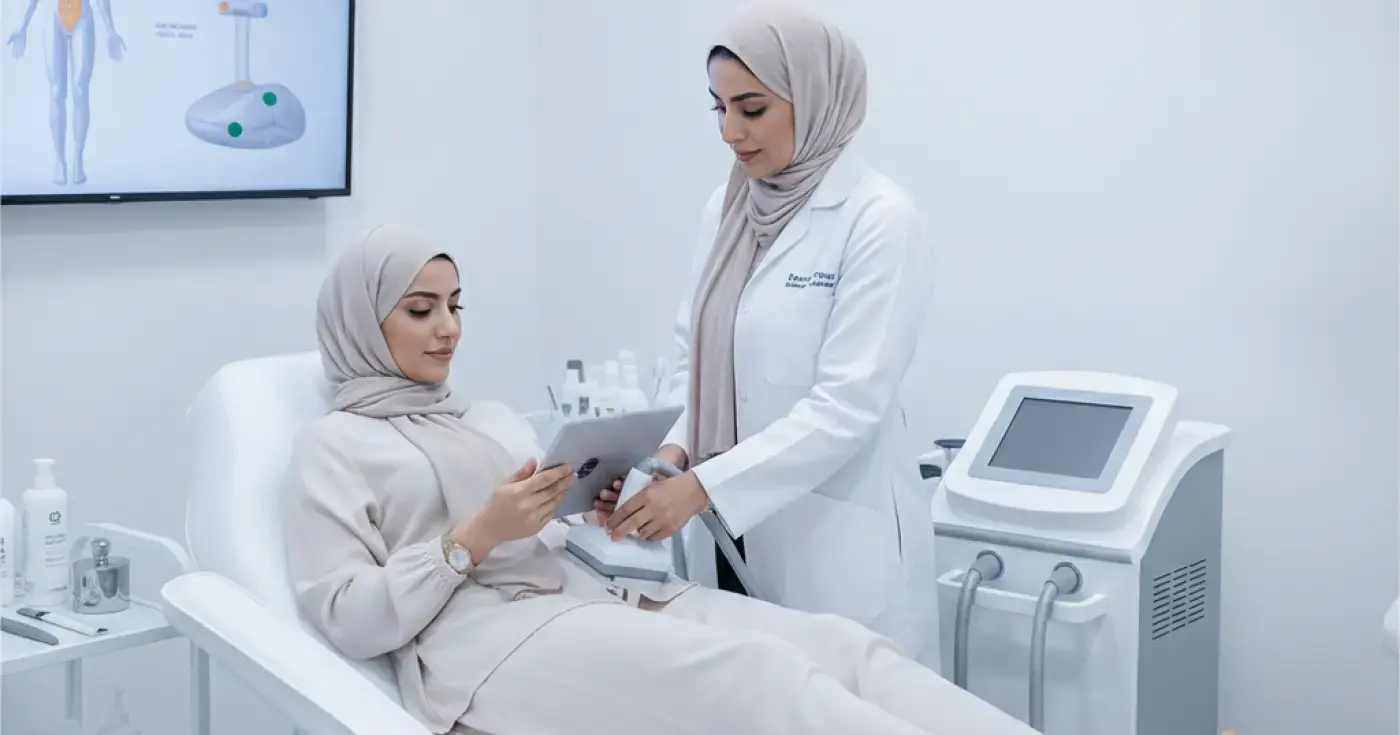
The procedure is highly comfortable and does not require anesthesia. A gel pad is applied to protect the skin, followed by the applicator, which uses vacuum pressure to draw the fat tissue between the cooling panels. Patients may feel intense cold and mild pulling for the first few minutes, but this sensation quickly subsides as the area becomes numb. Sessions last between 35 to 60 minutes per area, during which patients can read, work, or relax.
One of the greatest advantages of non-invasive body contouring is that it requires zero downtime. Patients can return to their normal daily activities immediately. Initial changes can be seen as early as 3 to 4 weeks after the first session, as the body begins flushing out the treated fat cells. The most dramatic and final results typically manifest between 2 to 4 months post-treatment.
To maximize the effectiveness of your treatments and maintain long-term results, follow these clinical recommendations:
While Cryolipolysis is highly safe, temporary side effects may occur, including localized redness, mild swelling, bruising, firmness, or transient numbness. These symptoms typically resolve on their own within a few days to weeks. However, certain medical conditions contraindicate the treatment, including:
Determining the exact number of body contouring sessions you need requires a comprehensive, in-person clinical evaluation. Consulting a qualified dermatologist or aesthetic physician is the best way to establish a safe, personalized, and realistic treatment plan that aligns with your body goals and lifestyle.
Clear, direct answers
Advertisement
Continue exploring
Discover non-surgical body contouring options like Cryolipolysis. Learn about ideal candidates, benefits, risks, and expected results in Saudi Arabia.
Read article
Discover how Cryolipolysis (fat freezing) works, expected results, treatment areas, side effects, and recovery tips in our comprehensive medical guide.
Read article
Discover how non-surgical body contouring and cryolipolysis work, ideal candidates, clinical risks, and what to expect before and after your sessions.
Read article