
Lahalak Medical PlatformDifferentiate Care
Learn when forehead Botox results appear, factors affecting the timeline, and essential post-care tips for long-lasting, natural results.
Advertisement
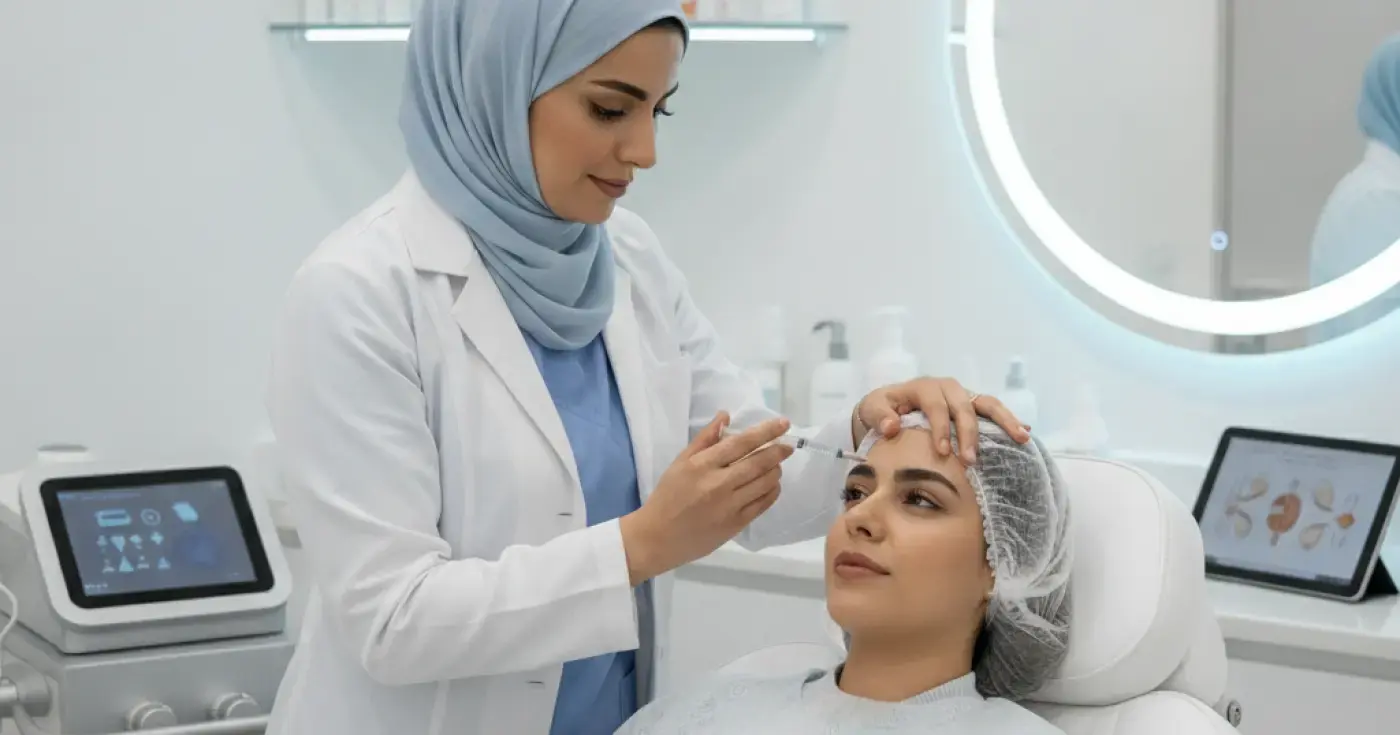
The forehead is one of the first areas of the face to display visible signs of aging and expression lines. These wrinkles develop primarily due to the repeated contraction of the frontalis muscle when expressing emotions such as surprise, anger, or deep concentration. Over time, these dynamic, movement-induced lines can transition into static, permanent wrinkles that affect the overall youthfulness and vitality of the face. This is where Botox injections serve as a premier, non-surgical cosmetic solution to restore smoothness and rejuvenation to the upper face.
This comprehensive medical guide addresses the most frequent question asked in aesthetic clinics across Saudi Arabia: When do forehead Botox results appear? We will explore the underlying physiological mechanism of botulinum toxin, outline the expected clinical timeline, discuss individual variables that accelerate or delay the onset of action, and provide evidence-based post-care instructions to maximize the longevity of your treatment.
Botox is the widely recognized brand name for Botulinum Toxin Type A, a purified natural protein that acts as a selective neuromodulator. When injected in precise, micro-doses into the frontalis muscle of the forehead, it temporarily blocks the transmission of nerve signals to the targeted muscle fibers. Specifically, it prevents the localized release of acetylcholine, the primary neurotransmitter responsible for triggering muscle contractions.
Once the targeted muscle fibers stop contracting intensely, the overlying skin relaxes, leading to a gradual smoothing and softening of horizontal forehead lines. It is clinically important to note that Botox does not add volume or fill lines like dermal fillers; instead, it addresses the root cause of dynamic wrinkles by temporarily relaxing the underlying musculature.
The clinical effects of botulinum toxin are not instantaneous. The physiological process of neuromuscular blockade requires time for the protein to bind to nerve endings. The typical post-injection timeline progresses as follows:
Most patients begin to notice the initial subtle changes within two to four days following their procedure. You may experience a slight sensation of tightness or heaviness in the forehead area, or find that lifting your eyebrows requires slightly more effort. This is a positive clinical indicator that the toxin is successfully binding to the neuromuscular junctions.
During this period, the cosmetic improvements become increasingly visible. Fine lines and superficial wrinkles begin to soften and fade, leaving the forehead skin looking smoother and more refreshed. Your ability to forcefully crease your forehead will be significantly diminished.
The definitive, peak therapeutic effect of forehead Botox is achieved 10 to 14 days post-treatment. At this stage, the product has fully stabilized within the targeted muscle tissue, and muscle relaxation reaches its maximum. Clinicians strongly advise waiting a full two weeks before assessing the final outcome or scheduling a touch-up session.
The speed at which forehead Botox takes effect and how long it lasts vary among individuals due to several biological and technical factors:
| Timeframe | Expected Physiological Effects | Clinical Recommendations |
|---|---|---|
| First 4 Hours | No visible changes; product begins diffusing locally. | Remain upright; do not rub the forehead or perform vigorous exercise. |
| Days 2 - 4 | Initial onset of muscle relaxation; mild heaviness. | Avoid facial massages or heavy pressure on the treated area. |
| Days 7 - 10 | Significant smoothing of dynamic lines and wrinkles. | Monitor facial symmetry and eyebrow alignment. |
| Day 14 | Peak clinical effect achieved; smooth, natural appearance. | Follow up with your practitioner for any necessary adjustments. |
Adhering to strict post-care guidelines is essential to prevent the migration of Botox to unintended muscles (such as the levator palpebrae, which can cause eyelid drooping). Key recommendations for post-Botox care include:
While forehead Botox is highly safe when performed by a qualified medical professional, some temporary, mild side effects can occur, including:
Rare but more significant complications require immediate medical evaluation, such as eyelid ptosis (drooping of the upper eyelid), severe facial asymmetry, or difficulty swallowing or breathing (extremely rare and usually associated with improper administration or unapproved products).
To help patients make informed decisions, we clarify several widespread myths regarding botulinum toxin treatments:
Fact: When administered by a skilled injector using precise dosages, Botox preserves natural facial expressions while selectively softening unwanted wrinkles.
Fact: When the effects wear off, your muscles gradually regain their original strength, and your wrinkles will simply return to their pre-treatment state, often appearing slightly softer due to the prolonged period of muscle rest.
Fact: Botox is highly effective for dynamic wrinkles. Static wrinkles, which remain visible when the face is completely relaxed, are better addressed through a combination of Botox, dermal fillers, or skin resurfacing treatments.
To ensure safe, effective, and natural-looking results, always prioritize the following standards when selecting a clinic:
Clear, direct answers
Advertisement
Continue exploring

Discover the target areas for full-face Botox, from the forehead to the jawline. Learn about the procedure, benefits, and recovery tips.
Read article
Learn how facial Botox works to reduce wrinkles, target areas, pre and post-care tips, and safety guidelines for natural results on LahaLak.
Read article