
Lahalak Medical PlatformDifferentiate Care
Learn how facial Botox works to reduce wrinkles, target areas, pre and post-care tips, and safety guidelines for natural results on LahaLak.
Advertisement
Facial Botox injections have established themselves as one of the most popular non-surgical cosmetic procedures worldwide, and particularly in Saudi Arabia. Derived from purified Botulinum toxin, Botox is a natural protein that temporarily relaxes the muscles responsible for creating wrinkles. As we age, our skin naturally loses elasticity, and the repetitive movements of facial muscles during expressions turn temporary lines into permanent wrinkles. This is where Botox serves as both an effective preventive and corrective treatment to restore a youthful appearance without surgery.
In this comprehensive guide provided by LahaLak Medical Platform, we explore the clinical science behind facial Botox, how it targets different types of wrinkles, and the precise medical guidelines you should follow before and after your session to ensure safe, natural, and beautiful results.
The mechanism of Botox is based on blocking nerve signals to specific tiny muscles in the face. Whenever we express emotions—such as laughing, frowning, or squinting—our nerves release a chemical messenger called acetylcholine, which signals the muscles to contract. Over time, these repeated contractions fold the overlying skin, leading to visible lines.
When Botox is precisely injected into the targeted muscles, it temporarily blocks the release of acetylcholine. Consequently, the injected muscle relaxes and its movement is significantly reduced. This allows the overlying skin to smooth out, causing dynamic wrinkles to fade or disappear. It is important to note that this effect is highly localized and does not affect other muscles or overall facial sensation.
Understanding the type of wrinkles you have is crucial, as many people confuse the roles of Botox and dermal fillers. Facial wrinkles are classified into two main categories:
| Feature | Dynamic Wrinkles | Static Wrinkles |
|---|---|---|
| Definition | Lines that appear only during facial movements and expressions. | Lines that remain visible on the face even when it is completely at rest. |
| Primary Cause | Repeated contraction of expressive muscles beneath the skin. | Loss of collagen, elastin, and volume due to aging and gravity. |
| Best Treatment | Respond exceptionally well to Botox injections. | Typically require dermal fillers, laser resurfacing, or skin peeling. |
| Common Examples | Forehead lines, frown lines (glabella), and crow's feet. | Nasolabial folds (smile lines around the mouth) and cheek wrinkles. |
Botox is highly versatile and can be used to treat several key areas of the face to achieve a refreshed and youthful look:
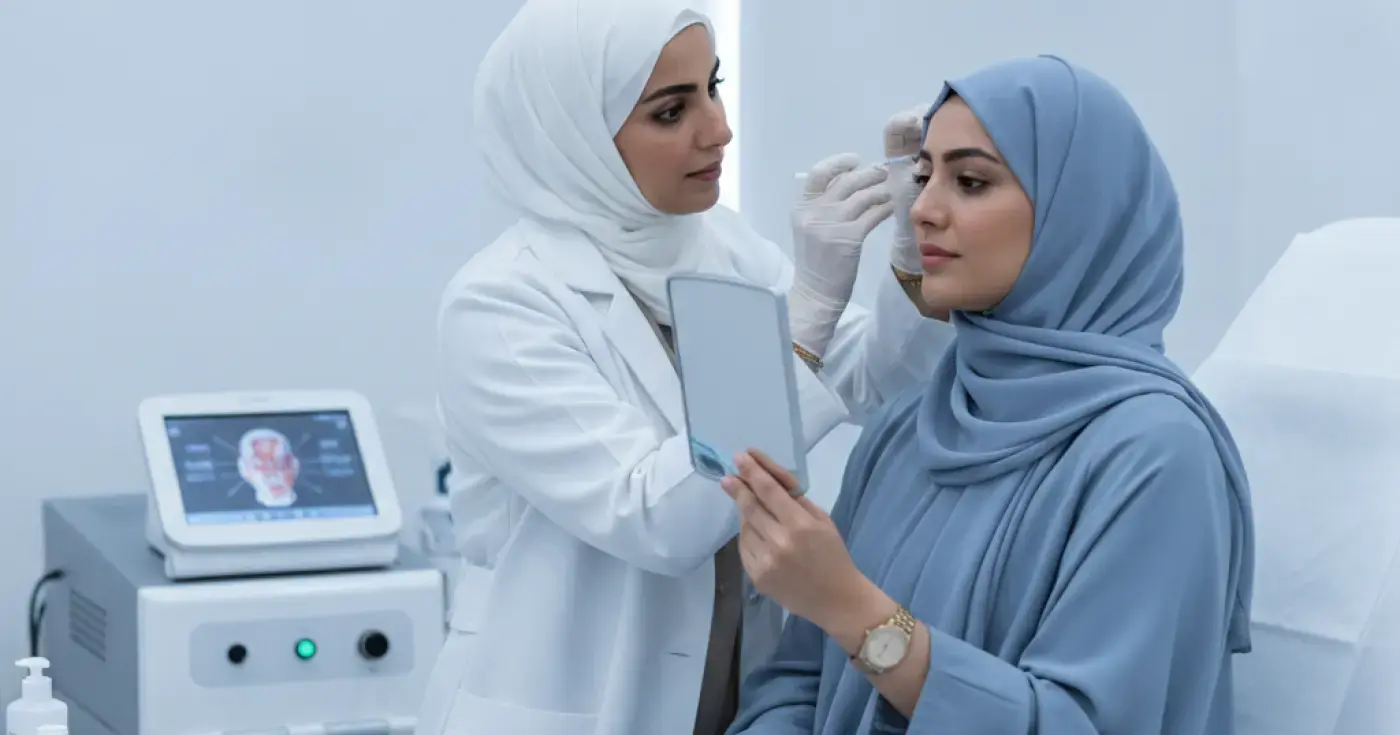
Often referred to as a "lunchtime procedure," Botox injections are quick, straightforward, and require minimal downtime. The clinical process involves:
Your session always begins with a thorough consultation. The specialist examines your facial anatomy and muscle movements, determines the appropriate dosage (units) for each area, and reviews your medical history to rule out any contraindications.
The target areas are thoroughly cleansed and disinfected. Although the pain is minimal and feels like a quick pinch, a topical numbing cream or ice packs can be applied to ensure maximum comfort during the procedure.
Using an ultra-fine needle, the doctor injects precise amounts of Botox into the targeted muscles. The entire injection process takes about 10 to 15 minutes. You can immediately return to your normal daily activities afterward, provided you follow post-care instructions.
Botox results are not instantaneous. You will begin to notice gradual muscle relaxation within 3 to 5 days. The full, optimal effect of the treatment is typically visible 10 to 14 days after the injection session.
Because the body gradually metabolizes the protein, the effects of Botox are temporary. On average, results last between 3 to 6 months. This duration varies based on individual metabolism, muscle strength, lifestyle, and adherence to proper skin care routines. Regular maintenance sessions are recommended to keep the muscles relaxed and prevent new wrinkles from forming.
Botox is highly safe when administered by a licensed, experienced medical professional in a clinical setting. However, minor and temporary side effects can occur, including:
To achieve the best results and minimize the risk of bruising or complications, please follow these medical guidelines:
While Botox is safe for most people, certain individuals should avoid the treatment for medical reasons:
Facial Botox is an excellent preventive and corrective tool to soften expression lines and restore a refreshed, youthful glow. However, the key to achieving natural-looking results and ensuring your safety is choosing a board-certified dermatologist or plastic surgeon licensed by the Saudi Commission for Health Specialties (SCFHS). Avoid non-medical salons or commercial offers that use unverified products. Your health and beauty deserve the highest standards of professional medical care.
Clear, direct answers
Advertisement
Continue exploring
Discover if three PRP sessions are enough for hair and skin. Learn about the standard clinical protocol, expected timelines, and expert pre/post-care tips.
Read article
Learn what happens after a PRP session for face and hair. Discover the recovery timeline, essential post-care tips, normal side effects, and when to see results.
Read article
Discover how Platelet-Rich Plasma (PRP) injections stimulate collagen and rejuvenate skin cells. Learn about the benefits, steps, and expected results.
Read article