
Lahalak Medical PlatformDifferentiate Care
Learn about the importance of early alopecia diagnosis and the key medical tests and blood panels used to identify hair loss types.
Advertisement
Hair loss is a significant aesthetic and psychological concern for many individuals. Among various hair disorders, alopecia stands out as a condition that causes immense anxiety. Alopecia is a broad medical term for hair loss from the scalp or body, ranging from small, circular bald patches to complete hair loss. Early diagnosis is crucial because identifying the exact underlying cause of hair loss allows dermatologists to design a personalized treatment plan that prevents further progression and accelerates healthy hair regrowth.
There are several types of alopecia, classified based on their causes and clinical presentations. Understanding these types is essential to differentiate between temporary shedding and chronic medical conditions:
An autoimmune disorder where the immune system mistakenly attacks hair follicles, causing hair to fall out in highly defined, round patches. It can affect the scalp, beard, eyebrows, or eyelashes.
Commonly known as male or female pattern baldness, this is the most prevalent type of hair loss. It is driven by genetics and the hair follicles' sensitivity to androgenic hormones, specifically dihydrotestosterone (DHT).
This type results from mechanical damage to the hair follicles caused by tight hairstyles, such as braids or tight ponytails, pulled repeatedly over time.
Sudden changes in hair density or scalp health should never be ignored. It is highly recommended to seek a dermatology consultation if you experience any of the following symptoms:
To reach an accurate diagnosis, dermatologists utilize a combination of clinical evaluations and specialized diagnostic tests:
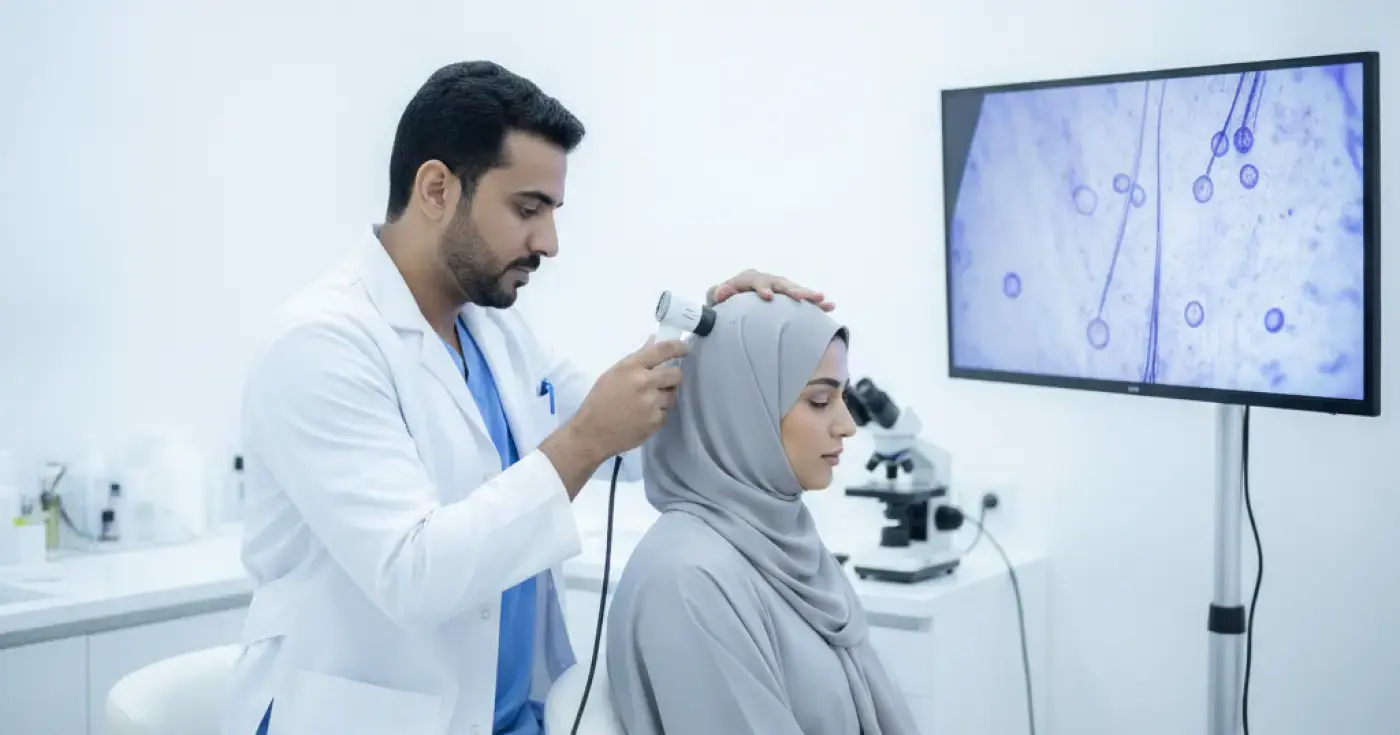
The diagnostic journey begins with a thorough physical examination of the scalp. The dermatologist then uses a high-magnification tool called a trichoscope to inspect the hair shafts and scalp skin. Trichoscopy reveals key diagnostic markers, such as "exclamation mark hairs" characteristic of active alopecia areata, or hair shaft diameter variation typical of androgenetic alopecia.
In complex cases where the cause of hair loss remains unclear, a scalp biopsy may be performed under local anesthesia. A small tissue sample is extracted and examined under a microscope to determine if there is active immune-mediated inflammation surrounding the follicles or if scarring has occurred (as seen in scarring alopecias).
Blood tests are vital to rule out systemic illnesses, nutritional deficiencies, or hormonal imbalances that can trigger or worsen hair loss. Standard diagnostic panels include:
| Diagnostic Test | Primary Objective | Recommended Cases |
|---|---|---|
| Trichoscopy | Non-invasive, high-magnification visualization of hair follicles and scalp | All cases of hair loss and alopecia during the initial visit |
| Scalp Biopsy | Microscopic tissue analysis to detect scarring or deep inflammation | Unclear diagnoses, suspected scarring alopecia, or treatment-resistant cases |
| Blood Panels | Detect systemic, hormonal, or nutritional causes of hair shedding | Diffuse hair loss, suspected hormonal imbalances, or nutritional deficiencies |
Initiating treatment during the early stages of alopecia prevents permanent damage to the hair follicles. In alopecia areata, early intervention with topical anti-inflammatory therapies or localized corticosteroid injections can calm the autoimmune response and reactivate follicles before they atrophy. For androgenetic alopecia, clinically proven treatments help preserve existing hair density and delay progression. Patients can also utilize a hair loss calculator to monitor their hair density and track treatment efficacy over time.
Based on the diagnostic findings, a dermatologist will formulate a comprehensive treatment plan, which may include:
In addition to medical treatments, daily hair care habits play a supportive role in protecting the hair and scalp. It is essential to adopt a gentle scalp care routine, avoiding harsh chemical treatments, excessive heat styling, and tight hairstyles. Maintaining a balanced diet rich in proteins and antioxidants, alongside managing stress levels, can significantly support hair health, as stress is a well-documented trigger for autoimmune hair loss flare-ups.
Alopecia is a highly manageable condition, provided it is diagnosed accurately and early. Avoiding unverified home remedies and consulting a qualified dermatologist ensures you receive evidence-based care tailored to your specific condition, protecting your scalp health and preventing irreversible hair loss.
Clear, direct answers
Advertisement
Continue exploring

Learn why alopecia areata recurs after treatment and discover clinical strategies, lifestyle tips, and advanced therapies to prevent relapse.
Read article
Explore the medical facts about natural remedies for alopecia. Learn about essential oils, supplements, and the risks of scalp irritation.
Read article
A comprehensive medical guide on eyebrow and eyelash alopecia areata, covering autoimmune causes, clinical diagnosis, and advanced treatment options.
Read article