
Lahalak Medical PlatformDifferentiate Care
Learn if skin biopsies leave scars, how different biopsy types affect healing, and expert dermatological tips to minimize scarring and protect your skin.
Advertisement
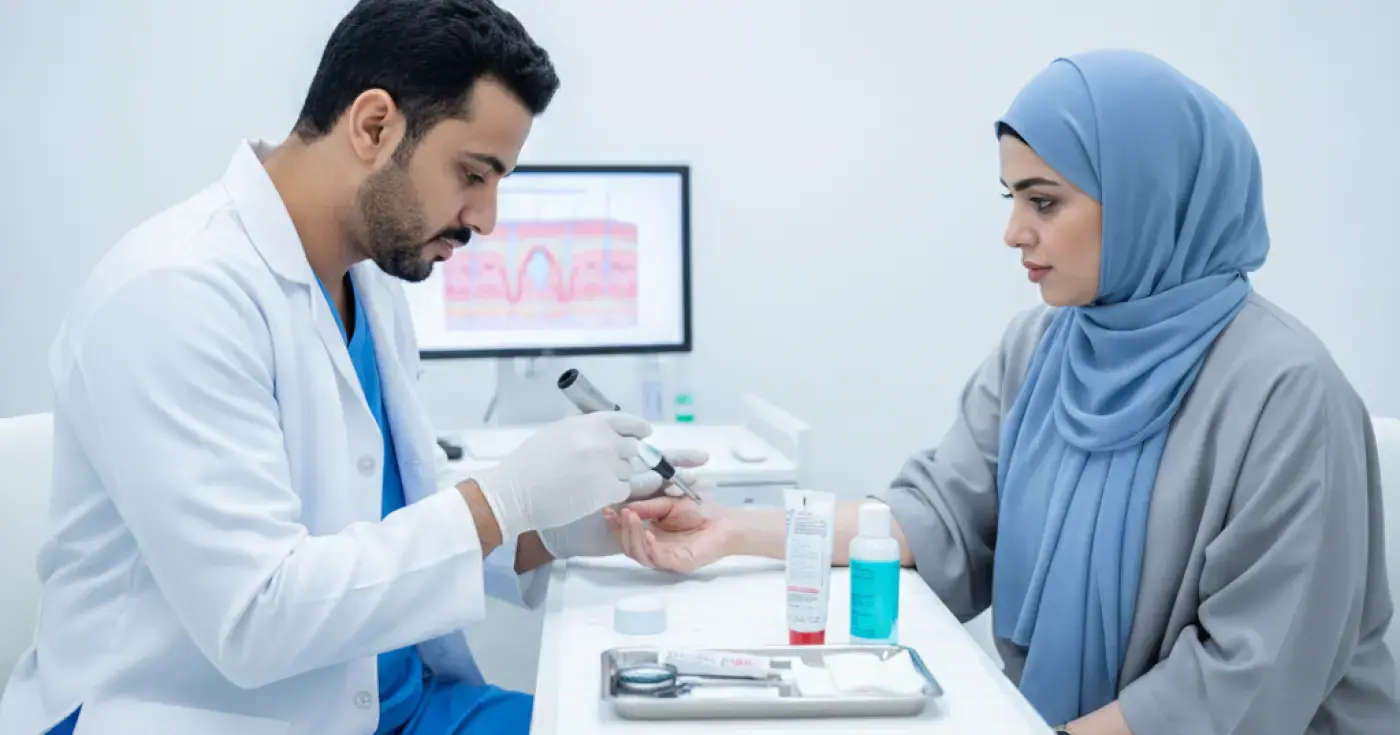
A skin biopsy is a straightforward, safe medical procedure where a dermatologist removes a small sample of skin cells for histopathological examination under a microscope. This procedure is essential for diagnosing various skin conditions, including chronic inflammatory diseases, psoriasis, eczema, and evaluating atypical moles to rule out skin malignancies. Despite its simplicity, patients frequently ask: Will this skin biopsy leave a permanent scar?
From a clinical standpoint, the short answer is yes; any medical procedure that penetrates the dermal layer of the skin will result in some degree of scarring. When the skin is injured, the body initiates a complex wound healing cascade, producing collagen fibers to close the gap and restore structural integrity. Because these new collagen fibers align differently than the surrounding normal skin, a scar forms. However, the size, color, and visibility of the scar vary significantly based on several clinical and technical factors.
The technique used to collect the skin sample depends on the lesion's type, location, and required depth. The following table compares the common types of skin biopsies and their expected impact on scar formation:
| Biopsy Type | Target Skin Depth | Wound Closure Method | Expected Scar Appearance |
|---|---|---|---|
| Shave Biopsy | Superficial (Epidermis & upper dermis) | No sutures required; heals naturally | Flat, slightly hypopigmented or hyperpigmented area |
| Punch Biopsy | Deep (Reaches subcutaneous fat) | Usually closed with one or two sutures | Small, circular or linear scar after suture removal |
| Excisional Biopsy | Full thickness (Entire lesion with margins) | Requires multi-layered surgical sutures | Linear, flat scar; length depends on lesion size |
Scarring is highly individual. Several clinical, genetic, and environmental factors determine the final appearance of a biopsy site:
Understanding the four main stages of wound healing helps patients manage expectations and recognize normal recovery signs:
Proper wound care at home accounts for a significant portion of the cosmetic outcome. Dermatologists recommend the following evidence-based guidelines:
While skin biopsies are highly safe, patients should monitor the site for signs of infection or complications that could worsen scarring. Contact your dermatologist immediately if you experience:
If a biopsy leaves a noticeable scar after healing, several clinical options can be discussed with a board-certified dermatologist to improve its appearance:
In conclusion, undergoing a skin biopsy is a vital diagnostic step that should never be delayed due to fear of scarring; your overall health and safety remain the top priority. Choosing a qualified dermatologist, strictly adhering to post-procedure wound care instructions, and protecting your skin from intense sun exposure are your best assurances for optimal healing and minimal scarring. Consult your doctor about any concerns regarding your skin type and scarring tendencies before the procedure.
Clear, direct answers
Advertisement
Continue exploring
Discover how long a skin biopsy takes, the laboratory steps involved, factors causing delays, and how to interpret your pathology report.
Read article
Learn how to care for your skin biopsy site step-by-step. Discover normal healing signs, infection risks, and tips to minimize scarring.
Read article
Discover what skin biopsy results reveal, from benign lesions to skin cancer, and learn how to understand your pathology report and care for the wound.
Read article