
Lahalak Medical PlatformDifferentiate Care
Can you combine facial, eyebrow, and body laser hair removal in one session? Learn about the clinical safety guidelines, benefits, and risks.
Advertisement
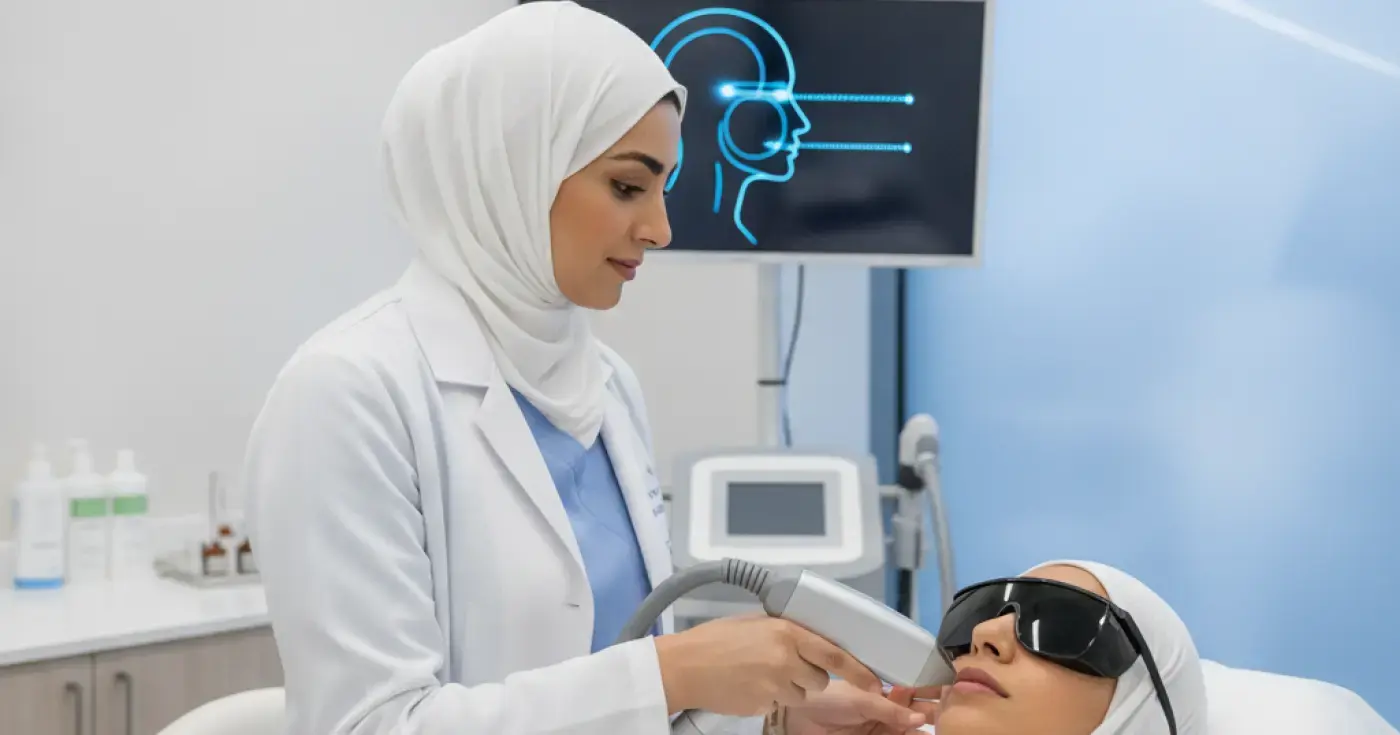
Many women wonder if it is safe and practical to perform laser hair removal for the face and eyebrows during the same clinical session as body laser. From a medical standpoint, the answer is yes; combining these sessions is entirely safe, provided that specific clinical precautions are taken and device settings are adjusted to accommodate the differences between delicate facial skin and thicker body skin.
Before scheduling a combined session, it is crucial to understand that skin characteristics vary significantly across different areas of the body:
When treating the eyebrow area, extreme caution is mandatory. Performing facial laser near the eyes involves specific clinical risks:
The eyes are highly vulnerable to laser radiation. Accidental exposure to laser beams can cause severe ocular damage, including retinal injury or cataracts. Therefore, directing laser beams within the orbital rim is strictly contraindicated.
To protect the eyes during eyebrow laser treatments, practitioners must adhere to the following:
Scheduling combined sessions offers several practical and clinical advantages:
While highly beneficial, combined sessions present certain clinical challenges that must be managed:
Treating large body areas along with the face can cause thermal discomfort. To mitigate this, advanced cooling technologies (such as dynamic cooling devices) must be utilized during the procedure.
Using improper settings on fine facial hair can sometimes stimulate increased hair growth (paradoxical hypertrichosis). Dermatologists must carefully evaluate hair type and adjust the laser wavelength and pulse duration accordingly when transitioning from body to face.
The following table highlights the key differences that must be managed during a combined session:
| Feature | Facial & Eyebrow Laser | Body Laser (Legs, Underarms, Bikini) |
|---|---|---|
| Target Hair Type | Mostly fine, vellus, or hormonal hair | Coarse, dark, and dense hair |
| Skin Sensitivity | Very high; prone to rapid irritation | Moderate to low |
| Preferred Laser Type | Alexandrite (for fine hair) or Nd:YAG (for darker skin tones) | Diode or Alexandrite |
| Expected Pain Level | Moderate to high (due to thin skin and nerve proximity) | Variable (highly manageable with cooling) |
| Initial Recovery Time | 24 to 48 hours (strict sun avoidance) | 24 to 72 hours |
To ensure safety and maximize treatment efficacy, patients must follow proper pre-treatment protocols and post-laser skin care guidelines:
Proper aftercare is essential to soothe the skin and prevent complications:
While mild redness and perifollicular edema (swelling around hair follicles) are normal, seek medical advice if you experience:
Clear, direct answers
Advertisement
Continue exploring
Discover how full body laser hair removal works, when to expect results, preparation tips, and safety guidelines from dermatologists.
Read article
Discover the clinical reasons why laser hair removal results differ, including skin type, hair color, hormonal factors, and device technology.
Read article
Learn the medical facts about laser hair removal efficacy, the difference between permanent removal and reduction, and what to expect from treatments.
Read articleExplore the topic