
Lahalak Medical PlatformDifferentiate Care
Discover the clinical reasons why laser hair removal results differ, including skin type, hair color, hormonal factors, and device technology.

Advertisement
Laser hair removal is one of the most widely performed non-invasive aesthetic procedures globally and in Saudi Arabia. While it offers a highly effective solution for long-term hair reduction, many individuals notice significant differences in their outcomes. Some achieve smooth, hair-free skin after just a few sessions, while others require numerous sessions and still experience persistent hair regrowth.
This variation is not necessarily a reflection of the practitioner's skill or the clinic's quality. Rather, it is driven by a complex interplay of biological, physiological, and technological factors. In this comprehensive clinical guide, we will explore the scientific reasons why laser hair removal results differ so widely from person to person.
To understand why results vary, it is essential to understand the underlying physics. Laser hair removal relies on the principle of "selective photothermolysis." The laser device emits a concentrated beam of light at a specific wavelength, which is selectively absorbed by melanin—the pigment that gives hair and skin its color.
Once absorbed, the light energy is converted into thermal energy (heat). This heat damages the hair follicle and the surrounding stem cells responsible for regeneration, thereby inhibiting or significantly delaying future hair growth without damaging the surrounding skin tissue when appropriate parameters are used.
Several individual characteristics determine how effectively a hair follicle responds to laser energy:
Because the laser targets melanin, the concentration of this pigment within the hair shaft is paramount. Dark hair (black or brown) contains abundant eumelanin, making it an ideal target. Conversely, light hair (blonde, red, grey, or white) contains very little melanin, resulting in poor or negligible response to standard laser treatments.
Furthermore, coarse, thick hair absorbs more heat energy than fine, vellus hair, making thick hair easier to target and eliminate during the initial phases of treatment.
Dermatologists utilize the Fitzpatrick skin phototype scale to categorize skin types and determine safe laser settings. The ideal candidate has very light skin and very dark hair, allowing the laser energy to focus entirely on the hair follicle without being absorbed by the surrounding skin.
In darker skin types, the epidermis contains high concentrations of melanin, which can compete with the hair follicle for laser absorption. This requires specialized wavelengths and longer pulse durations to protect the skin from thermal injury, burns, or pigmentary changes, often requiring more cautious and gradual treatment sessions.
Hormones are the primary regulators of hair growth patterns. Any underlying endocrine imbalance can stimulate new hair growth and compromise laser results. Key conditions include:
If an underlying hormonal issue is suspected, undergoing a hormone profile test is highly recommended before starting or continuing laser therapy.
Different laser technologies are designed for specific skin and hair profiles. Choosing the correct device is critical for safety and efficacy:
| Skin Type (Fitzpatrick Scale) | Hair Color & Texture | Expected Laser Response | Recommended Laser Technology |
|---|---|---|---|
| Light Skin (Types I-III) | Dark and Coarse | Excellent and rapid response | Alexandrite or Diode |
| Medium to Olive Skin (Type IV) | Dark and Coarse | Very good response with careful parameter adjustment | Diode or Nd:YAG |
| Dark Skin (Types V-VI) | Dark and Coarse | Good response; requires high clinical caution | Long-Pulsed Nd:YAG exclusively |
| All Skin Types | Light (Blonde, Red, Grey) or Fine Vellus | Poor to minimal response | Alternative modalities (e.g., electrolysis) preferred |
Hair follicles cycle through three distinct phases: Anagen (active growth), Catagen (regression), and Telogen (resting). Laser energy is only effective during the Anagen phase, when the hair shaft is actively growing and physically connected to the follicle's germinal cells.
Since only about 15% to 20% of hairs are in the Anagen phase at any given time, treatments must be spaced precisely (typically every 4 to 6 weeks) to target newly emerging hairs as they enter this active phase. Missing or delaying sessions allows follicles to transition out of the vulnerable phase, reducing overall treatment efficiency.
Patient compliance with preparation and aftercare instructions significantly influences clinical outcomes and safety:
While laser hair removal is highly safe when performed by qualified professionals, potential side effects can occur. These include transient erythema (redness) and edema (swelling), temporary pigmentary changes (hypopigmentation or hyperpigmentation), and, in rare cases, paradoxical hypertrichosis—a condition where fine hair is stimulated to grow thicker, particularly on the face and neck of female patients, if suboptimal energy levels are used.
Patients should seek a formal dermatologist consultation or consult an endocrinologist if they experience:
In conclusion, it is important to maintain realistic expectations: laser hair removal achieves "long-term hair reduction" rather than absolute, 100% permanent elimination of all hair. Individual results are shaped by genetics, hormonal health, skin type, and strict adherence to clinical protocols. Understanding these variables allows patients to work effectively with their healthcare providers to achieve optimal, safe, and satisfying results.
Clear, direct answers
Advertisement
Continue exploring
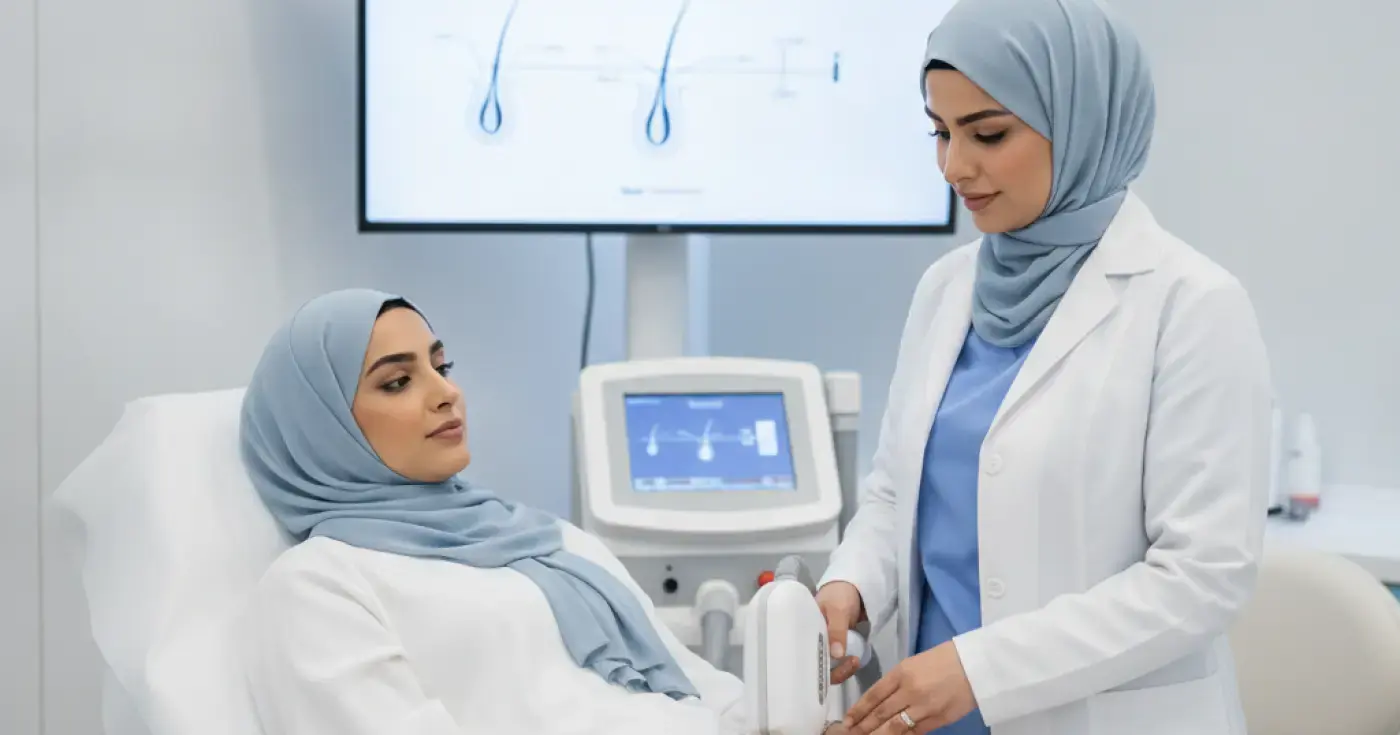
Discover how full body laser hair removal works, when to expect results, preparation tips, and safety guidelines from dermatologists.
Read article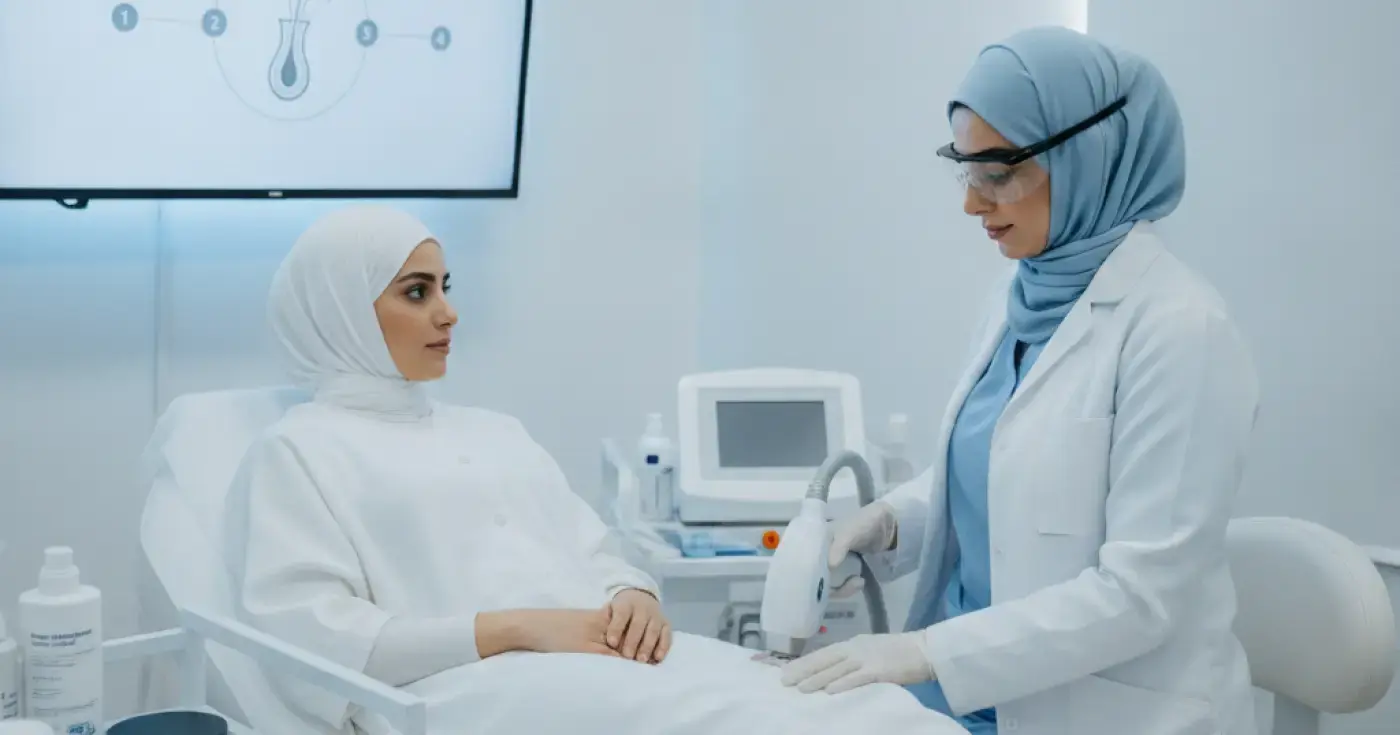
Find out how many laser hair removal sessions your body needs. Learn about factors affecting results, recommended intervals, and expert tips.
Read article
Learn about laser hair removal touch-up (retouch) sessions, their benefits, ideal timing, and how they differ from main sessions for optimal results.
Read articleExplore the topic