
Lahalak Medical PlatformDifferentiate Care
Find out how many laser hair removal sessions your body needs. Learn about factors affecting results, recommended intervals, and expert tips.
Advertisement
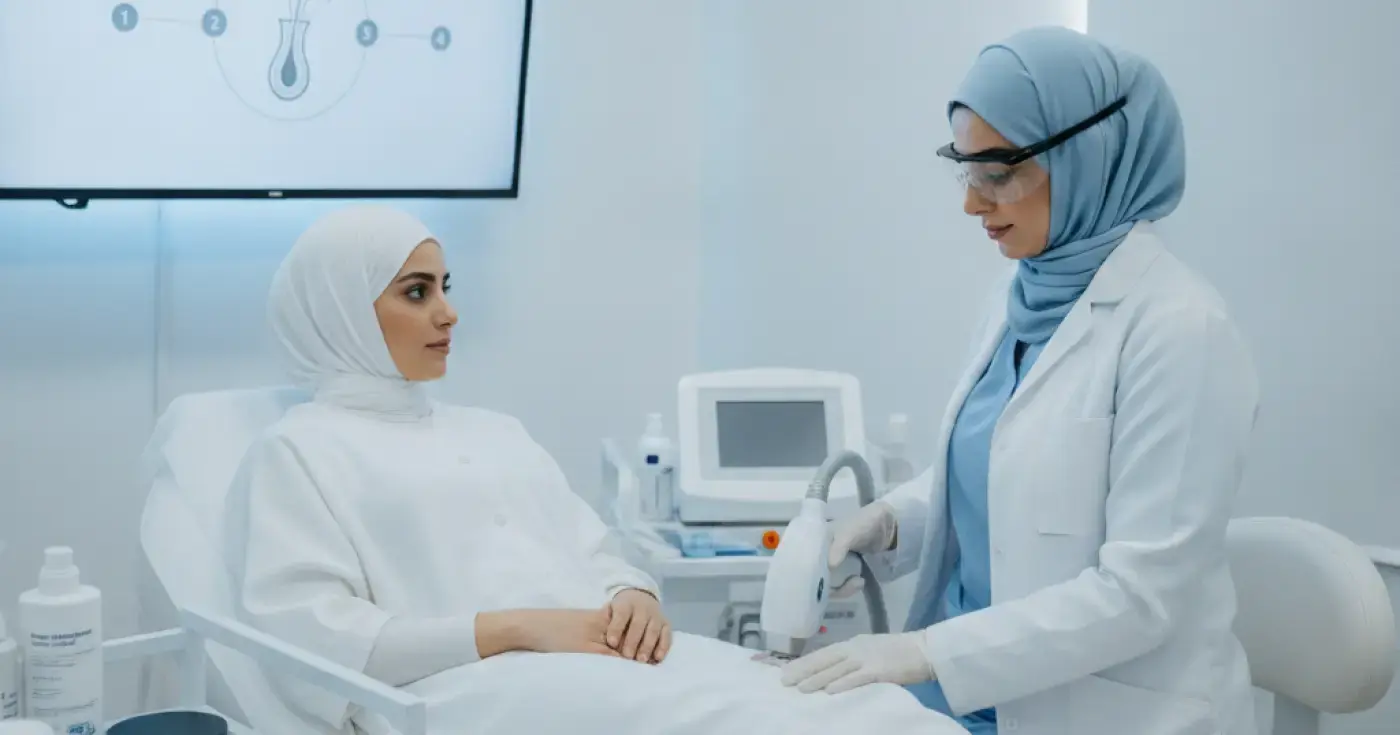
Laser hair removal is one of the most popular non-invasive aesthetic procedures worldwide. It works by emitting concentrated light beams that are absorbed by the melanin (pigment) in the hair follicles. This light energy converts to heat, damaging the follicle and inhibiting future hair growth without harming the surrounding skin tissue.
From a clinical perspective, achieving complete hair clearance in a single session is biologically impossible. This is due to the human hair growth cycle, which consists of three distinct phases:
Since only about 15% to 20% of body hair is in the active Anagen phase at any given time, multiple treatments spaced weeks apart are required to target all follicles as they cycle into this active phase.
On average, most individuals require 6 to 8 treatment sessions to achieve optimal results, resulting in an 80% to 90% reduction in hair growth. However, individual responses vary. In cases of unexpected hair density or resistance, a physician may recommend a hormonal profile test to rule out underlying endocrine conditions such as Polycystic Ovary Syndrome (PCOS).
Several biological and technical factors determine how many sessions you will need:
The contrast between skin tone and hair color is critical. Dark, coarse hair on light skin typically responds fastest. Dermatologists utilize the Fitzpatrick skin phototype scale to assess skin types accurately, selecting the safest and most effective laser wavelength to prevent burns or hyperpigmentation.
Different body areas have unique hair growth cycles. Areas like the underarms and bikini line generally respond faster to laser treatments compared to hormonal areas like the face in women or the back and chest in men.
Hormones, particularly androgens, directly stimulate hair growth. Patients with hormonal imbalances may require more initial sessions and ongoing maintenance treatments to manage new hair follicle activation.
Different laser wavelengths are suited for different skin types:
The following table outlines the typical number of sessions and recommended intervals for various body areas based on standard dermatological guidelines:
| Body Area | Average Expected Sessions | Interval Between Sessions (Weeks) | Expected Response Rate |
|---|---|---|---|
| Face & Neck | 8 - 12 sessions | 4 - 6 weeks | Moderate (Hormone-dependent) |
| Underarms | 6 - 8 sessions | 6 - 8 weeks | Excellent & Fast |
| Bikini Line | 6 - 10 sessions | 6 - 8 weeks | Excellent & Fast |
| Legs & Arms | 6 - 8 sessions | 8 - 10 weeks | Excellent |
| Back & Chest | 8 - 10 sessions | 8 - 10 weeks | Very Good |
To ensure safety and maximize efficacy, patients should adhere to the following pre-treatment instructions:
Mild redness and localized swelling around the hair follicles (perifollicular edema) are normal and typically resolve within a few hours. Proper post-laser skin care is essential for recovery:
Determining the exact number of laser hair removal sessions requires an individualized assessment by a qualified dermatologist. We highly recommend consulting licensed medical clinics equipped with FDA-approved technologies to ensure a safe, customized, and highly effective treatment journey.
Clear, direct answers
Advertisement
Continue exploring
Comprehensive medical guide to laser hyperpigmentation removal in Saudi Arabia. Learn about SFDA-approved technologies, clinical steps, and risks.
Read article
A clinical guide on the safety of laser hair removal after tanning or during your period, comparing Gentle Pro, Splendor X, and Soprano Titanium.
Read article
Learn how to choose the best laser hair removal technology for your skin type in KSA, featuring SFDA regulations and expert dermatological advice.
Read articleExplore the topic