
Lahalak Medical PlatformDifferentiate Care
Learn the medical facts about laser hair removal efficacy, the difference between permanent removal and reduction, and what to expect from treatments.
Advertisement
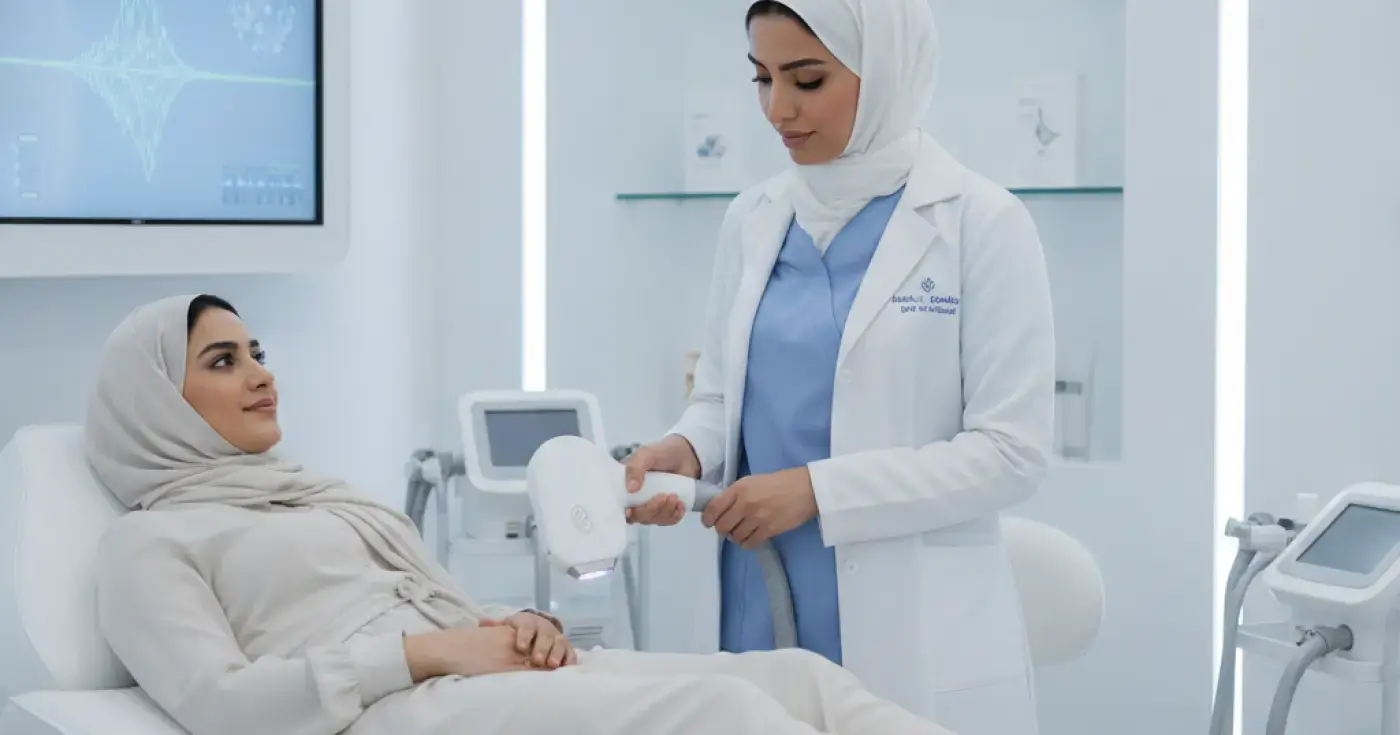
Laser hair removal is one of the most popular cosmetic procedures worldwide, including in Saudi Arabia. However, there is a common misconception regarding its outcomes: many expect 100% permanent hair elimination. In reality, medical science defines the outcome as permanent hair reduction. This comprehensive guide explains how laser technology interacts with hair follicles and what you can realistically expect from your treatment sessions.
Laser technology operates on the principle of selective photothermolysis. The device emits a specific wavelength of light absorbed by the melanin (pigment) in the hair follicle. This light energy converts into heat, damaging or destroying the follicle to inhibit future growth while leaving the surrounding skin undamaged. To ensure safety, dermatologists utilize the Fitzpatrick Skin Phototype Scale to customize device settings and prevent burns or hyperpigmentation.
From a clinical standpoint, laser hair removal does not eliminate 100% of hair permanently. Instead, it achieves "permanent hair reduction". The U.S. Food and Drug Administration (FDA) defines this as a long-term, stable reduction in the number of regrowing hairs after a completed treatment regimen.
This clinical term means that while hair may grow back, it will be significantly finer, lighter, and much slower to grow. In many cases, treated areas remain entirely hair-free for months or even years, requiring only occasional touch-up sessions to maintain results.
Human hair grows in three distinct phases, which explains why multiple sessions are necessary:
Since only about 15% to 20% of body hair is in the Anagen phase at any given time, a series of 6 to 8 sessions spaced several weeks apart is required to target all follicles effectively.
The following table outlines expected laser treatment efficacy based on skin phototype and hair characteristics:
| Skin Type (Fitzpatrick Scale) | Ideal Hair Color | Recommended Laser Type | Expected Efficacy Level |
|---|---|---|---|
| Very Fair Skin (Type I-II) | Dark (Black/Brown) | Alexandrite (755 nm) | Excellent (Fast, highly visible reduction) |
| Medium/Olive Skin (Type III-IV) | Dark | Diode (810 nm) or Alexandrite with caution | Very Good to Excellent |
| Dark Skin (Type V-VI) | Dark | Long-pulsed Nd:YAG (1064 nm) | Very Good (Safe for melanocytes) |
| All Skin Types | Light/Blonde/Red/White | Generally ineffective | Very Low (Insufficient target pigment) |
Individual results vary based on several biological and technical factors:
Hormones are primary drivers of hair growth. Conditions like Polycystic Ovary Syndrome (PCOS) cause elevated androgen levels, stimulating new hair follicle development. In such cases, undergoing a hormone panel for PCOS and managing the underlying condition medically is essential to achieving optimal laser results.
Different laser systems are tailored to specific skin and hair profiles:
Adhering to a strict clinical protocol ensures safety and enhances treatment outcomes:
Proper post-laser skin care is vital. Apply prescribed soothing and anti-inflammatory creams, avoid hot showers, saunas, and swimming for 48 hours, and consistently apply broad-spectrum sunscreen to protect sensitive skin from post-inflammatory hyperpigmentation.
While laser hair removal is highly safe when performed by qualified professionals, temporary side effects like mild redness and perifollicular edema (swelling around hair follicles) are common and typically resolve within hours. However, improper settings can lead to serious complications, including superficial burns, hyperpigmentation, hypopigmentation, or paradoxical hypertrichosis (stimulated hair growth in adjacent areas).
Always consult a board-certified dermatologist before beginning laser treatments. A professional evaluation ensures that you have no contraindications (such as taking photosensitizing medications) and helps determine the safest, most effective laser parameters for your unique skin and hair type.
Clear, direct answers
Advertisement
Continue exploring
Discover the clinical reasons why laser hair removal results differ, including skin type, hair color, hormonal factors, and device technology.
Read article
Discover how full body laser hair removal works, when to expect results, preparation tips, and safety guidelines from dermatologists.
Read article
Learn about laser hair removal touch-up (retouch) sessions, their benefits, ideal timing, and how they differ from main sessions for optimal results.
Read articleExplore the topic