
Lahalak Medical PlatformDifferentiate Care
Learn why changes in birthmark or mole shape, size, or color require a dermatologist visit. Discover the ABCDE rule and skin self-exam tips.
Advertisement
Birthmarks and moles are common skin features that appear in most individuals. Birthmarks are typically present at birth or develop shortly after, while acquired moles appear during childhood and young adulthood. In the vast majority of cases, these skin spots are completely benign and pose no health risks. However, monitoring these lesions and understanding their characteristics is a fundamental step in preventing serious skin conditions, particularly skin cancers such as melanoma.
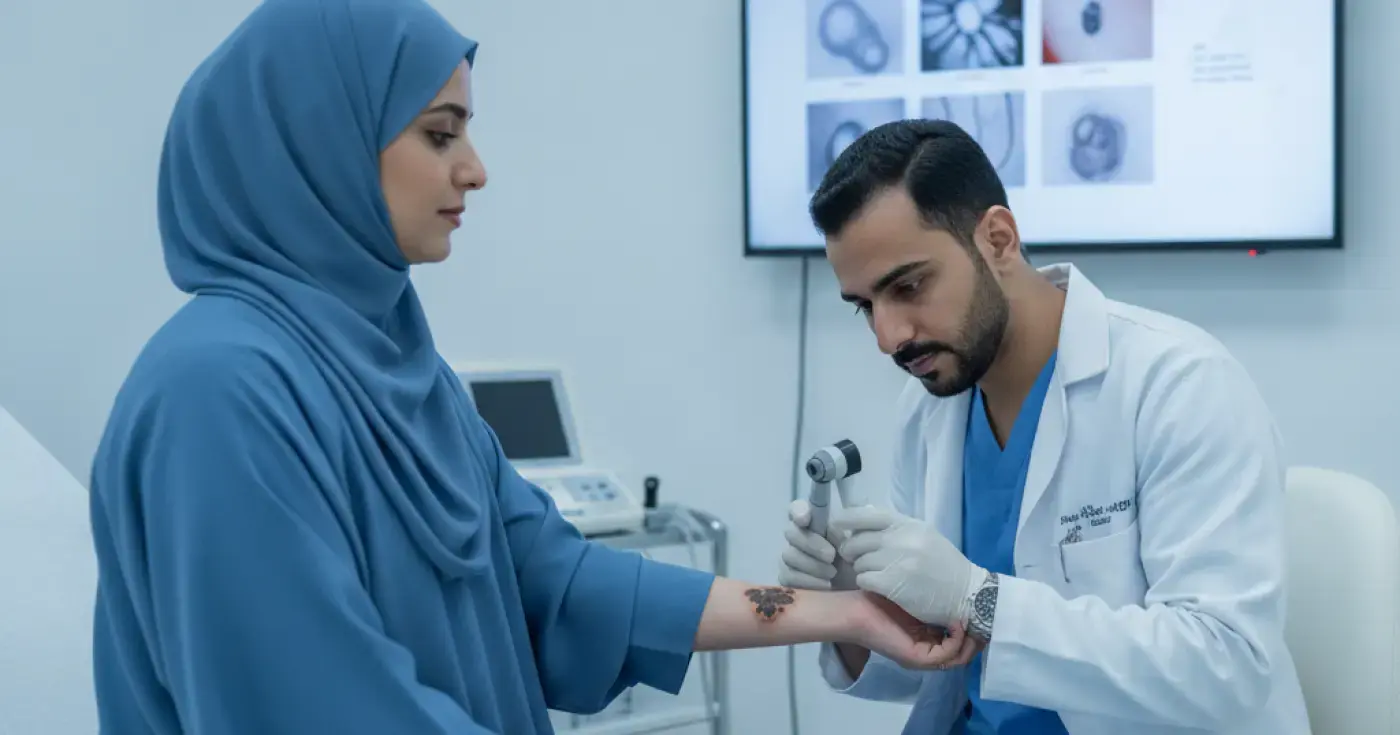
Yes, absolutely. Any noticeable change in the shape, size, color, or elevation of a birthmark or mole is a clinical indication to schedule an appointment with a dermatologist for a professional mole dermoscopy exam. While many changes can be benign or triggered by natural factors like hormonal fluctuations during pregnancy or puberty, sudden or progressive changes can be an early warning sign of atypical cell development. Early detection remains the cornerstone of successful management and prevention.
Dermatologists have established a simple, globally recognized guide to help individuals perform a regular skin self-exam and identify warning signs that require professional medical evaluation. This guide is summarized by the acronym ABCDE:
Normal, benign moles are usually symmetrical. If you draw an imaginary line through the middle of the mole, both halves should match. If the two halves do not look the same in shape, thickness, or elevation, it is considered asymmetrical and should be evaluated.
Benign moles typically have smooth, even, and well-defined borders. If the borders of your birthmark or mole become irregular, scalloped, notched, blurred, or seem to fade into the surrounding skin, this is a warning sign.
A safe, normal mole is usually a single, uniform shade of brown, tan, or black. If a mole displays multiple colors, shades, or has patches of red, pink, blue, white, or gray, this color variation warrants professional clinical examination.
Benign moles are generally small. If a mole or birthmark has a diameter larger than 6 millimeters (about the size of a pencil eraser), it requires closer monitoring, although some melanomas can be detected at a smaller size.
This is the most critical factor. Evolving refers to any change in the mole over time. This includes increases in size, changes in height, or the sudden appearance of new symptoms such as itching, bleeding, or crusting.
In addition to the ABCDE criteria, certain clinical symptoms should prompt an immediate visit to a dermatologist if they occur alongside changes in a birthmark:
| Feature | Normal Mole (Benign) | Suspicious Change (Requires Exam) |
|---|---|---|
| Symmetry | Symmetrical and regular shape | Asymmetrical (halves do not match) |
| Border | Smooth, distinct, and well-defined | Irregular, scalloped, or blurred |
| Color | Single, uniform color | Multiple colors or shades |
| Size | Stable, usually under 6 mm | Growing or larger than 6 mm |
| Symptoms | No itching, pain, or bleeding | Itching, bleeding, or crusting |
When you visit a clinic to check a changing birthmark or mole, the dermatologist will perform a series of diagnostic steps to ensure your safety:
Dermatologists recommend conducting a thorough skin self-exam once a month. This simple habit helps you understand your skin's patterns and catch any changes early. To do this effectively, follow these steps:
To protect your skin and minimize the risk of cellular damage or mole transformation, follow these preventive guidelines:
A change in the shape or color of a birthmark is not definitive proof of a serious condition, but it is a crucial signal from your body to seek professional evaluation. Do not hesitate to consult a qualified dermatologist if you notice any of the warning signs described in the ABCDE rule. Early detection provides peace of mind and ensures timely, effective medical intervention to protect your health and skin.
Clear, direct answers
Advertisement
Continue exploring
A comprehensive medical guide on laser and surgical birthmark removal. Learn about pre-treatment preparation, procedure steps, and essential post-care.
Read article
Learn if vascular and pigmented birthmarks can be permanently removed, the latest medical treatments like lasers and surgery, and post-care tips.
Read article
A medical guide on pediatric birthmarks, identifying red flags, and exploring modern laser and surgical treatment options in Saudi Arabia.
Read article