
Lahalak Medical PlatformDifferentiate Care
Discover the medical differences between Botox and dermal fillers. Learn about their uses, target areas, longevity, and safety from clinical experts.

Advertisement
Non-surgical aesthetic treatments have become increasingly popular in Saudi Arabia for restoring skin vitality and combating signs of aging. Among the most common and widely performed procedures are Botox and dermal fillers. Although many patients confuse the two or assume they perform the exact same function, there are fundamental scientific differences between them regarding composition, mechanism of action, target areas, and clinical outcomes.
This comprehensive medical guide aims to clarify the differences between Botox and fillers based on established scientific principles approved by the Saudi Food and Drug Authority (SFDA) and global health organizations, helping you understand the best option for your skin concerns in consultation with your specialist.
Botox is the widely recognized brand name for a purified natural protein derived from the bacterium Clostridium botulinum, scientifically known as Botulinum Toxin Type A. It acts as a temporary muscle relaxant by blocking nerve signals to the tiny muscles in the face, thereby preventing the muscle contractions that lead to dynamic wrinkles.
Dynamic wrinkles are those lines that appear and disappear with daily facial expressions, such as smiling, frowning, or squinting. Over time, repeated muscle movements cause these temporary lines to become permanently etched into the skin. Botox provides these muscles with a temporary period of relaxation, allowing the overlying skin to smooth out and recover.
Unlike Botox, which relaxes muscles, dermal fillers are injectable substances designed to restore lost volume, plump thin areas, and smooth out static wrinkles. Fillers are made from safe natural or synthetic materials, the most common being Hyaluronic Acid (HA). HA is a naturally occurring substance in the skin known for its exceptional ability to attract and retain water molecules, providing hydration and volume.
Dermal fillers target static wrinkles, which remain visible on the face even when the muscles are completely relaxed. These wrinkles result from the natural loss of collagen, elastin, and subcutaneous fat due to aging and gravity. Fillers physically lift and plump the skin from within to restore youthful contours.
To easily understand the core differences between the two treatments, the following table summarizes the clinical comparison:
| Feature | Botox (Botulinum Toxin) | Dermal Fillers |
|---|---|---|
| Active Ingredient | Purified Botulinum Toxin Type A | Hyaluronic Acid (most common) or Calcium Hydroxylapatite |
| Mechanism of Action | Temporarily relaxes targeted facial muscles | Physically restores volume and plumps tissues |
| Target Wrinkle Type | Dynamic wrinkles (visible during expressions) | Static wrinkles (visible at rest) and volume loss |
| Common Areas | Forehead, between brows, around eyes | Lips, cheeks, nasolabial folds, under eyes |
| Onset of Results | Appears within 3 to 5 days | Immediate, fully settling within 2 weeks |
| Duration of Results | Typically lasts 3 to 6 months | Typically lasts 6 to 18 months (depending on product) |
| Reversibility | Wears off gradually over time | Can be dissolved immediately with Hyaluronidase |
Prior to any aesthetic treatment, clinical safety requires a thorough consultation with a dermatologist or plastic surgeon licensed by the Saudi Commission for Health Specialties (SCFHS). The physician will perform a detailed skin assessment, review your medical history, and establish a personalized treatment plan.
Both Botox and dermal fillers are highly safe when administered by a qualified, board-certified medical specialist in a sterile clinical environment. However, as with any medical injection, temporary side effects and rare risks can occur:
In many cases, patients benefit most from a combination of both treatments. Often referred to as a "liquid facelift," combining Botox and fillers allows the clinician to address multiple signs of aging simultaneously. Botox smooths out expression lines in the upper face, while fillers restore volume and structure to the lower face, providing a harmonious, natural-looking rejuvenation without surgical downtime.
To ensure optimal results and minimize the risk of complications, dermatologists recommend adhering to the following post-care guidelines:
Clear, direct answers
Advertisement
Continue exploring

A comprehensive medical guide on Botox injections for frown lines between the eyebrows, including benefits, procedure steps, and post-care tips.
Read article
Learn how Botox treats under-eye lines and crow's feet. Discover results, side effects, and expert care tips in this comprehensive medical guide.
Read article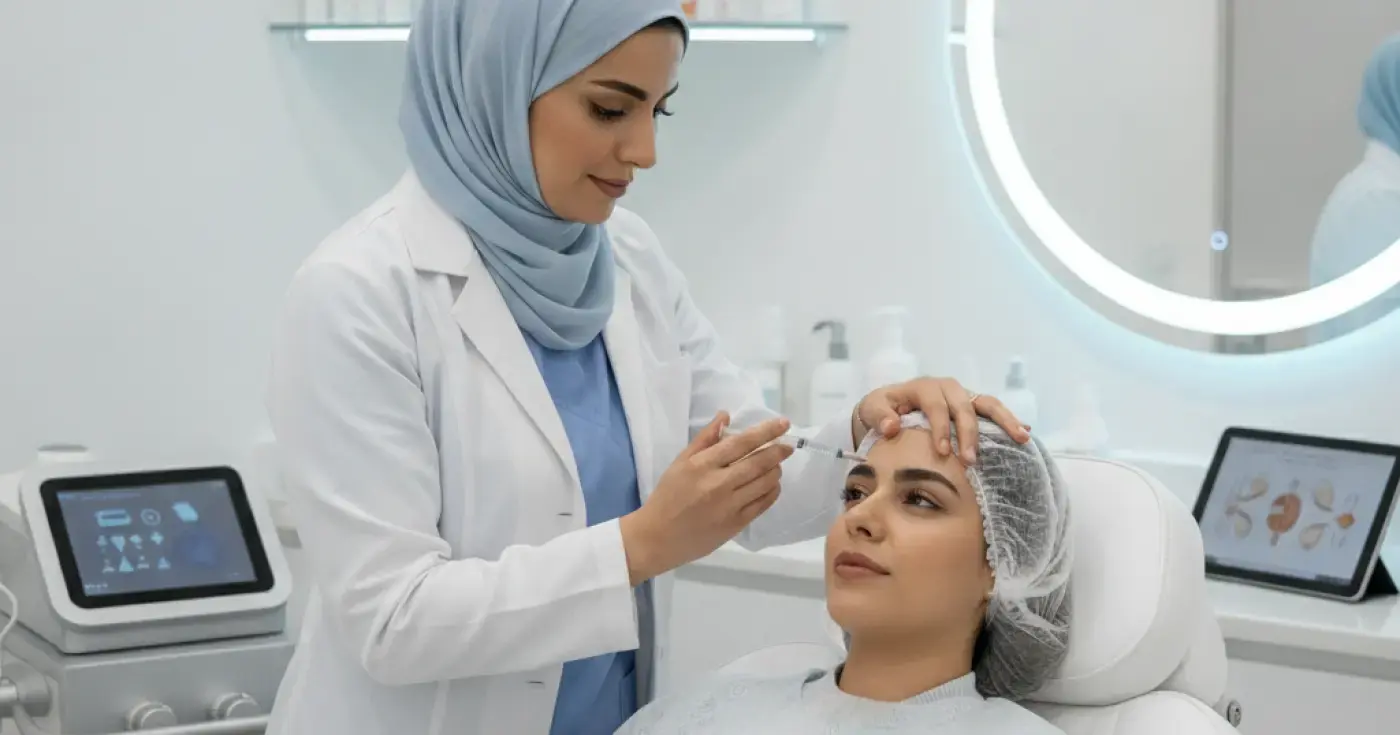
Learn when forehead Botox results appear, factors affecting the timeline, and essential post-care tips for long-lasting, natural results.
Read article