
Lahalak Medical PlatformDifferentiate Care
Learn about benign skin lumps, common types like lipomas and cysts, and the warning signs that require an immediate visit to a dermatologist.

Advertisement
Skin lumps are highly common complaints in dermatology clinics. These lumps appear in various shapes and sizes across different areas of the body, often causing anxiety for patients who worry they might be a sign of cancer. However, the vast majority of these skin lumps are benign (non-cancerous) and pose no threat to life. This comprehensive medical guide aims to shed light on benign skin lumps, their most common types, how to differentiate them from more serious conditions, and when to seek professional medical advice.
Benign skin lumps are non-cancerous growths of cells within the different layers of the skin (epidermis, dermis, or subcutaneous tissue). This means they grow slowly, do not invade neighboring tissues, and do not spread to other parts of the body. These lumps can develop due to an accumulation of fat cells, fibrous tissue, blood vessels, or clogged sebaceous glands and hair follicles.
There are several types of benign skin lumps, differing in their origin and clinical appearance. Here are the most common types in detail:
Epidermoid cysts are small, closed sacs that develop just beneath the skin. They contain keratin, a protein substance that can sometimes be thick and foul-smelling. These cysts commonly appear on the face, neck, and back, and are characterized by a small central punctum (blackhead-like opening). They are usually painless unless they become inflamed or infected.
A lipoma is a soft, fatty lump that grows slowly under the skin. It feels doughy and moves easily when touched with a finger. Lipomas most frequently appear on the shoulders, neck, back, and arms. They are generally painless unless they grow large enough to press on nearby nerves.
Hemangiomas are caused by an abnormal buildup of blood vessels near the skin's surface. They appear as red or purple bumps, often referred to as "cherry angiomas" when they develop in adults. They are completely benign and do not require treatment unless for cosmetic reasons or if they bleed repeatedly.
These are small, firm, red-to-brown bumps that typically appear on the legs. They are caused by an accumulation of fibrous tissue under the skin, often developing after a minor injury like an insect bite or a small cut. When pinched from the sides, a dermatofibroma tends to dimple inward rather than protrude.
Skin tags are small, harmless growths of skin that hang off the skin by a tiny stalk. They commonly appear in friction areas such as the neck, armpits, and groin. While entirely harmless, they can cause discomfort when snagged by clothing or jewelry.
Although a definitive diagnosis can only be made by a specialist, there are general characteristics that help in the initial differentiation between benign and malignant lumps. These characteristics are based on the globally recognized ABCDE rule for monitoring skin lesions:
| Clinical Feature | Benign Skin Lumps | Malignant Skin Lumps (Suspicious) |
|---|---|---|
| Growth Rate | Very slow or stops after reaching a certain size | Rapid and continuous growth |
| Texture & Mobility | Soft or rubbery, moves easily under the skin | Hard, firm, and fixed to deeper tissues |
| Borders | Regular, round, and clearly defined | Irregular, jagged, and poorly defined |
| Associated Symptoms | Usually painless, no spontaneous bleeding | May cause severe itching, pain, or bleed easily |
| Color | Homogeneous and uniform | Variegated (multiple colors) and changing |
While most skin lumps are benign, certain warning signs require booking a routine skin check with a specialist to rule out serious conditions. Consult a dermatologist immediately if you notice any of the following:
During your visit, the dermatologist will perform a detailed physical examination of the lump using a specialized magnifying tool called a dermoscope. If the doctor suspects any abnormal cellular activity, they will recommend a skin biopsy. A biopsy involves taking a small sample of the lump under local anesthesia and sending it to a pathology lab for microscopic analysis, which is the only way to guarantee an accurate diagnosis.
In many cases, benign skin lumps do not require any medical treatment if they do not cause discomfort. However, a doctor may recommend surgical excision if the lump is painful, becomes repeatedly infected, restricts movement, or for cosmetic preferences. Treatment options include:
To protect your skin health and detect any changes early, dermatologists recommend incorporating the following steps into your skincare routine and general health habits:
Clear, direct answers
Advertisement
Continue exploring

Learn about subcutaneous lipomas (benign fatty lumps), their causes, how they are diagnosed, and the latest surgical and non-surgical removal options.
Read article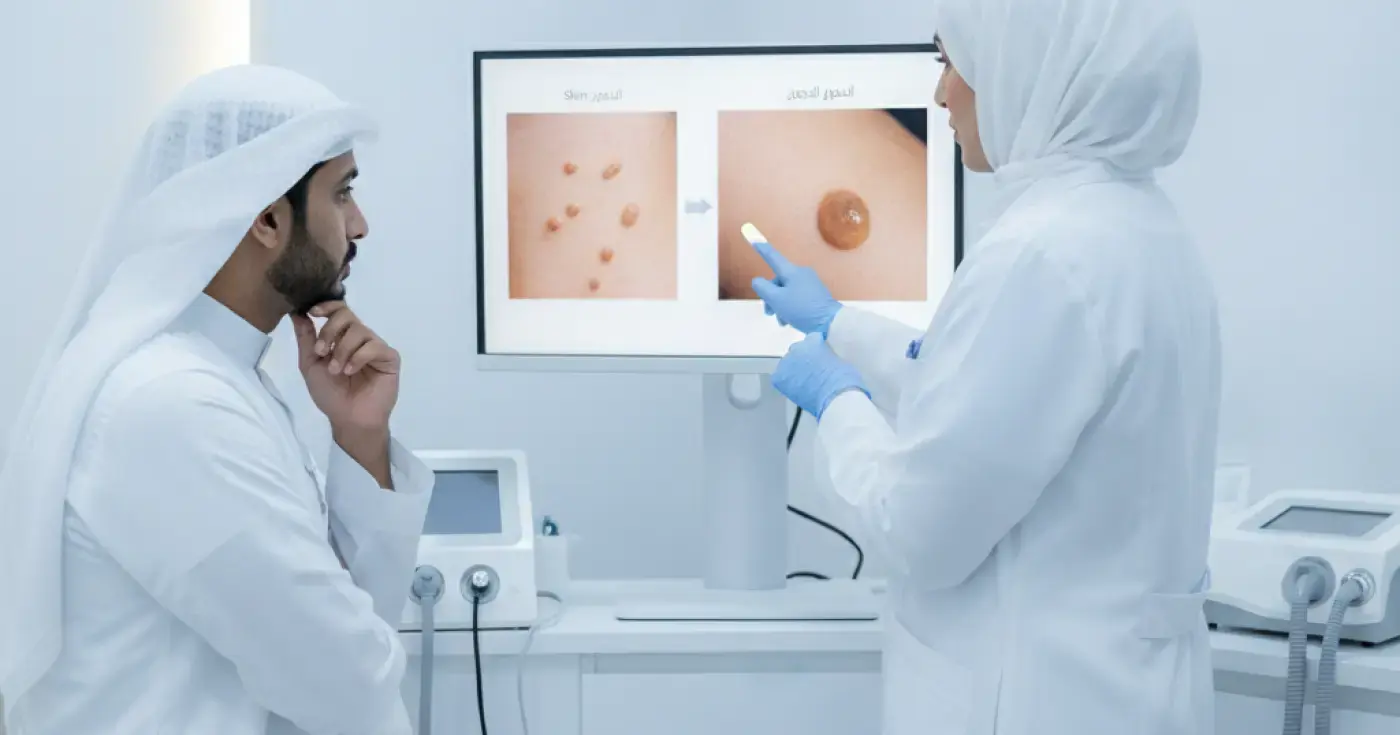
Understand the differences between skin tags and benign skin tumors. Learn about symptoms, causes, removal methods, and when to see a dermatologist.
Read article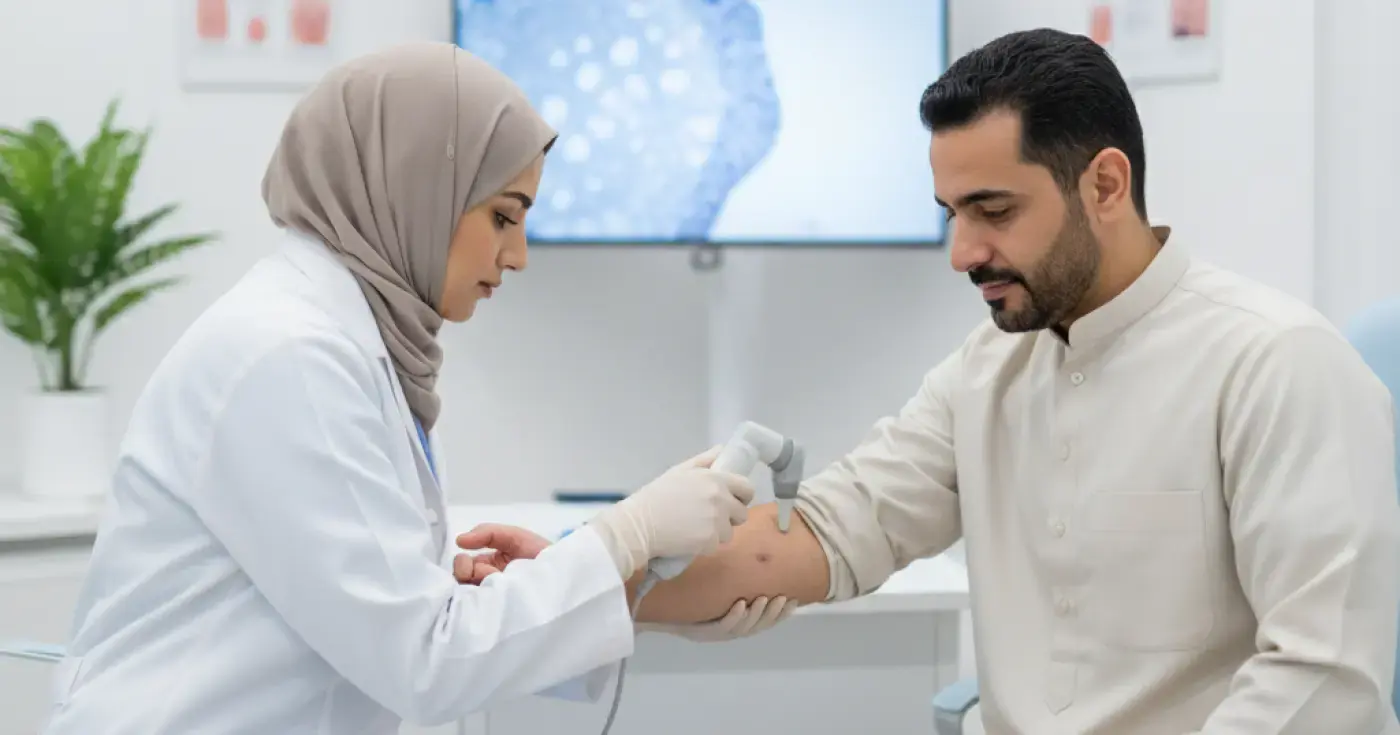
Find out when benign skin tumors require removal, the best clinical methods available, and essential post-procedure recovery tips.
Read article