Lahalak Medical Platform
Learn when episiotomy can be avoided during natural birth, medical indications for the procedure, and evidence-based tips to protect the perineum.
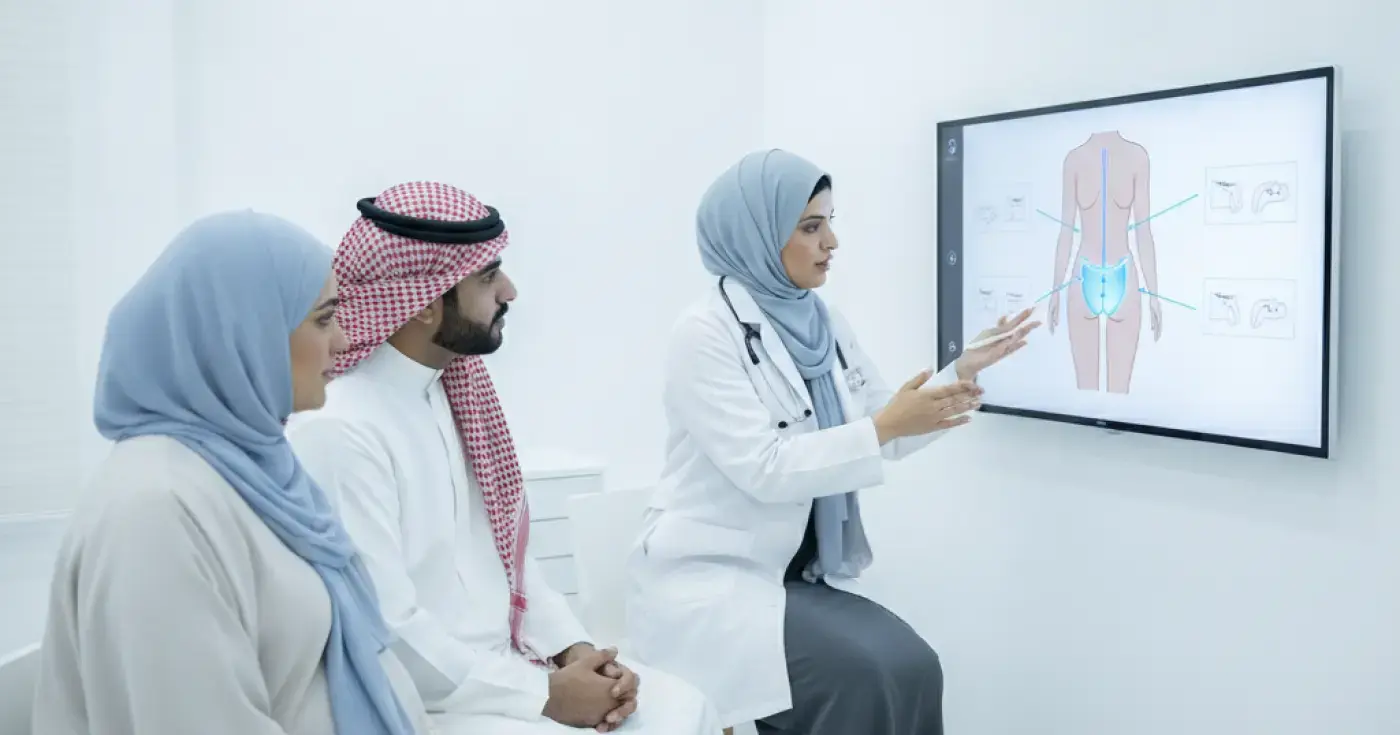
Childbirth is a unique journey that requires optimal medical care focused on maternal and neonatal safety. In past decades, performing an episiotomy was a routine practice for most first-time mothers. However, modern evidence-based obstetric standards, supported by global medical bodies and the Saudi Ministry of Health, confirm that natural vaginal birth without routine episiotomy is safe and attainable for most women.
Current clinical guidance stresses restricting surgical incisions to clear medical indications, thereby minimizing unnecessary interventions and promoting smoother postpartum recovery.
An episiotomy is a surgical incision made in the perineum—the tissue between the vaginal opening and the anus—to enlarge the vaginal outlet during delivery.
It is important to distinguish between a surgical episiotomy and a spontaneous perineal tear:
Historical practices assumed that routine episiotomy prevented severe pelvic floor damage. However, high-quality clinical research demonstrates that routine episiotomy does not prevent deep tearing and may increase pain, blood loss, and healing time.
Consequently, healthcare guidelines clearly state that being a first-time mother (nulliparous) is not a clinical justification for performing an episiotomy.
Obstetricians and midwives evaluate the need for an episiotomy during the pushing stage. Common indications include:
| Criteria | Surgical Episiotomy | Spontaneous Natural Tear |
|---|---|---|
| Type of Injury | Controlled, straight incision | Natural tissue stretching and fraying |
| Postpartum Pain | Generally higher and lasts longer | Usually milder and resolves quicker |
| Healing Time | Requires precise suturing; 3–4 weeks | Heals rapidly; minor tears may not require sutures |
| Sphincter Risk | Higher risk of extension to 3rd/4th degree if midline | Lower incidence of deep sphincter involvement |
Several prenatal and intrapartum strategies can enhance perineal elasticity and reduce surgical intervention:
Starting perineal massage around 34 to 35 weeks of pregnancy for 5 minutes daily using safe natural oils improves tissue flexibility and reduces suture requirements in first-time mothers.
Applying warm, moist compresses to the perineum during the second stage of labor relaxes tissues and increases local blood flow, significantly decreasing severe trauma.
Adopting side-lying or all-fours positions reduces direct mechanical pressure on the perineum compared to traditional back-lying (lithotomy) positions.
Following midwife or physician guidance to push slowly as the baby's head crowns allows gradual tissue stretching.
Under Saudi Ministry of Health patient care guidelines, expectant mothers have the right to discuss their birth plan during antenatal visits, express preferences regarding episiotomy, and receive clear explanations before any non-emergency intervention is performed.
Proper perineal care aids healing whether a surgical cut or natural tear occurred:
Seek immediate medical attention if experiencing high fever, foul-smelling discharge, worsening pain, or wound separation.
Vaginal birth without episiotomy is a practical and safe option for most deliveries. Prenatal preparation, effective clinical communication, and evidence-based intrapartum care contribute to a healthy delivery experience for mother and child.
Short answers that help clarify the key points related to this article.
Subscribe for new educational pregnancy and birth content from LahaLak.
Compare hospitals and prices by city and birth type, then continue to booking with clear steps.
From LahaLak guide
Medical article
A medical guide to first-time vaginal birth: understanding the delivery phase, pain relief choices, episiotomy facts, and immediate postpartum care.
Read article
Medical article
Learn about vaginal birth recovery stages, lochia bleeding, perineal care, suture healing, and red flag symptoms requiring prompt medical advice.
Read article
Medical article
Learn about epidural analgesia during labor, its benefits, side effects, and how it impacts labor progression and delivery decisions.
Read articleConnected next steps