
Lahalak Medical Platform
Learn about the recommended inter-pregnancy interval after a C-section, uterine scar healing, and considerations for subsequent delivery options.

The experience of a cesarean delivery represents a major physiological and surgical milestone in a woman's reproductive journey. Unlike a non-operative delivery, a cesarean birth requires both external abdominal and internal uterine surgical repair, placing distinct demands on the body's natural healing mechanisms. When a family begins to consider expanding, planning a second pregnancy after a first C-section involves evaluating physical recovery, emotional readiness, and systemic health status. Understanding the optimal interval between births is one of the most frequent and crucial consultations in contemporary obstetrics and gynecology.
In the context of the Saudi healthcare system, primary care centers and specialized obstetric clinics place strong emphasis on maternal health education, preconception counseling, and structured family planning. These services aim to provide parents with evidence-based guidance that honors both their personal family goals and clinical safety standards. Recognizing how time impacts tissue recovery, metabolic replenishment, and future delivery options empowers mothers to make informed choices in collaboration with their obstetric care teams. Adequate birth spacing is not merely a restriction; it is a supportive health strategy designed to optimize maternal and neonatal outcomes.
Over recent years, public health initiatives across the Kingdom of Saudi Arabia have significantly enhanced maternal awareness regarding interval spacing after surgical births. Decisions regarding subsequent pregnancies are increasingly guided by individualized clinical reviews rather than informal assumptions or generalized timelines. Obstetricians evaluate prior surgical reports, recovery complications, and baseline health parameters to help mothers determine when their bodies are functionally ready to support another gestation.
Proactive family planning allows the female body adequate time to restore its structural integrity and physiological equilibrium before facing the demands of another pregnancy. The uterus requires a continuous period of healing to ensure scar strength, while the systemic circulation and nutritional stores require replenishment following the metabolic costs of pregnancy, blood loss during surgery, and subsequent lactation. Preparing early establishes a solid foundation for a healthy second pregnancy.
When reviewing medical recommendations regarding birth spacing after a cesarean section, patients frequently encounter terminology that can seem confusing or interchangeable. In clinical obstetrics, clear definitions exist to differentiate the exact timeframes evaluated by researchers and physicians. Distinguishing between the inter-pregnancy interval and the inter-delivery interval is essential for accurately interpreting risk evaluations and applying clinical guidelines to your personal birth plan.
The inter-pregnancy interval (IPI) refers specifically to the duration of time measured from the date of the previous delivery to the date of conception of the subsequent pregnancy. In contrast, the inter-delivery interval (IDI) measures the entire span of time elapsed between the date of the previous birth and the date of the subsequent birth. While IPI reflects the precise recovery window available to the body before a new gestation begins, IDI incorporates the standard nine-month gestational period and is predominantly utilized by clinicians when assessing delivery options, such as a trial of labor after cesarean.
| Medical Term | Calculation Method | Clinical Significance |
|---|---|---|
| Inter-Pregnancy Interval (IPI) | Date of prior delivery to date of next conception | Measures tissue healing, uterine scar maturation, and maternal nutritional replenishment. |
| Inter-Delivery Interval (IDI) | Date of prior birth to date of next birth | Assesses overall uterine integrity and eligibility for a trial of labor after cesarean (TOLAC). |
When clinical guidelines advise waiting a specific number of months before trying to conceive again, they are referencing the inter-pregnancy interval. For instance, an advised interval of 18 months means waiting one full year and a half from the date of the C-section before becoming pregnant again. This dedicated window provides the internal uterine environment uninterrupted time to undergo microscopic cellular remodeling without the added distension and hormonal shifts of a new pregnancy.
The inter-delivery interval represents the cumulative timeline between two deliveries. If a woman conceives 12 months after her previous C-section, her inter-delivery interval at full term will be approximately 21 months. Obstetric care providers rely heavily on the IDI when evaluating the mechanical strength of the lower uterine segment during labor planning, as a longer total interval between deliveries provides greater structural stability during uterine contractions.
Recovery following a cesarean birth involves two main physiological processes: structural repair of the incised uterine tissue and systemic restitution of maternal physiological reserves. A cesarean delivery involves a full-thickness surgical incision through the abdominal wall and the muscular layer of the uterus (myometrium). Healing at the uterine level extends far beyond the closure of the skin incision or the disappearance of superficial postoperative discomfort.
Microscopic wound healing within the myometrium proceeds through distinct biological phases: an initial inflammatory phase, followed by cellular proliferation and collagen deposition, and culminating in prolonged tissue remodeling. During tissue remodeling, disorganized collagen fibers are gradually reorganized into an aligned, resilient muscular matrix. Interrupting this complex cellular process prematurely by a quick successive pregnancy can affect the final tensile strength of the uterine scar.
Histological studies indicate that the hysterotomy scar undergoes active structural transformation over many months post-surgery. While initial wound closure occurs within weeks, the complete re-establishment of muscle bundle architecture and vascular integrity requires an extended timeline. Adequate healing ensures that as the lower uterine segment stretches to accommodate a growing fetus in a future pregnancy, the scar tissue remains resilient under intra-abdominal and intra-uterine pressures.
In addition to structural tissue repair, a mother's body undergoes considerable metabolic expenditure during pregnancy, surgical delivery, and exclusive breastfeeding. Cesarean deliveries typically involve greater baseline blood loss than uncomplicated vaginal births, increasing the risk of maternal iron depletion and postpartum anemia. Furthermore, micronutrient reserves—including iron, ferritin, vitamin D, calcium, and folate—are drawn upon heavily to support fetal development and lactation. Allowing sufficient time between pregnancies enables maternal metabolic systems to restore these essential reserves, reducing the likelihood of severe fatigue, bone density depletion, or gestational anemia in subsequent pregnancies.
Major international health organizations, including the World Health Organization (WHO) and the American College of Obstetricians and Gynecologists (ACOG), provide evidence-based recommendations regarding birth spacing. A widely cited benchmark recommends maintaining an inter-pregnancy interval of at least 18 months (or an inter-delivery interval of approximately 24 months) to minimize potential maternal and neonatal complications. However, it is essential to understand that these benchmarks serve as population-level clinical guidelines rather than rigid, universal rules that apply uniformly to every woman.
Modern obstetric care emphasizes an individualized risk-benefit analysis rather than enforcing strict blanket mandates. A woman's age, baseline fertility reserve, previous surgical indication, overall health status, and personal family goals all play significant roles in determining her specific optimal interval. Consequently, clinical recommendations must be tailored through open, collaborative discussions between the patient and her attending obstetrician.
Population-level guidelines are designed to lower overall statistical risks across broad demographic groups. However, at the individual clinical level, strict adherence to an 18-month waiting period may not always align with a patient's overall health profile. For example, a mother approaching her late thirties may face age-related declines in ovarian reserve. In such cases, the minor statistical benefit of waiting an extra six to twelve months for scar healing must be carefully balanced against the progressive decline in maternal fertility. Conversely, a younger patient who experienced postoperative surgical site complications may be advised to extend her recovery timeline.
Conceiving relatively soon after a surgical birth—such as becoming pregnant 6 months post-cesarean or within one year of delivery—is a scenario that frequently raises anxiety among mothers. Phrases like rapid pregnancy after C-section often conjure images of severe medical emergencies. However, a balanced medical perspective recognizes that while a short inter-pregnancy interval (defined as less than 6 to 12 months from delivery to conception) introduces relative statistical increases in certain risks, it does not mean that every short-interval pregnancy is high-risk or destined for complications.
Clinical management focuses on transforming statistical awareness into structured prenatal care. Experiencing an unplanned or early second pregnancy calls for attentive clinical surveillance and customized prenatal management rather than panic. With early obstetric registration, meticulous scar evaluation, and tailored nutrient support, the vast majority of women with short pregnancy intervals achieve safe and healthy outcomes for both themselves and their babies.
Obstetric research indicates that short intervals between a cesarean delivery and a subsequent conception can be associated with slight increases in specific clinical parameters:
When a short-interval pregnancy is confirmed, the healthcare team tailors the antenatal care pathway to proactively manage potential challenges. This includes performing early baseline ultrasound imaging to establish precise gestational age, mapping the exact site of placental implantation relative to the previous uterine scar, conducting serial complete blood counts and ferritin tests, and ensuring comprehensive nutritional counseling throughout all trimesters.
A central consideration when planning a second pregnancy after a cesarean is determining the ultimate mode of delivery. Many women express a strong desire to attempt a trial of labor after cesarean (TOLAC) with the goal of achieving a successful vaginal birth after cesarean (VBAC). The total interval between deliveries plays a recognized role in evaluating whether a candidate is suitable for a trial of labor or if an elective repeat cesarean delivery (ERCD) is clinically preferable.
Medical evidence shows that an inter-delivery interval of less than 18 months (corresponding to an inter-pregnancy interval of less than 9 to 10 months) is associated with a modestly higher relative risk of uterine rupture during active labor compared to longer intervals. Uterine rupture is a rare but serious intrapartum complication where the integrity of the uterine muscle wall is compromised. Therefore, assessing the duration between births forms an integral component of safety stratification when counseling women on their delivery options.
To ensure maximum safety for both mother and infant during a trial of labor after cesarean, obstetric guidelines highlight key clinical criteria:
Allowing sufficient time for scar maturation gives the lower uterine segment the elasticity required to sustain intense uterine contractions during labor. When the inter-delivery interval is adequate and clinical criteria are met, TOLAC offers a high rate of success and allows women to experience the benefits of vaginal birth, such as shorter recovery times and lower surgical risks. Shared decision-making between the mother and her obstetric provider remains the cornerstone of choosing the safest delivery pathway.
The healthcare architecture in the Kingdom of Saudi Arabia offers robust, structured support for women contemplating or navigating a second pregnancy after a cesarean section. Primary healthcare centers and specialized maternity hospitals provide comprehensive preconception evaluations, standardized antenatal pathways, and advanced diagnostic imaging. Taking full advantage of these healthcare resources ensures that potential risk factors are identified and managed before conception occurs.
Navigating a second pregnancy successfully relies on open communication with your healthcare provider, adherence to routine prenatal visits, and proactive self-care. Obstetricians in Saudi Arabia follow evidence-based protocols to monitor scar thickness, track fetal growth, and optimize maternal hematological status throughout pregnancy, ensuring high standards of safety and comfort for both mother and child.
Women planning a second pregnancy post-cesarean are encouraged to follow key preparation guidelines:
During antenatal care, regular check-ups allow clinicians to assess fetal development and maternal health. Women should be aware of key red-flag symptoms that necessitate immediate evaluation at an emergency care department or specialized maternity triage: sharp or localized pain directly over the prior C-section scar site, unexpected vaginal bleeding or fluid leakage, a noticeable reduction in fetal movements during the third trimester, severe persistent headaches, or visual disturbances. Timely medical assessment guarantees rapid intervention and preserves maternal and fetal safety.
Short answers that help clarify the key points related to this article.
Helpful services
Subscribe for new educational pregnancy and birth content from LahaLak.
Compare hospitals and prices by city and birth type, then continue to booking with clear steps.
From LahaLak guide

Medical article
Learn how obstetricians decide on skin and uterine incision placement during a repeat C-section, including key surgical factors.
Read article
Medical article
Explore how a prior cesarean scar affects placental implantation, the differences between placenta previa and accreta, and when to seek medical evaluation.
Read article
Medical article
Learn how abdominal adhesions form after a C-section, their potential impact on a repeat surgery, and the limits of pre-operative diagnosis.
Read articleConnected next steps
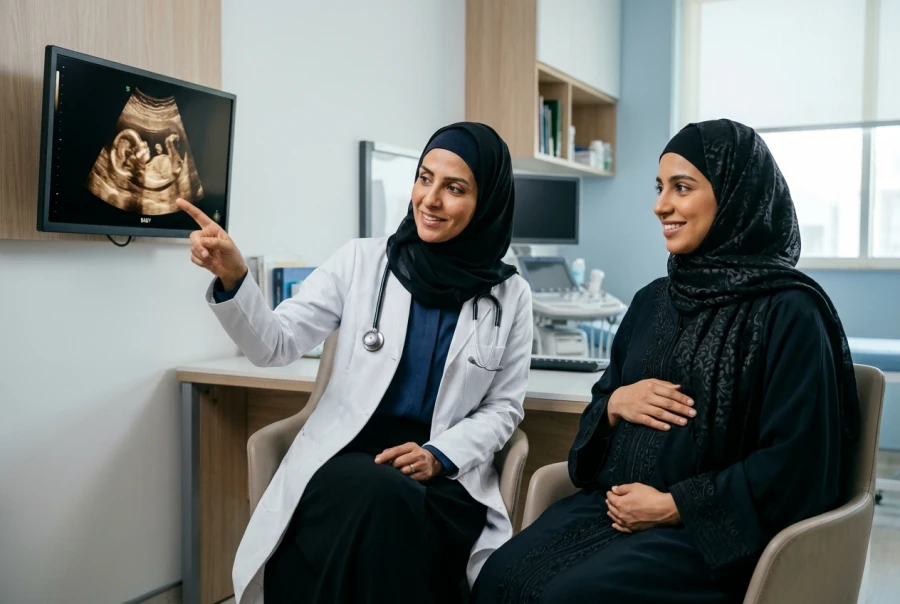 Six Month Obstetric Prenatal Monitoring ProgramEnsure a safe and healthy maternity journey with our tailored 6-month pregnancy monitoring package. LahaLak connects you with top-tier obstetricians and gynecologists across Saudi Arabia for routine check-ups, precise lab tests, and ultrasound scans. Book your comprehensive care package today and enjoy peace of mind for you and your baby.
 Routine Prenatal Care Program (9 Months)Ensure a safe and healthy maternity journey with our tailored 9-month pregnancy monitoring package. LahaLak connects you with top-tier obstetricians and gynecologists across Saudi Arabia for routine check-ups, precise lab tests, and ultrasound scans. Book your comprehensive care package today and enjoy peace of mind for you and your baby.
 Three Month Obstetric Prenatal Monitoring ProgramEnsure a safe and healthy maternity journey with our tailored 3-month pregnancy monitoring package. LahaLak connects you with top-tier obstetricians and gynecologists across Saudi Arabia for routine check-ups, precise lab tests, and ultrasound scans. Book your comprehensive care package today and enjoy peace of mind for you and your baby.