
Lahalak Medical Platform
Comprehensive guide on recovering after a first c-section: wound care stages, gradual mobility, timeline variations, and when to see your doctor.
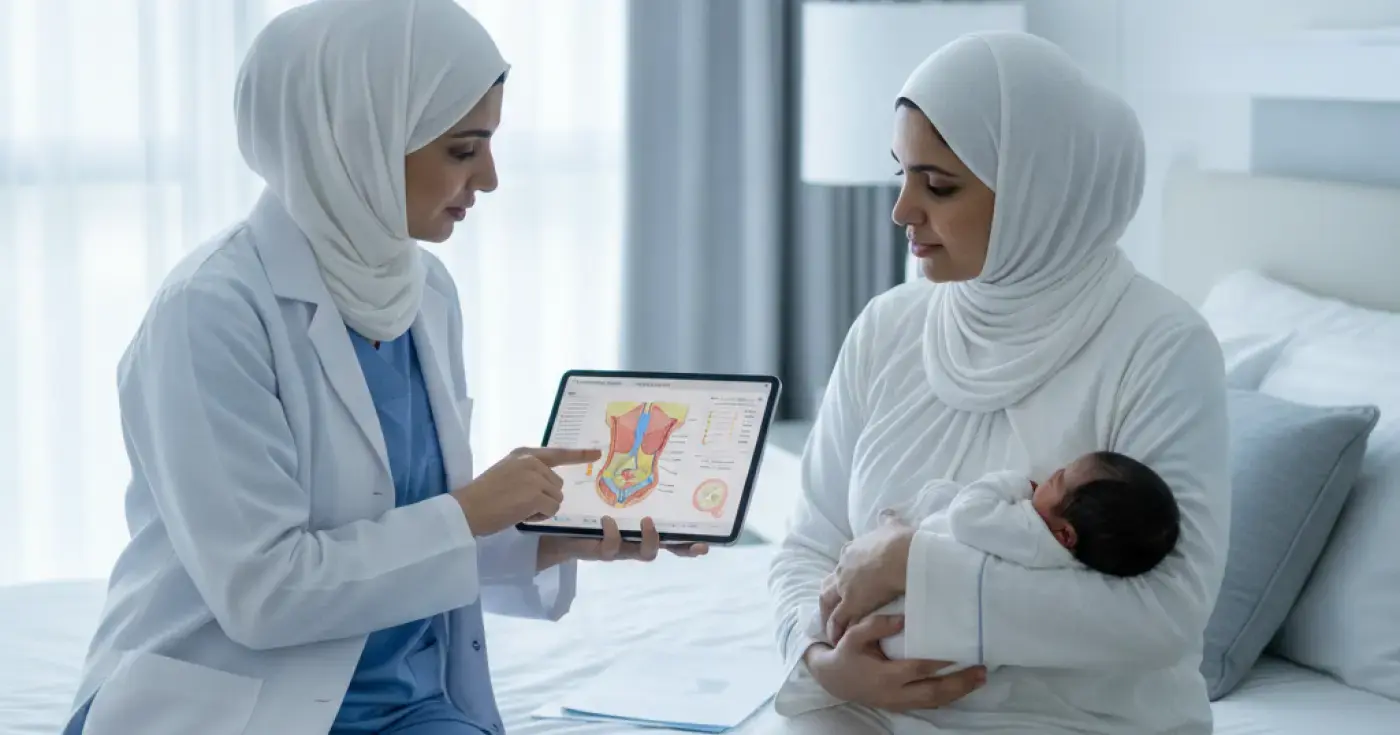
A first vaginal birth or cesarean birth represents a major physiological event requiring personalized care during the postpartum period. Recovery following a first cesarean section varies based on individual health status, surgical factors, and adherence to postoperative instructions. This guide offers evidence-informed insight to support a safe and structured healing process.
Distinguishing between external and internal healing layers is essential for managing expectations:
Even if the visible incision appears fully healed, internal tissues require continued protection from excessive physical strain and heavy lifting.
| Timeframe | Wound Healing Status | Recommended Mobility | Clinical Focus |
|---|---|---|---|
| Days 1–3 (Inpatient) | Initial skin closure with protective dressing | Assisted short walks to reduce thrombosis risk | Pain management and postpartum assessment |
| Weeks 1–2 | Incision dry; surface sutures dissolvable/removed | Flat, indoor walking; avoiding lifting heavy objects | Wound hygiene and infection prevention |
| Weeks 3–6 | Stable scar tissue formation | Gradual increase in walking distance and light chores | Clinical review prior to exercise initiation |
| Post 6 Weeks | Internal tissue stabilization | Return to routine activities upon physician clearance | Core and pelvic floor health evaluation |
Proper wound care reduces infection risk and promotes healthy scar formation:
Early and gradual walking encourages blood circulation, aids bowel motility, and lowers the risk of venous thromboembolism. However, physical activity must be escalated safely:
Mild to moderate incisional discomfort and uterine contractions (afterpains) are common, especially during breastfeeding. Take prescribed analgesics as instructed by your healthcare team to maintain comfortable mobility. Never modify medication doses or start unprescribed products without medical consultation.
Seek prompt medical attention or emergency care if any of the following warning signs occur:
Recovery involves both physical and emotional well-being. Balanced nutrition, adequate hydration, and sufficient rest support tissue restoration. Utilizing structured clinical self-monitoring tools helps mothers navigate the postpartum journey safely while maintaining open communication with their clinical team.
Short answers that help clarify the key points related to this article.
Helpful services
Subscribe for new educational pregnancy and birth content from LahaLak.
Compare hospitals and prices by city and birth type, then continue to booking with clear steps.
From LahaLak guide
Medical article
Learn about pain expectations during and after your first C-section, the difference between pressure and pain, and effective post-op management.
Read article
Medical article
Learn how long a first C-section takes, from preparation and spinal anesthesia to infant delivery and recovery room monitoring.
Read article
Medical article
Learn about the recommended gestational timing for a planned first C-section, why week 39 is often preferred, and safety guidelines.
Read articleConnected next steps
 Six Month Obstetric Prenatal Monitoring ProgramEnsure a safe and healthy maternity journey with our tailored 6-month pregnancy monitoring package. LahaLak connects you with top-tier obstetricians and gynecologists across Saudi Arabia for routine check-ups, precise lab tests, and ultrasound scans. Book your comprehensive care package today and enjoy peace of mind for you and your baby.
 Routine Prenatal Care Program (9 Months)Ensure a safe and healthy maternity journey with our tailored 9-month pregnancy monitoring package. LahaLak connects you with top-tier obstetricians and gynecologists across Saudi Arabia for routine check-ups, precise lab tests, and ultrasound scans. Book your comprehensive care package today and enjoy peace of mind for you and your baby.