
Lahalak Medical Platform
Understand how delayed skin-to-skin contact affects mother-baby bonding, common medical reasons, and practical ways to build a safe emotional connection.
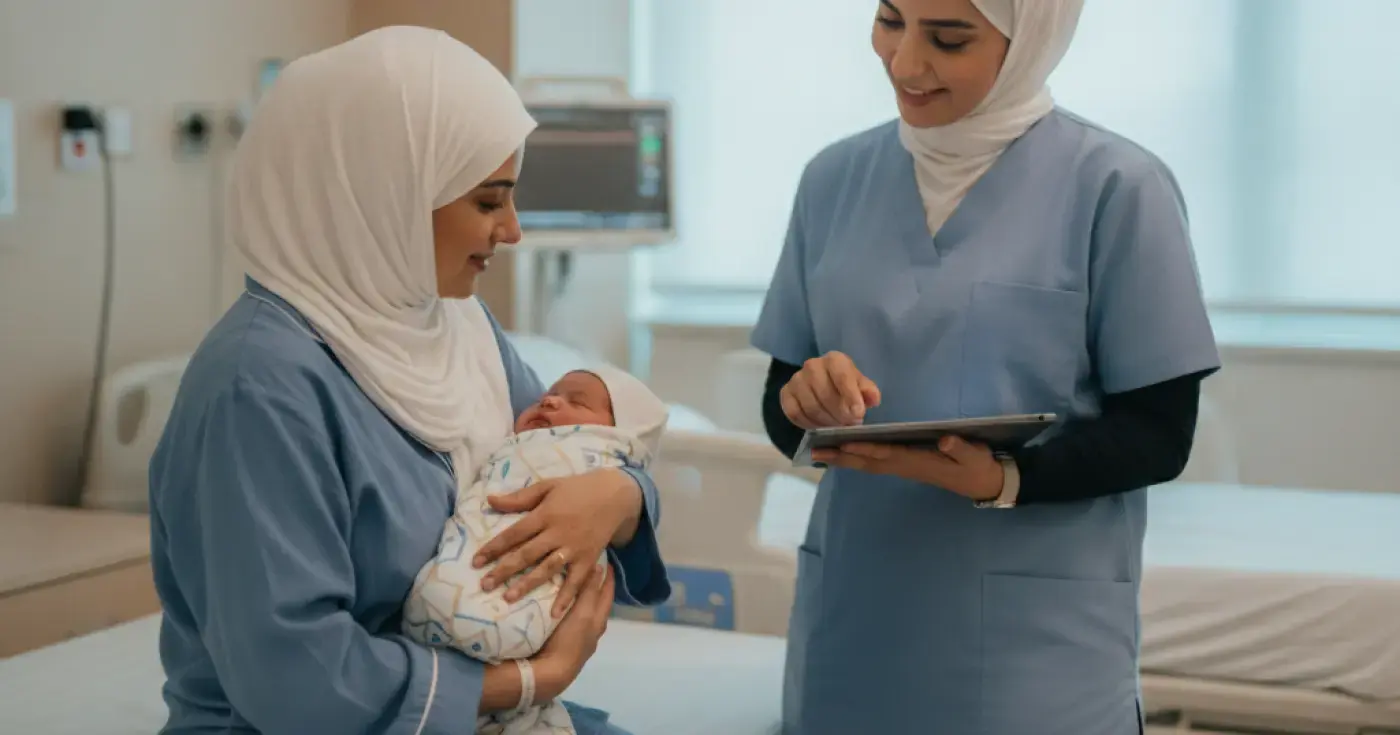
Mother-infant bonding is a continuous, evolving process that begins during pregnancy and develops over days, weeks, and months following delivery. Contrary to common misconceptions, forming a secure emotional attachment does not solely depend on the immediate minutes after birth. It is built through daily caregiving, gentle touch, responsiveness, and emotional presence.
Bonding is driven by hormonal pathways, maternal instincts, and sensory interactions such as voice recognition, scent, and gentle holding. Even when temporary medical separation occurs, mothers and infants retain a strong capacity to forge a deep, enduring connection once they are reunited.
Early skin-to-skin contact, often referred to as the 'golden hour,' involves placing the naked newborn on the mother's bare chest immediately after delivery. Clinically, this practice helps regulate infant body temperature, heart rate, and blood glucose levels while facilitating early breastfeeding initiation and uterine contraction via oxytocin release.
While guidelines support immediate skin-to-skin contact for stable mothers and babies, certain clinical circumstances necessitate prioritizing immediate resuscitation or medical stabilization.
In certain الولادة القيصرية cases, maternal anesthesia monitoring, surgical closure, or management of post-partum bleeding may temporarily delay holding the newborn.
Preterm infants or newborns experiencing respiratory distress require prompt stabilization in specialized units under الرعاية الصحية لحديثي الولادة, making immediate chest contact unsafe until clinical stability is achieved.
Maternal complications such as severe preeclampsia, post-partum exhaustion, or hemorrhage require immediate clinical attention before safe handling of the baby can occur.
Current research in neonatology and maternal mental health reassures parents that missing the first hour does not result in permanent attachment deficits or long-term psychological harm. Bonding is resilient and cumulative. A temporary delay due to medical necessity does not diminish a mother's capacity to build a warm and loving relationship with her baby.
Healthcare professionals emphasize reassuring mothers and alleviating feelings of guilt. Clinical experience shows that mothers who experience initial separation go on to form strong, secure attachments as soon as regular contact and feeding routine begin.
| Clinical Aspect | Immediate Skin-to-Skin (First Hour) | Delayed Skin-to-Skin (Post-Stabilization) |
|---|---|---|
| Clinical Priority | Smooth transition for stable newborns. | Ensuring maternal and neonatal life safety first. |
| Physiological Impact | Immediate regulation of temperature and respiration. | Achieves stabilization after essential medical interventions. |
| Emotional Attachment | The initial bond begins right after birth. | Bond develops strongly through ongoing contact later. |
| Breastfeeding Support | Triggers an immediate latching reflex. | Supported via early pumping and lactation consultation. |
Once clinical stability is established, several practical steps can assist mothers in building closeness:
Hospitals in Saudi Arabia emphasize family-centered care and rooming-in practices whenever clinically appropriate. Healthcare providers facilitate mother-infant contact, support lactation needs in NICUs, and provide compassionate guidance to help families transition smoothly.
It is natural for mothers to feel disappointed if their delivery plan was altered by medical circumstances. However, if persistent sadness or anxiety interferes with daily functioning, seeking الدعم النفسي بعد الولادة and consulting healthcare professionals ensures both maternal well-being and child development throughout the continuum of متابعة الحمل والولادة.
Short answers that help clarify the key points related to this article.
Helpful services
Subscribe for new educational pregnancy and birth content from LahaLak.
Compare hospitals and prices by city and birth type, then continue to booking with clear steps.
From LahaLak guide
Medical article
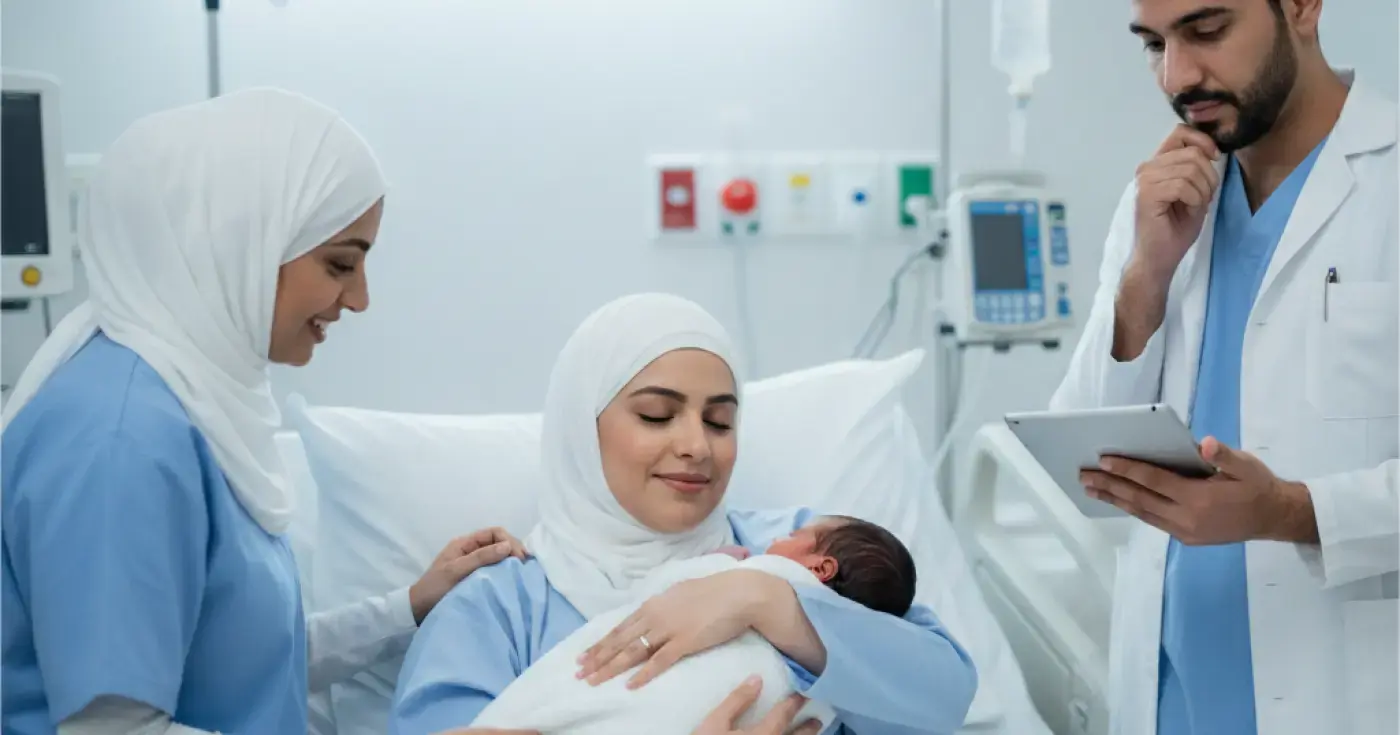
Learn about the safety, conditions, and timing of skin-to-skin contact after cesarean birth, including anesthesia factors and infant monitoring.
Read article
Medical article
Learn the red flag warning signs after vaginal delivery, when to seek immediate emergency medical care, and how to stay safe during postpartum recovery.
Read article
Medical article
A clinical guide on when to start exercise after vaginal delivery, safe pelvic floor exercises, gradual progression, and signs to stop activity.
Read articleConnected next steps
 Six Month Obstetric Prenatal Monitoring ProgramEnsure a safe and healthy maternity journey with our tailored 6-month pregnancy monitoring package. LahaLak connects you with top-tier obstetricians and gynecologists across Saudi Arabia for routine check-ups, precise lab tests, and ultrasound scans. Book your comprehensive care package today and enjoy peace of mind for you and your baby.
 Three Month Obstetric Prenatal Monitoring ProgramEnsure a safe and healthy maternity journey with our tailored 3-month pregnancy monitoring package. LahaLak connects you with top-tier obstetricians and gynecologists across Saudi Arabia for routine check-ups, precise lab tests, and ultrasound scans. Book your comprehensive care package today and enjoy peace of mind for you and your baby.