
Lahalak Medical PlatformDifferentiate Care
Discover safe mole removal methods, essential pre-procedure tests, post-care tips, and why you should avoid dangerous home removal remedies.
Advertisement
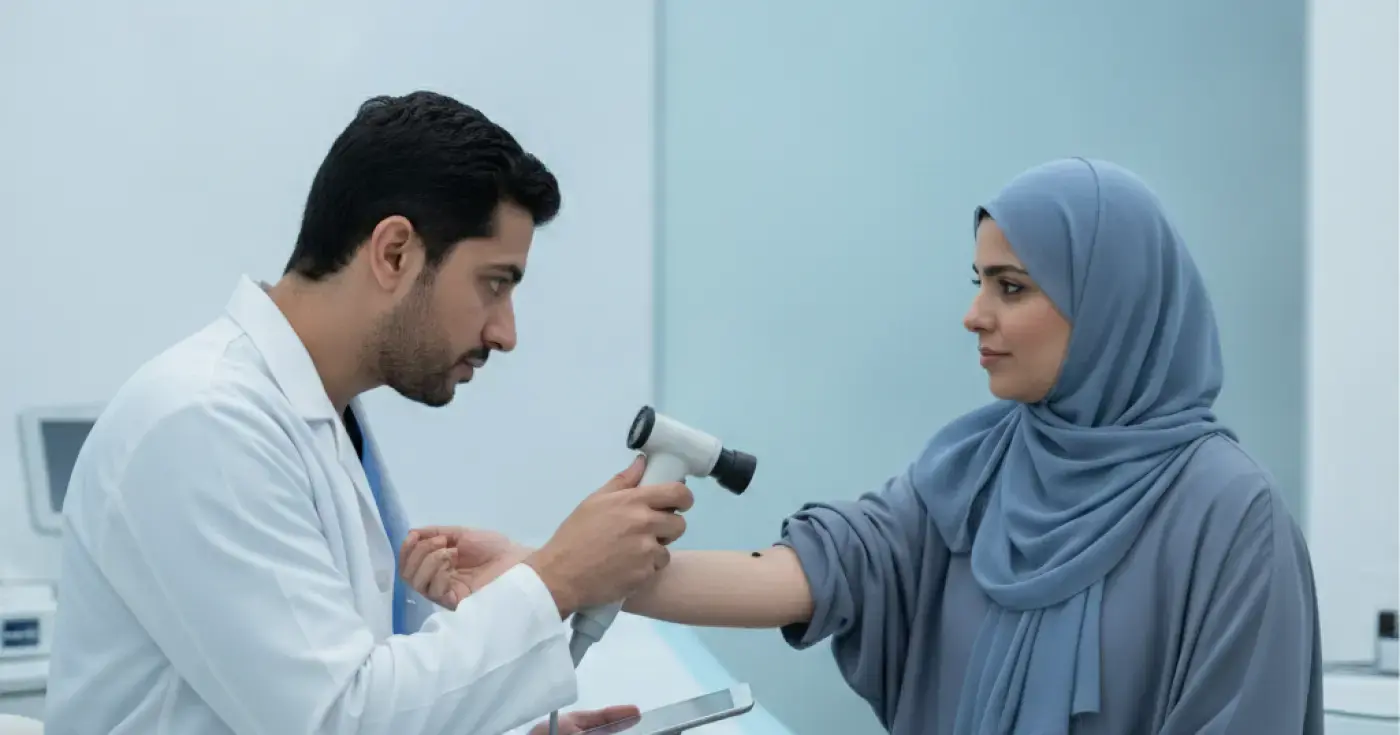
Moles, medically referred to as melanocytic nevi, are common skin growths that occur when pigment-producing cells (melanocytes) grow in clusters rather than being spread evenly throughout the skin. While the vast majority of moles are entirely benign and harmless, the decision to remove them requires a thorough clinical assessment by a qualified medical professional before proceeding with any treatment.
In Saudi Arabia, where high UV index levels are prevalent throughout the year, public health awareness regarding regular skin checks is crucial. Distinguishing between a benign cosmetic mole and an atypical mole that exhibits warning signs of malignancy is the cornerstone of maintaining healthy skin and preventing serious complications.
Moles are generally classified into two main categories: common moles (congenital or acquired) and atypical moles (dysplastic nevi). Common moles are typically round or oval, uniform in color (light to dark brown), have distinct borders, and are usually smaller than 6 millimeters in diameter.
Atypical moles, however, warrant close medical attention. Dermatologists utilize the clinical ABCDE criteria to help patients self-monitor their moles for potential warning signs of melanoma:
The decision to undergo mole removal is driven by two primary indications:
Medical removal is indicated when a dermatologist suspects malignancy, such as melanoma. In these cases, the primary goal is to perform a complete excision and send the tissue specimen for a histopathological skin biopsy. Other medical reasons include chronic irritation, where a mole is repeatedly snagged by clothing, jewelry, or irritated during shaving.
Many individuals choose to remove prominent, raised, or large moles located on visible areas like the face or neck to enhance their aesthetic appearance and boost self-confidence. In cosmetic cases, selecting a method that minimizes scarring is highly prioritized.
Before undergoing any removal procedure, a comprehensive dermatologist consultation is mandatory. This clinical evaluation typically includes:
This pre-procedure evaluation is critical. Destroying a mole using laser or cryotherapy without a proper diagnosis can mask an underlying malignancy, delaying life-saving treatment.
The choice of removal method depends on the mole's size, depth, location, and whether it is being removed for medical or cosmetic reasons. The table below compares the standard clinical methods:
| Removal Method | Primary Indications | Type of Anesthesia | Sutures Required | Risk of Scarring |
|---|---|---|---|---|
| Surgical Excision | Deep or suspected atypical/malignant moles | Local anesthetic injection | Yes (cosmetic sutures) | Moderate (fine linear scar) |
| Shave Excision | Raised, superficial, or cosmetic moles | Local anesthetic injection | No (superficial cautery) | Low to Moderate |
| Laser Mole Removal | Small, flat, benign cosmetic moles | Local or topical anesthetic | No | Very Low |
| Cryotherapy (Freezing) | Superficial skin tags or very flat benign lesions | None or mild local anesthetic | No | Low (risk of hypopigmentation) |
While laser mole removal is highly popular for cosmetic purposes, it is strictly reserved for moles that have been clinically confirmed as benign, as the laser destroys the tissue, making a biopsy impossible.
There is a widespread proliferation of DIY mole removal methods online, including the use of apple cider vinegar, garlic, thread-tying, or commercial chemical peeling creams. Dermatologists strongly warn against these practices due to severe clinical risks:
In-office mole removal is a straightforward, outpatient procedure performed under sterile clinical conditions. The typical steps include:
The aesthetic outcome of the healing process depends heavily on proper wound care. Patients should strictly follow these clinical guidelines:
While mole removal is highly safe, potential minor risks include:
Patients should seek prompt medical attention if they experience any of the following symptoms post-procedure:
Given the high UV index in Saudi Arabia, protecting your skin from sun damage is the most effective way to prevent atypical mole development and skin cancers. It is highly recommended to perform a self-skin examination monthly, schedule an annual professional skin check, wear protective clothing, and consistently use broad-spectrum sunscreen to safeguard your skin health.
Clear, direct answers
Advertisement
Continue exploring

Discover the differences between surgical and laser mole removal. Learn about procedures, recovery, risks, and how dermatologists choose the best option.
Read article
Worried about scars after mole removal? Discover how different removal methods affect scarring, key risk factors, and expert tips for scar-free healing.
Read article
Learn about safe, medically approved skin tag removal methods, clinical procedures, risks of DIY remedies, and when to see a dermatologist.
Read article