
Lahalak Medical PlatformDifferentiate Care
Learn about psoriasis causes, symptoms, and the latest medical, systemic, and biological treatments. Discover practical coping strategies.
Advertisement
Psoriasis is a common, chronic, and non-communicable autoimmune skin disease that affects millions of people worldwide. Far from being a mere cosmetic concern, psoriasis is a complex systemic inflammatory condition that accelerates the life cycle of skin cells. In normal skin, cells grow deep in the skin and slowly rise to the surface, a process that takes about a month. In people with psoriasis, this process is accelerated to just a few days, causing rapid cell buildup on the skin's surface and resulting in thick, silvery scales and itchy, painful red patches.
Managing this chronic condition effectively requires a deep understanding of its nature and continuous collaboration with a board-certified specialist through a dermatology consultation to design a personalized treatment plan. In this comprehensive guide, we will explore the causes, symptoms, diagnostic methods, and modern therapeutic options for psoriasis.
Psoriasis is an inflammatory skin disorder driven by an overactive immune system. Specifically, T-cells (a type of white blood cell that normally protects the body from infection) mistakenly attack healthy skin cells. This ongoing autoimmune response triggers chemical signals that accelerate skin cell production, leading to the characteristic plaques and scales.
Psoriasis typically presents as raised, red patches covered with silvery-white scales. While it most commonly appears on the elbows, knees, scalp, and lower back, it can develop anywhere on the body, including the nails, genitals, and joints.
Psoriasis manifests in several distinct forms, each with unique clinical characteristics and distribution patterns:
While the exact cause of psoriasis remains the subject of ongoing scientific research, clinical evidence points to a combination of genetic and environmental factors:
Family history plays a significant role in psoriasis. Having a parent with the condition increases the risk of developing it, and the probability rises substantially if both parents are affected.
As noted, hyperactive immune cells drive chronic inflammation, leading to the rapid and abnormal proliferation of epidermal cells.
Environmental and lifestyle factors do not cause psoriasis but can trigger flare-ups or worsen existing symptoms. These include:
Psoriasis symptoms vary widely depending on the type and severity of the disease, but common signs include:
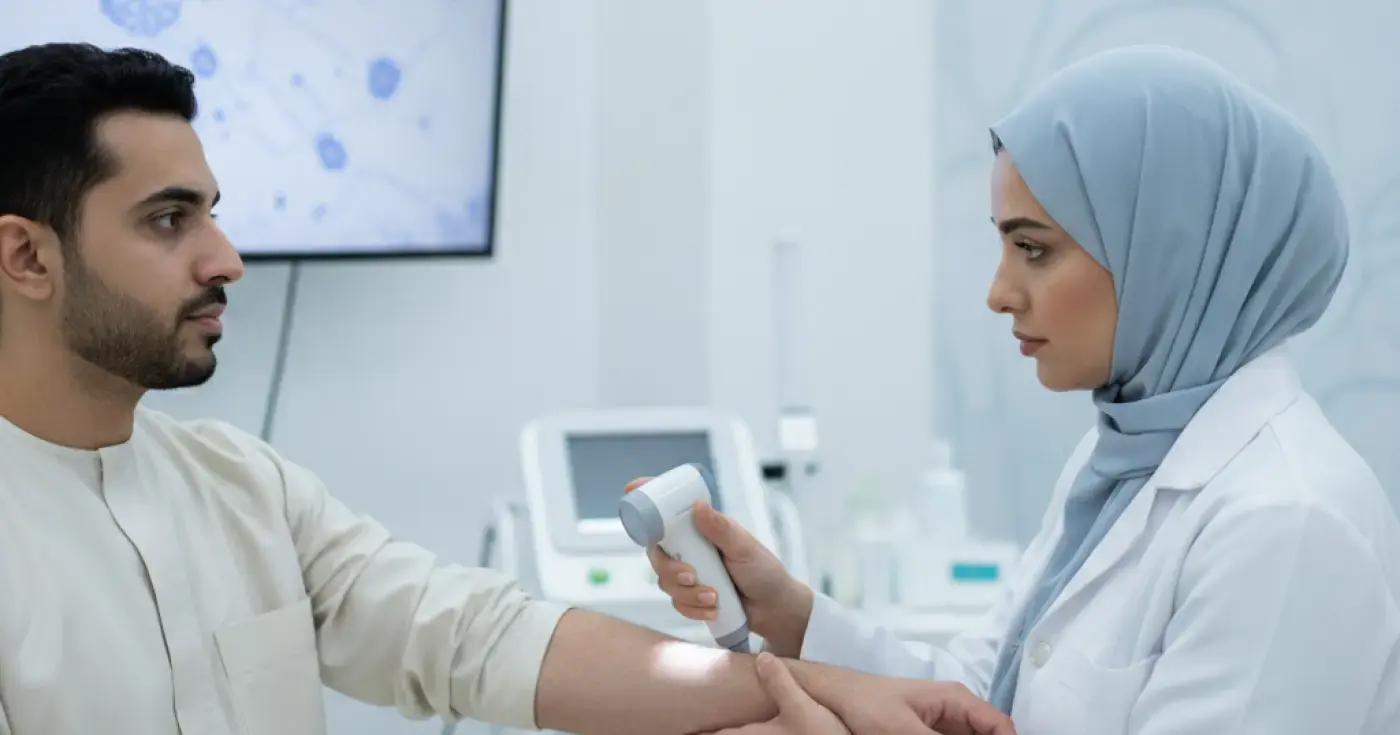
Diagnosing psoriasis is primarily clinical, based on a physical examination of the skin, scalp, and nails by a dermatologist. The doctor will also review the patient's medical history and family history of skin conditions.
In cases where the presentation is atypical or to rule out other skin conditions like eczema, the dermatologist may perform a small skin biopsy for microscopic evaluation. A complete blood count or other laboratory tests may also be ordered to assess overall health and rule out systemic inflammatory markers.
While there is currently no permanent cure for psoriasis, modern medical advancements offer highly effective treatments to control inflammation, slow skin cell turnover, clear plaques, and significantly improve quality of life. Treatments are categorized into several main modalities:
Used primarily for mild-to-moderate cases, these are applied directly to the skin and include:
This involves exposing the skin to controlled doses of ultraviolet (UV) light (either UVA or UVB) under medical supervision in a clinical setting. This treatment helps slow rapid skin cell growth and reduce inflammation.
For moderate-to-severe cases that do not respond to topical therapies, oral or injectable systemic medications like Methotrexate, Cyclosporine, or oral retinoids may be prescribed.
Biologics represent a major breakthrough in the management of moderate-to-severe psoriasis. Administered via injection or infusion, these advanced drugs target specific proteins in the immune system (such as TNF-alpha, IL-17, or IL-23) that drive the inflammatory process, offering high clearance rates with a targeted safety profile.
The following table provides a comparison of the primary treatment categories to help patients understand their options in consultation with their healthcare provider:
| Treatment Category | Mechanism of Action | Suitable Cases | Potential Side Effects |
|---|---|---|---|
| Topical Therapies | Reduces localized inflammation and hydrates skin | Mild to moderate cases | Skin thinning, localized irritation |
| Phototherapy | Slows cell growth using controlled UV light | Moderate, resistant cases | Redness, dry skin, mild burns |
| Systemic Medications | Suppresses the immune system globally | Moderate to severe cases | Requires monitoring of liver and kidney function |
| Biologic Therapies | Targets specific inflammatory proteins | Severe, unresponsive cases | Slightly increased risk of infections |
Self-care and lifestyle adjustments are vital components of long-term psoriasis management. Key recommendations include:
Psoriasis is a systemic inflammatory condition that can affect other organs if left unmanaged. Potential complications include:
It is highly recommended to seek professional medical care if:
Clear, direct answers
Advertisement
Continue exploring
Discover when to consult a dermatologist for eczema. Learn about warning signs of skin infections, severe symptoms, and advanced treatment options.
Read article
Discover expert-approved ways to moisturize eczema-prone skin. Learn how to choose the right moisturizers and prevent dryness, irritation, and itching.
Read article
Discover the link between eczema and allergies. Learn about triggers, the atopic march, diagnosis, and effective management strategies.
Read articleExplore the topic