
Lahalak Medical PlatformDifferentiate Care
Understand why normal fertility hormone tests don't guarantee pregnancy, including tubal, uterine, semen factors, and unexplained infertility.

Advertisement
Receiving normal results from fertility hormone blood tests provides reassurance, yet it is clinically common for couples with reference-range hormone levels to experience delayed conception. Conception, embryo implantation, and a sustained pregnancy require a complex biological and mechanical system that extends well beyond endocrine balance. Hormones indicate chemical readiness and ovarian regulation, but they cannot assess uterine anatomy, fallopian tube patency, or male reproductive parameters.
Fertility is an interdependent, shared process that requires a holistic evaluation of both partners through expert medical consultation rather than relying on a single lab panel.
Hormone blood panels evaluate the signaling axis between the pituitary gland and the ovaries. Standard tests typically include follicle-stimulating hormone (FSH), luteinizing hormone (LH), estradiol (E2), prolactin, and the AMH test (anti-müllerian hormone), which reflects the overall ovarian reserve.
While essential, systemic hormone blood tests cannot evaluate several structural and functional critical components:
Regular menstrual periods generally indicate regular ovulatory cycles. However, subtle ovulatory dysfunction or luteal phase inadequacy can occasionally exist despite regular bleeding. Clinical evaluation using transvaginal ultrasound tracking and mid-luteal progesterone testing helps verify true follicular rupture and endometrial preparation.
Ovarian reserve is typically evaluated using an AMH test alongside antral follicle counts via pelvic ultrasound. It is vital to understand that ovarian reserve reflects the quantitative pool of remaining follicles, not necessarily the chromosomal or qualitative integrity of individual eggs.
As age advances naturally, hormone levels may remain within baseline normal limits while the proportion of euploid (chromosomally balanced) eggs changes. This distinction helps couples make informed decisions without undue anxiety or unnecessary interventions.
According to World Health Organization clinical data, male factor parameters contribute to approximately 40% to 50% of all cases of delayed conception. Evaluating only the female partner because her initial lab results are normal is incomplete care. A thorough fertility evaluation must include both partners simultaneously.
A comprehensive semen analysis is the primary diagnostic test for the male partner and should be performed early in the evaluation process. Based on standard diagnostic guidelines, it evaluates three principal metrics:
Identifying male factor alterations provides immediate clarity when female hormone levels are within normal reference ranges.
Once endocrine stability and ovulatory patterns are established, diagnostic focus shifts to anatomical evaluation. Performing tubal evaluation and uterine cavity assessments ensures no mechanical obstruction blocks fertilization or implantation. Common modalities include:
The following table outlines what each diagnostic modality evaluates and its inherent clinical scope:
| Diagnostic Focus | Common Tests | Clinical Insight Provided | Scope & Limitations |
|---|---|---|---|
| Hormones & Reserve | FSH, LH, estradiol, prolactin, and AMH test | Assesses endocrine balance and quantitative ovarian reserve | Does not assess egg quality, tubal openness, or uterine cavity |
| Ovulation Tracking | Ultrasound monitoring, progesterone | Confirms follicular growth, ovulation, and endometrial lining thickness | Does not guarantee fertilization inside the tube |
| Male Factor | Semen analysis, clinical exam | Evaluates sperm count, progressive motility, and morphology | Standard panels may not measure DNA fragmentation directly. |
| Tubal & Uterine Anatomy | Tubal evaluation (HSG / SIS) | Verifies fallopian tube patency and absence of uterine cavity defects | Requires procedure; does not evaluate endocrine function |
When hormone blood panels are normal, ovulation is confirmed, fallopian tubes are fully open, the uterine cavity is clear, and semen analysis metrics are normal, clinicians diagnose
Clear, direct answers
Advertisement
Continue exploring

Learn about the causes of high testosterone in women, its impact on ovulation and periods, and the difference between total and free testosterone.
Read article
Learn when male fertility hormone tests like FSH, LH, testosterone, and prolactin are ordered, and how they complement semen analysis in fertility evaluations.
Read article
Learn how irregular cycles affect ovulation and delayed pregnancy, key hormone tests like FSH, LH, TSH, prolactin, and when to consult a doctor.
Read articleConnected next steps
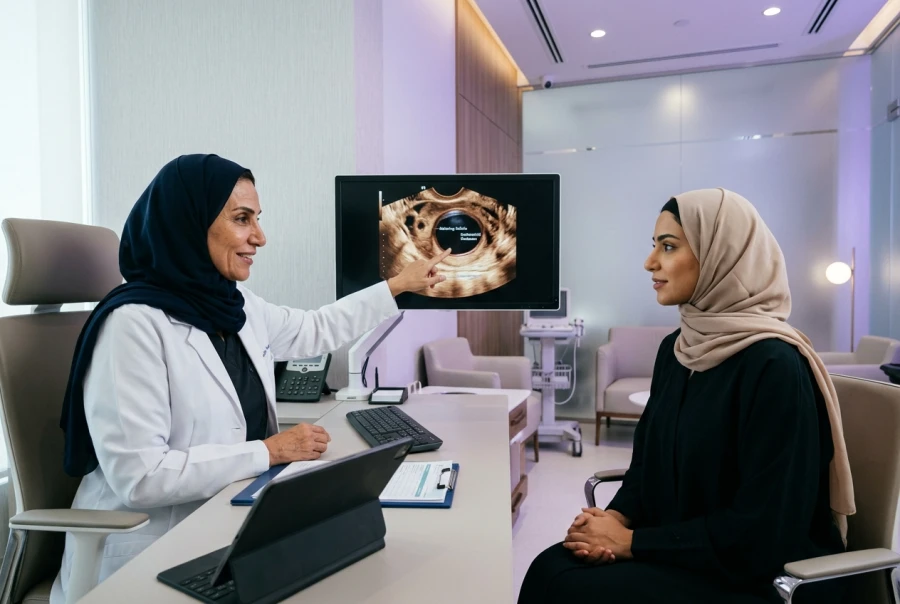 Follicular Tracking UltrasoundA precise monitoring procedure to track follicle growth and determine the optimal timing for conception, significantly enhancing pregnancy success through expert ultrasound guidance and serial development measurements.
 Semen AnalysisA precise and comprehensive assessment of male fertility by examining sperm count, motility, and morphology. It helps identify underlying causes of delayed conception and develop an integrated, effective treatment plan.
Explore the topic