
Lahalak Medical PlatformDifferentiate Care
Learn when male fertility hormone tests like FSH, LH, testosterone, and prolactin are ordered, and how they complement semen analysis in fertility evaluations.

Advertisement
Evaluating male fertility is a fundamental part of the joint medical assessment when couples experience delayed conception. Understanding which tests are necessary and when to order them helps ensure an accurate, evidence-based diagnostic process.
The male reproductive axis involves complex hormonal cross-talk between the hypothalamus, the pituitary gland, and the testes. While hormones regulate sperm production and testosterone secretion, hormone blood tests are not automatically ordered for every male. This article from LahaLak details the clinical indications for male fertility hormone testing, how results are interpreted alongside semen analysis, and key safety precautions.
According to established clinical practice guidelines, the primary and most essential initial test for male fertility evaluation is a semen analysis, not hormone blood testing.
A semen analysis provides a direct evaluation of testicular exocrine function by examining key parameters, including:
If two properly collected semen analyses show normal values based on World Health Organization standards, routine hormone testing is generally unnecessary unless specific clinical symptoms are present.
Hormone panels are indicated under specific clinical circumstances rather than as general screening tools. Doctors typically order hormone testing when:
These tests help determine whether the underlying cause originates in the testes (primary hypogonadism) or in the pituitary/hypothalamic axis (secondary hypogonadism).
Follicle-Stimulating Hormone (FSH) is secreted by the anterior pituitary gland and acts directly on Sertoli cells in the testes to support spermatogenesis (sperm production).
Key clinical insights from FSH testing include:
Luteinizing hormone (LH) is also produced by the pituitary gland. Its primary role in males is to stimulate Leydig cells in the testes to produce testosterone.
Elevated LH levels suggest primary Leydig cell dysfunction, as the pituitary attempts to compensate for low testosterone. Low LH levels, conversely, signal central pituitary or hypothalamic suppression.
Testosterone is the principal male androgen necessary for libido, erectile function, muscle mass, and maintaining spermatogenesis.
When assessing testosterone during fertility workups:
Prolactin is present in small quantities in men. Prolactin testing is specifically recommended when:
Hyperprolactinemia suppresses gonadotropin secretion, impairing testosterone production and fertility.
Hormonal values must always be evaluated in conjunction with semen analysis parameters and physical examination findings.
The table below outlines common clinical patterns seen during male fertility evaluation:
| Hormonal Pattern | FSH | LH | Testosterone | Clinical Interpretation |
|---|---|---|---|---|
| Primary Testicular Failure | Elevated | Elevated/Normal | Low/Normal | Impaired sperm production within the testes. |
| Secondary Hypogonadism | Low | Low | Low | Pituitary or hypothalamic failure to stimulate testes. |
| Obstructive Azoospermia | Normal | Normal | Normal | Normal spermatogenesis with physical ductal blockage. |
| Hyperprolactinemia | Low/Normal | Low/Normal | Low | Pituitary suppression caused by elevated prolactin. |
Hormonal panels are critical for distinguishing between the two main types of azoospermia:
This distinction guides surgeons on whether genetic testing or testicular sperm extraction (e.g., Micro-TESE) is appropriate.
A common medical misconception is that taking testosterone therapy improves male fertility. Physiologically, the exact opposite occurs.
Exogenous testosterone suppresses the hypothalamic-pituitary-gonadal axis via negative feedback. The pituitary stops producing FSH and LH, leading to a drastic drop in intratesticular testosterone levels, which halts sperm production completely or causes severe oligospermia. Patients should never initiate or discontinue hormone therapy without direct medical supervision.
Hormone levels fluctuate due to stress, illness, sleep changes, and diurnal rhythms. Therefore:
A referral for an andrology specialist consultation is indicated when:
An abnormal hormone result does not equate to irreversible infertility. Modern reproductive medicine offers precise diagnostic tools and effective targeted therapies. Comprehensive evaluation under specialist care ensures safe and tailored management for male fertility goals.
Clear, direct answers
Advertisement
Continue exploring

Learn how irregular cycles affect ovulation and delayed pregnancy, key hormone tests like FSH, LH, TSH, prolactin, and when to consult a doctor.
Read article
Learn about PCOS blood tests, hormone levels, LH to FSH ratio, and Rotterdam diagnostic criteria for polycystic ovary syndrome.
Read article
Learn when the prolactin test is needed, how elevated prolactin affects ovulation and cycles, and when to consult a specialist for fertility concerns.
Read articleConnected next steps
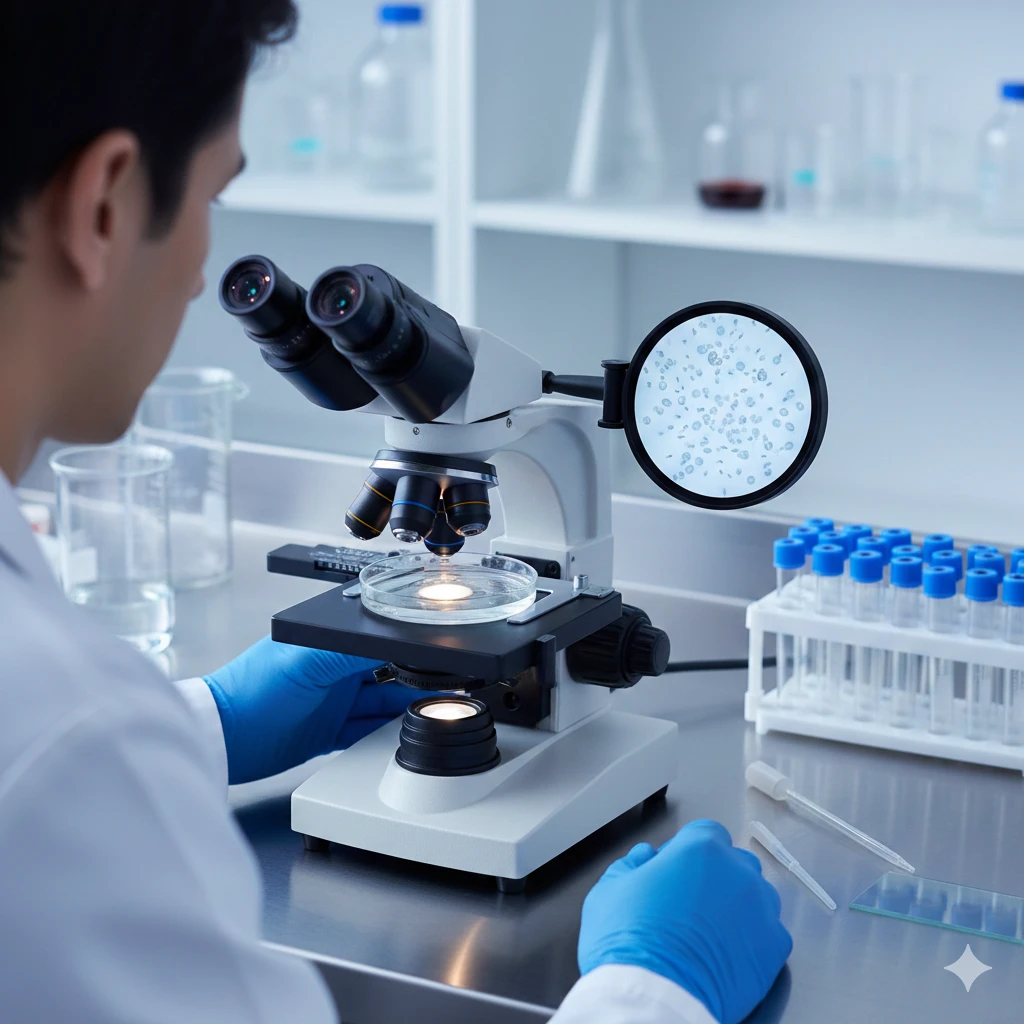 Semen AnalysisA precise and comprehensive assessment of male fertility by examining sperm count, motility, and morphology. It helps identify underlying causes of delayed conception and develop an integrated, effective treatment plan.
 Luteinizing Hormone (LH) TestA pivotal test for evaluating fertility and regulating the menstrual cycle, helping determine ovulation time and accurately diagnose causes of delayed conception.
 Follicle Stimulating Hormone (FSH) TestFSH testing to evaluate ovarian or testicular function, aiding in the precise diagnosis of fertility issues and hormonal imbalances for couples.
 Free Testosterone TestA precise measurement of active male hormone in the blood to evaluate sexual health, muscle strength, and vitality levels, helping diagnose hormone deficiency in men and improve daily life quality.
Explore the topic