
Lahalak Medical PlatformDifferentiate Care
Comprehensive guide for new parents to babyproof their home. Learn about common hazards, estimated safety equipment costs in KSA, and clinical insights.
Advertisement
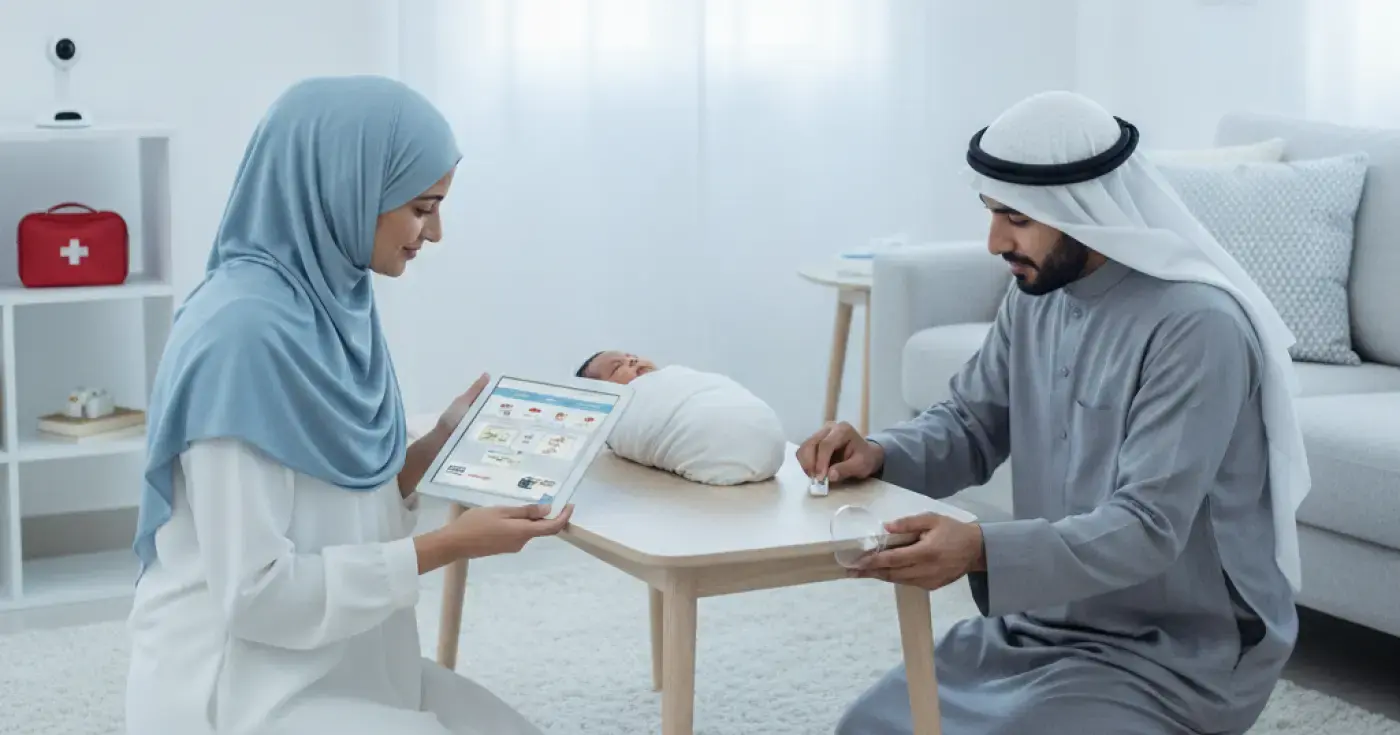
Bringing a newborn baby home is a moment filled with joy and excitement for new parents, but it also comes with great responsibilities regarding providing a safe and healthy living environment. Protecting an infant from household hazards is not just about comfort; it is a fundamental pillar for preventing unintentional injuries that could affect their physical development and safety.
From a medical and developmental standpoint, infants undergo rapid and unpredictable stages of development in their first months of life. Babies gradually begin exploring their surroundings, starting with rolling over, then crawling, reaching for objects, and putting them in their mouths. This natural exploratory behavior requires proactive anticipation from parents to secure the home before the child begins active movement.
Global and local medical reports indicate that household accidents are among the most common causes of pediatric emergency room visits. The following table highlights the main household hazards and recommended preventative measures:
| Hazard Type | Most Vulnerable Age Group | Primary Preventative Action |
|---|---|---|
| Falls | All ages (especially after 4 months) | Install safety guards on windows and stairs; never leave the baby unattended on elevated surfaces. |
| Choking | Infants from birth to 1 year | Avoid placing soft toys, extra pillows, or heavy blankets in the crib; keep small objects away. |
| Burns | Toddlers starting to crawl and walk | Secure electrical outlets; keep hot pots and liquids away from table edges and kitchen counters. |
| Poisoning | Infants from 6 months and older | Store medicines and household chemicals in locked, high cabinets out of reach. |
To simplify the process of babyproofing, it is recommended to divide tasks by rooms and vital areas:
An infant should always sleep on their back on a flat, firm mattress covered with a tightly fitted sheet. Avoid using padded crib bumpers, stuffed toys, or heavy blankets, as they pose a significant risk of suffocation.
Anchor heavy furniture (such as TVs and bookshelves) to the walls to prevent tip-overs. Cover sharp furniture corners with silicone guards to protect the baby when they start moving around.
These are the most hazardous areas. Install safety locks on lower cabinets containing chemicals or sharp tools, and set the water heater temperature below 49°C (120°F) to prevent accidental scalds during bath time.
Baby safety products are widely available in the Saudi market at various price points, allowing parents to secure their homes within flexible budgets. The following table shows the estimated costs of key safety items:
| Safety Equipment | Preventative Function | Average Estimated Cost in KSA (SAR) |
|---|---|---|
| Safety Gate for Stairs/Hallways | Prevents access to dangerous areas | 120 - 350 SAR |
| Cabinet and Drawer Locks | Protects from chemicals and sharp tools | 30 - 80 SAR (pack of 10) |
| Corner Protectors | Prevents head and facial injuries | 20 - 50 SAR (pack of 8) |
| Outlet Covers | Prevents electrical shocks | 15 - 40 SAR (pack of 20) |
| Video Baby Monitor | Remote monitoring of the baby during sleep | 150 - 600 SAR |
In pediatric clinics, doctors often observe that new parents focus heavily on buying non-essential luxury items while overlooking basic home safety measures. Clinical experience shows that most infant home injuries occur during very brief moments of distraction, lasting only seconds. A common question parents ask in the clinic is: "When should we start babyproofing?" The medical answer is always: Starting before the baby is born or during the first few weeks is the best choice, as a child's motor development can surprise parents at any moment.
Neglecting home safety measures can lead to severe health consequences that vary from child to child based on the nature of the accident and the infant's age. Potential complications include fractures, lacerations that may leave permanent scars, chemical or drug poisoning requiring gastric lavage or ICU admission, and psychological trauma that can affect the child's behavioral development. It is crucial to emphasize that risks vary from home to home depending on the architectural layout and the family's commitment to preventative guidelines.
The information provided in this article is for health education and general preventative guidance only. It is not a substitute for professional medical advice, diagnosis, or direct clinical evaluation by a qualified pediatrician in the event of an emergency.
Clear, direct answers
Advertisement
Continue exploring

Learn about the importance of Choline and B-vitamin testing for breastfeeding mothers, when to test, estimated costs in Saudi Arabia, and clinical advice.
Read article
A complete medical guide on postpartum hair loss causes, when to see a doctor, treatment safety, and estimated costs in Saudi Arabia.
Read article
A comprehensive medical guide on Pelvic Congestion Syndrome (PCS) after childbirth. Learn about symptoms, diagnosis, estimated costs in Saudi Arabia, and recovery.
Read articleExplore the topic
Choline and B-Vitamins Analysis for Breastfeeding Mothers: Importance, Benefits, and Testing Guide in Saudi ArabiaElixir · Health PanoramaPostpartum Hair Loss: Causes, Treatments, and Costs in Saudi ArabiaPregnancy GuidePostpartum Pelvic Congestion Syndrome: A Comprehensive Guide for New MothersElixir · Health Panorama