
Lahalak Medical PlatformDifferentiate Care
Explore advanced medical treatments for hair loss and thinning, including PRP, exosomes, and modern transplant techniques. Expert dermatological insights.
Advertisement
Hair thinning and hair loss are prevalent medical and aesthetic concerns that significantly impact psychological well-being and quality of life. Within the clinical landscape of Saudi Arabia, there is a growing demand for advanced, evidence-based hair restoration therapies. Effective management requires a thorough understanding of the hair growth cycle, which consists of the active growth phase (Anagen), the transitional phase (Catagen), and the resting phase (Telogen).
Dermatologists emphasize that before initiating any treatment, patients should undergo a comprehensive medical evaluation, including a comprehensive hair loss panel, to identify the underlying etiology. Hair loss can stem from genetic factors (such as androgenetic alopecia), hormonal imbalances (such as thyroid dysfunction or PCOS), nutritional deficiencies (such as iron or Vitamin D deficiency), or telogen effluvium triggered by physiological stress. A precise diagnosis is crucial for designing an effective, personalized treatment plan.
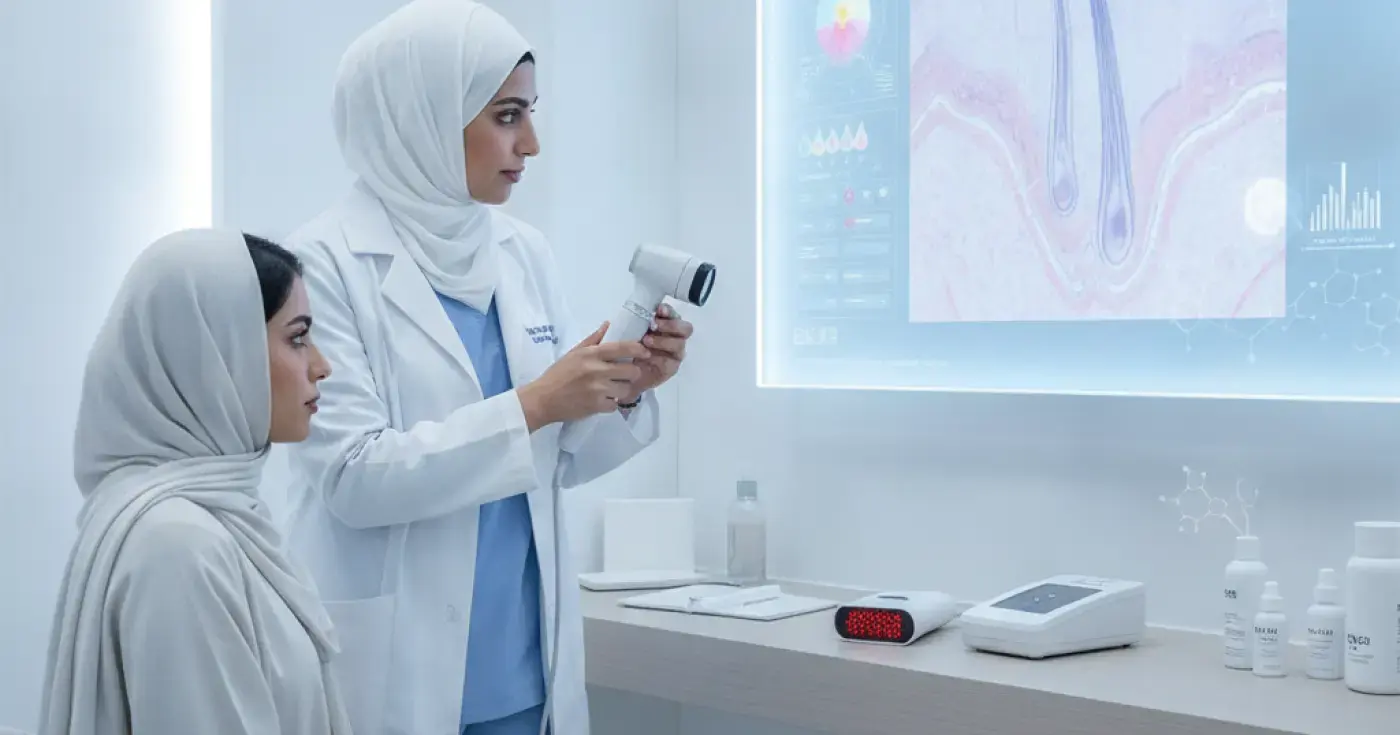
Recent years have seen remarkable advancements in non-surgical modalities designed to stimulate dormant follicles and increase hair shaft diameter without invasive surgery. These treatments offer minimal downtime and high safety profiles when performed by qualified medical professionals.
The clinical application of platelet-rich plasma therapy involves extracting a small sample of the patient's blood, processing it in a specialized centrifuge to isolate concentrated platelets, and injecting it into the scalp. These platelets release essential growth factors that stimulate stem cells within the hair bulge, promote angiogenesis, and prolong the anagen phase. Newer protocols utilize Platelet-Rich Fibrin (PRF), which provides a sustained, slow release of growth factors for enhanced regenerative outcomes.
LLLT utilizes specific wavelengths of red light (typically 630 to 670 nanometers) to penetrate the scalp tissue. This photobiomodulation process stimulates mitochondrial activity within hair follicle cells, increasing adenosine triphosphate (ATP) production and enhancing microcirculation. This technology is available as clinical-grade in-office hoods or SFDA-approved home-use helmets and caps, used under medical guidance.
Mesotherapy involves micro-injecting a customized cocktail of vitamins, minerals, amino acids, and vasodilators directly into the mesoderm (middle layer of the scalp). By delivering these vital nutrients directly to the follicle base, mesotherapy improves cellular metabolism, strengthens the hair shaft, and helps arrest acute hair shedding.
Regenerative medicine represents the cutting edge of hair restoration, utilizing cellular and molecular biology to repair and regenerate damaged hair follicles.
Exosomes are extracellular vesicles secreted by stem cells, packed with signaling proteins, growth factors, and microRNA. When injected into the scalp, exosomes facilitate intercellular communication, effectively reprogramming damaged follicular cells, reducing inflammation, and promoting robust hair growth. This therapy is showing great promise for patients with advanced thinning who seek non-surgical alternatives.
This innovative technique involves harvesting a minute tissue sample containing healthy hair follicles or adipose tissue from the patient, processing it to isolate regenerative cells, and reintroducing them into thinning areas. These cells help restore the follicular microenvironment and stimulate new vascular networks to support healthy hair growth.
For individuals experiencing advanced androgenetic alopecia or permanent hair thinning, surgical hair transplantation remains the most definitive and long-lasting solution.
FUE is the gold standard in modern hair transplantation. Individual follicular units are harvested from the donor area (typically the occipital scalp) using micro-punches, leaving virtually undetectable micro-scarring. The grafts are then meticulously implanted into tiny recipient sites. The use of Sapphire blades (Sapphire FUE) has further refined this technique, minimizing tissue trauma and accelerating post-operative healing.
DHI utilizes a specialized tool known as the Choi Implanter Pen. This device allows the surgeon to extract and implant the hair follicle simultaneously in a single step, eliminating the need to pre-create recipient channels. This technique offers precise control over the angle, depth, and direction of each implanted hair, resulting in highly natural-looking density and minimal graft handling.
| Treatment Modality | Mechanism of Action | Expected Sessions | Recovery Period | Ideal Candidates |
|---|---|---|---|---|
| PRP Therapy | Autologous growth factor stimulation | 3 - 6 sessions (monthly) | Minimal (a few hours) | Early to moderate hair thinning |
| Exosome Therapy | Cellular signaling and tissue regeneration | 1 - 2 sessions annually | Under 24 hours | Refractory thinning and genetic hair loss |
| LLLT | Photobiomodulation of follicular cells | Ongoing (2-3 times/week) | None | General hair thinning, post-transplant support |
| DHI Hair Transplant | Direct follicular unit transplantation | Single surgical session | 7 - 14 days for scabs to heal | Advanced androgenetic alopecia |
To ensure patient safety and optimize therapeutic outcomes, a comprehensive pre-treatment workup is mandatory:
While modern hair restoration technologies are highly safe, patients must maintain realistic expectations and understand potential risks:
The longevity of hair restoration results depends heavily on appropriate post-treatment care and lifestyle habits. Dermatologists recommend the following protocols:
First, adopt a gentle hair care routine that focuses on damaged hair care, avoiding excessive heat styling, tight hairstyles, and harsh chemical treatments. Second, maintain a nutrient-dense diet rich in lean proteins, omega-3 fatty acids, zinc, and biotin to support follicular cellular synthesis. Finally, strictly adhere to the maintenance therapies prescribed by your dermatologist to prevent the progression of underlying hair loss.
Early intervention is critical in preserving viable hair follicles. You should seek a professional dermatological consultation if you notice persistent shedding of more than 100 hairs per day, visible widening of your hair part, a receding hairline, patchy hair loss, or if scalp shedding is accompanied by severe pruritus, scaling, or pain. Addressing hair loss early significantly increases the success rate of non-surgical interventions.
Clear, direct answers
Advertisement
Continue exploring
Explore clinically proven treatments for hair thinning, from topical therapies to PRP and transplants. Learn how to restore hair density safely.
Read article
Discover the best medical treatments and advanced clinical procedures to restore hair density safely under specialist supervision.
Read article
A comprehensive clinical guide on maintaining scalp health, choosing the right medicated shampoo, and preventing chronic dandruff recurrence.
Read articleExplore the topic