
Lahalak Medical PlatformDifferentiate Care
Learn the clinical benefits of combining skin boosters, lasers, and peels in a facial glow package, including safety tips and recovery guidelines.
Advertisement
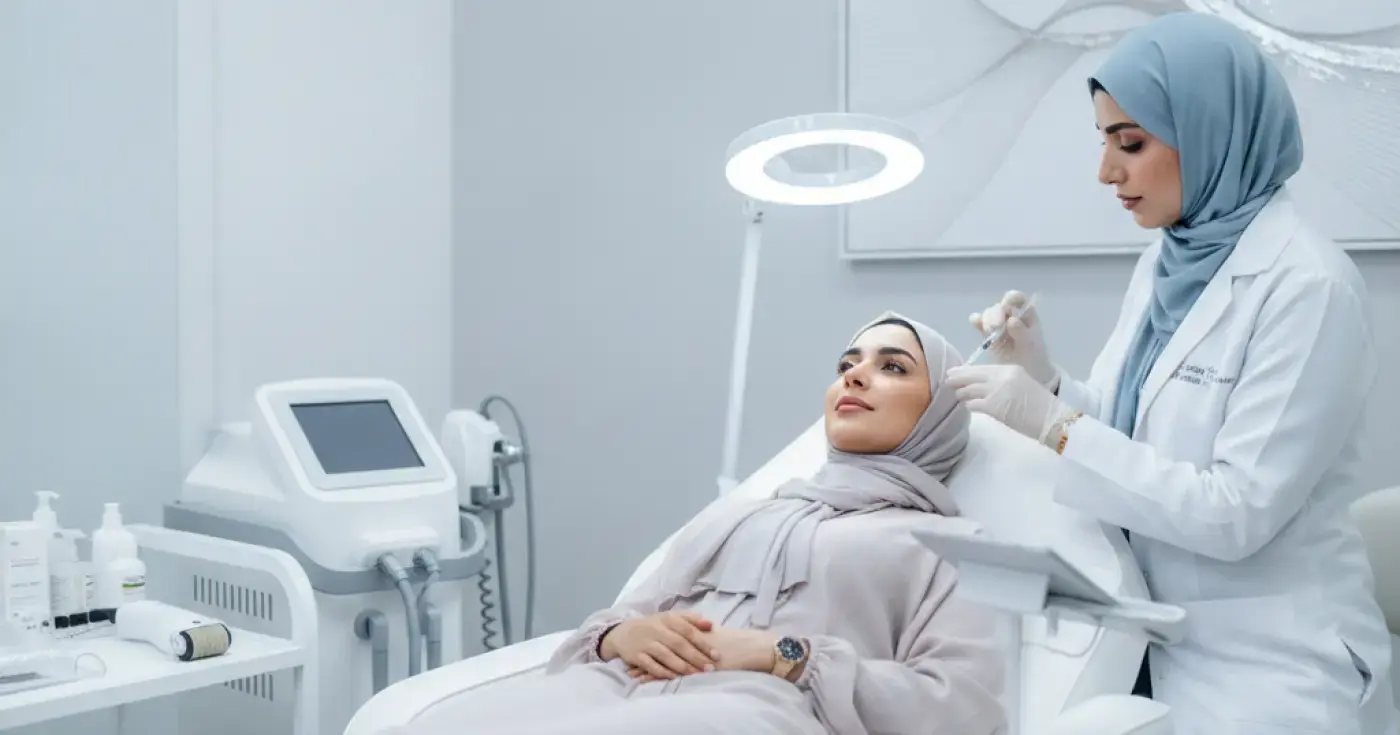
In recent years, aesthetic medicine has evolved from relying on single-modality treatments to adopting comprehensive, multi-tech "facial glow packages." This modern approach focuses on combining different clinical techniques to target multiple skin layers simultaneously, achieving outcomes that far exceed what any single treatment could deliver on its own.
In Saudi Arabia, the demand for these combined packages has grown significantly, supported by advanced devices approved by the Saudi Food and Drug Authority (SFDA). However, patients frequently ask: Does combining multiple techniques actually yield better results? This article explores the clinical science, safety protocols, and benefits of combining skin rejuvenation treatments.
To understand the benefits of combination therapy, it is essential to look at the core components commonly included in facial glow packages:
As a cornerstone of modern aesthetic packages, skin boosters involve micro-injections of non-crosslinked hyaluronic acid directly into the superficial or mid-dermis. Hyaluronic acid acts as a moisture magnet, deeply hydrating the skin from within, improving elasticity, and restoring a youthful radiance.
A professional chemical peel exfoliates dead skin cells from the epidermis. This promotes cellular turnover, evens out skin tone, reduces superficial pigmentation, and prepares the skin to better absorb subsequent active ingredients.
Advanced energy-based devices, such as laser skin resurfacing (fractional or carbon lasers) and RF microneedling, deliver controlled thermal energy to the deeper dermis. This stimulates neocollagenesis (new collagen production) and elastin synthesis, tightening the skin and reducing pore size.
Microneedling creates controlled micro-injuries to trigger the body's natural healing cascade. When combined with PRP (derived from the patient's own blood), the growth factors accelerate tissue regeneration, leading to faster healing and enhanced skin vitality.
From a clinical perspective, yes, provided the combination is designed and supervised by a qualified dermatologist. This is based on the principle of "therapeutic synergy." When compatible treatments are combined, their joint effect is greater than the sum of their individual effects.
For instance, performing a light chemical peel before administering mesotherapy or skin boosters removes the stratum corneum barrier, allowing for more uniform product absorption. Similarly, combining fractional laser with PRP significantly reduces post-treatment downtime while maximizing collagen synthesis through synergistic thermal and biological stimulation.
The table below highlights common treatment combinations used in facial glow packages and their clinical synergy:
| Combined Techniques | Synergistic Mechanism | Expected Recovery Time | Ideal Candidate |
|---|---|---|---|
| Microneedling + PRP | Micro-channels facilitate deep absorption of growth factors, accelerating healing and collagen production. | 24 - 48 Hours | Acne scars, enlarged pores, and dull skin. |
| Fractional Laser + Skin Boosters | Laser resurfaces the skin, while skin boosters counteract post-laser dryness with deep hydration. | 3 - 5 Days | Fine lines, photo-damaged skin, and severe dehydration. |
| Chemical Peel + Mesotherapy | Peeling exfoliates dead cells, allowing deeper and more even delivery of injected vitamins and minerals. | 2 - 4 Days | Hyperpigmentation, uneven skin tone, and lack of radiance. |
There is no one-size-fits-all approach. A successful facial glow package requires a thorough clinical consultation, which includes:
To optimize results and minimize complications, patients should adhere to the following pre-treatment instructions:
The procedure typically begins with a deep skin cleanse to remove impurities and makeup. A topical anesthetic cream is then applied to minimize discomfort during injections or energy delivery. The dermatologist then performs the selected treatments in the planned sequence. The session usually concludes with the application of a soothing, medical-grade moisturizer and a broad-spectrum sunscreen to protect the vulnerable skin barrier.
Post-treatment care is critical to achieving the desired outcome and preventing adverse effects. Key recommendations include:
While combined treatments are highly safe when performed by licensed professionals, temporary side effects can occur, including:
However, performing these treatments in unlicensed facilities or failing to follow medical protocols can lead to severe complications, such as bacterial infections, burns, or scarring. Always choose a licensed clinic and a board-certified dermatologist.
Patients should seek immediate medical advice if they experience any of the following symptoms post-treatment:
Clear, direct answers
Advertisement
Continue exploring
Learn about the clinical benefits of combining Dermapen microneedling with Skin Boosters, procedure steps, side effects, and post-care tips.
Read article
Discover the benefits of hyaluronic acid for facial skin. Learn about topical serums, injectable skin boosters, and clinical safety tips.
Read article
Discover the benefits of Salmon DNA (PDRN) skin boosters. Learn how it regenerates skin, treats acne scars, and reduces wrinkles safely.
Read article