
Lahalak Medical PlatformDifferentiate Care
Discover how exosome therapy rejuvenates the skin, boosts collagen, treats acne scars, and compares to PRP. Learn about results and safety.
Advertisement
Exosome therapy represents one of the most exciting scientific advancements in regenerative aesthetics and dermatology. Exosomes are not stem cells themselves; rather, they are microscopic extracellular vesicles released by cells. They act as vital messengers, carrying a rich cargo of proteins, growth factors, amino acids, and genetic material (like RNA) to facilitate intercellular communication and trigger natural tissue repair.
In the human body, stem cells naturally release exosomes to heal damaged tissues. In clinical aesthetics, these highly concentrated vesicles are ethically sourced and purified in specialized laboratories. Due to their ultra-small nano-size, exosomes easily penetrate deep into the dermal layers, delivering direct instructions to skin cells to restart the production of collagen and elastin, effectively reversing signs of cellular aging.
While Platelet-Rich Plasma (PRP) relies on growth factors harvested from the patient's own blood—which can vary in quality based on age and overall health—exosome therapy provides a standardized, ultra-concentrated dose of active growth factors. Furthermore, because exosomes lack a cell nucleus, they carry a significantly lower risk of triggering an immune response compared to direct stem cell transplants, making them highly biocompatible and safe.
By reprogramming aging skin cells and reducing chronic inflammation, exosome therapy addresses a wide range of dermatological concerns:
Exosomes stimulate fibroblasts, the cells responsible for structural support in the skin. This stimulation leads to improved skin elasticity, a visible reduction in fine lines and wrinkles, and a restored youthful glow.
This therapy is highly effective for acne scar treatment. Exosomes help regulate the wound-healing process, preventing the formation of rigid scar tissue. They also inhibit excess melanin production, helping to fade dark spots and even out skin tone.
With powerful anti-inflammatory properties, exosomes significantly speed up recovery after aggressive aesthetic treatments like deep chemical peels or fractional CO2 lasers, reducing downtime and post-procedure redness.
Dermatologists in Saudi Arabia follow strict clinical protocols to ensure the safety and efficacy of exosome treatments:
The dermatologist first evaluates the patient's skin condition to rule out active infections or contraindications. Patients are typically advised to stop using strong retinoids or chemical exfoliants at least three days before the session.
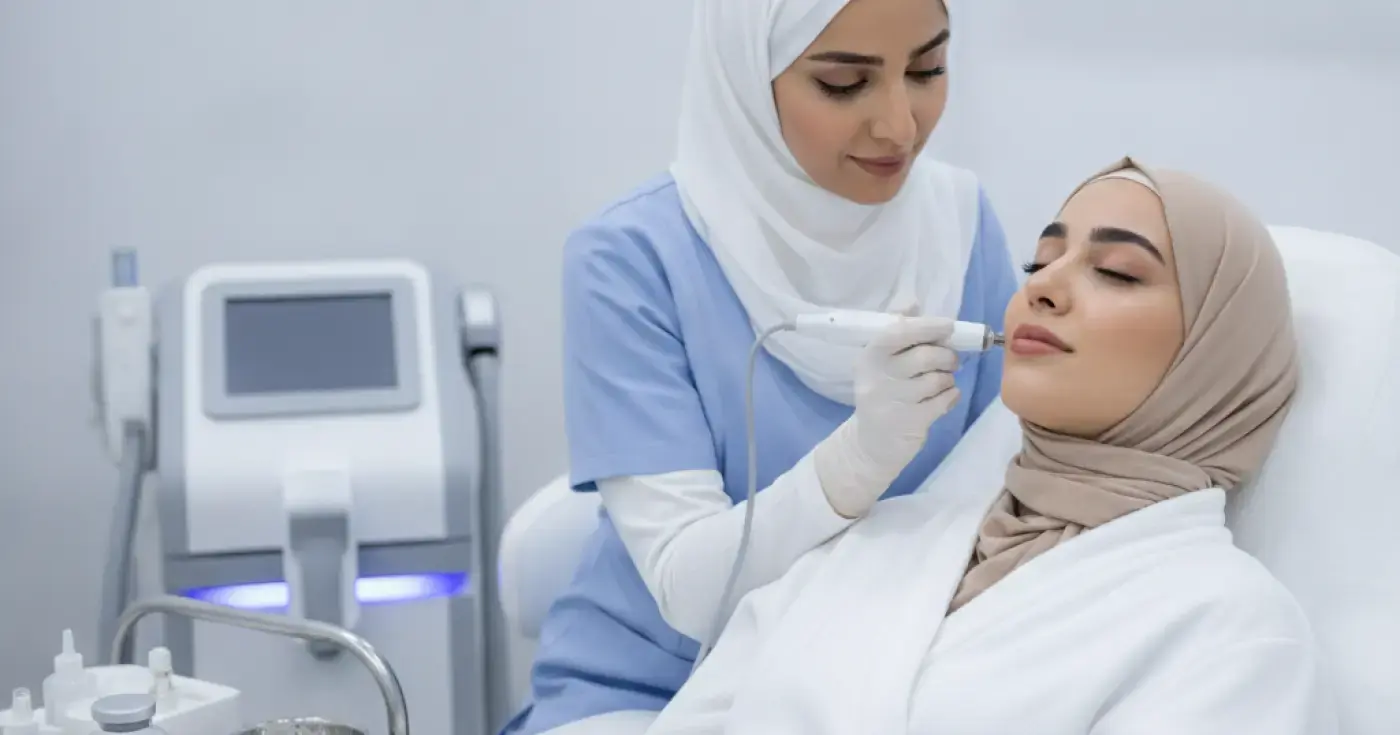
Because exosomes require micro-channels to reach the deeper layers of the skin, they are applied in combination with other skin-penetrating techniques:
The recovery period is remarkably short. Patients should follow standard post-treatment guidelines, which include avoiding direct sun exposure, applying a broad-spectrum physical sunscreen, and avoiding makeup for 24 to 48 hours to keep the micro-channels clean and free from irritation.
The following table highlights the key differences between exosomes and other popular skin rejuvenation treatments:
| Feature | Exosome Therapy | Platelet-Rich Plasma (PRP) | Traditional Skin Boosters (HA) |
|---|---|---|---|
| Primary Component | Purified nano-vesicles & growth factors | Autologous platelets from patient's blood | Non-crosslinked Hyaluronic Acid & vitamins |
| Main Objective | Cellular repair, collagen synthesis, scar reduction | General skin revitalization & circulation boost | Deep hydration and superficial skin plumping |
| Downtime | A few hours to 1 day | 1 to 2 days (mild swelling may occur) | A few hours (injection marks fade quickly) |
| Suitability for Sensitive Skin | Excellent (highly anti-inflammatory) | Very good (biocompatible) | Excellent and safe for most skin types |
Exosome therapy is non-invasive and exceptionally safe. However, minor, temporary side effects may occur, typically resolving within 24 to 48 hours:
To prevent complications such as bacterial infections, always ensure your treatment is performed in a licensed clinic by a qualified dermatologist using products approved by the Saudi Food and Drug Authority (SFDA).
While initial hydration and a subtle glow can be seen within a few days, the deep regenerative results—such as scar improvement, wrinkle reduction, and firmer skin—typically manifest within 4 to 6 weeks as new collagen forms. For optimal, long-lasting outcomes, dermatologists generally recommend an initial series of 3 to 5 sessions spaced about a month apart, followed by maintenance sessions every 6 to 12 months.
Clear, direct answers
Advertisement
Continue exploring
Discover the Skin Radiance Package, its key treatments like skin boosters and HydraFacial, expected benefits, and essential post-care medical advice.
Read article
Is facial mesotherapy suitable for all skin types? Learn about the benefits, side effects, and compatibility in this expert medical guide.
Read article
Discover if mesotherapy can treat active acne and scars. Learn about ingredients, benefits, side effects, and expert dermatological advice.
Read articleExplore the topic