
Lahalak Medical PlatformDifferentiate Care
A comprehensive medical guide on atopic eczema, exploring its causes, triggers, clinical treatments, and daily skin care routines for effective management.
Advertisement
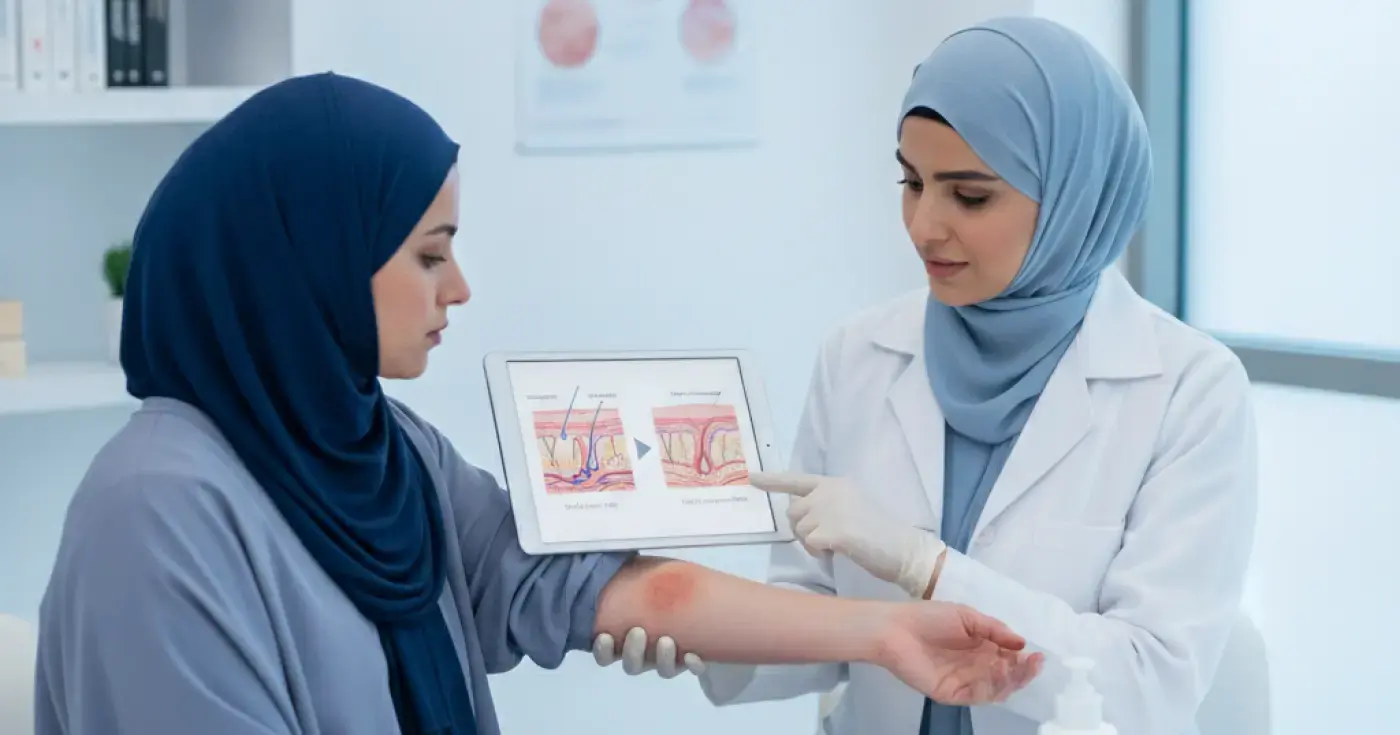
Atopic eczema, clinically known as atopic dermatitis, is one of the most common chronic inflammatory skin conditions worldwide. Characterized by intense itching, severe dryness, and recurrent flare-ups, it significantly impacts the quality of life of those affected. While it frequently begins in early childhood, it can persist into adulthood or even manifest for the first time in mature years. Managing this chronic condition requires a comprehensive understanding of its nature, triggers, and a structured treatment plan under professional medical guidance.
The clinical presentation of atopic eczema varies depending on age, skin tone, and severity. However, the hallmark symptom is pruritus (intense itching), which often worsens at night, leading to sleep disturbances. Common clinical features include:
The exact etiology of atopic eczema is multifactorial, involving a complex interplay of genetic predisposition, epidermal barrier dysfunction, and immune system dysregulation:
Many individuals with atopic eczema have a genetic mutation affecting the production of filaggrin, a crucial protein responsible for maintaining a strong skin barrier. A deficient barrier allows essential moisture to escape, leading to dryness, while facilitating the penetration of environmental allergens, irritants, and pathogens into the deeper layers of the skin.
The immune system in individuals with eczema reacts excessively to minor environmental triggers, releasing inflammatory cytokines that cause localized skin inflammation, redness, and persistent itching.
A strong family history of atopic conditions—such as eczema, asthma, or allergic rhinitis (hay fever)—significantly increases the risk of developing atopic dermatitis, a clinical association known as the "atopic triad."
While environmental triggers do not cause eczema, they can exacerbate symptoms and initiate acute flare-ups. Recognizing and avoiding these triggers is essential for effective management:
Uncontrolled or inadequately treated atopic eczema can lead to several complications, including:
The diagnosis of atopic eczema is primarily clinical, based on a detailed medical history and physical examination by a specialist. The physician will evaluate the distribution of skin lesions, the presence of itching, and family history. In cases where contact allergies are suspected to complicate the condition, the doctor may recommend allergy patch testing to identify specific contact allergens.
Medical management of atopic eczema focuses on reducing inflammation, relieving itching, and restoring the skin's natural barrier. Treatment plans are tailored to the individual's age and disease severity:
Topical treatments are the cornerstone of daily eczema management:
For moderate-to-severe cases that do not respond sufficiently to topical treatments, advanced systemic options may be considered:
Controlled exposure to narrow-band ultraviolet B (UVB) light under medical supervision can help reduce inflammation and itching in patients with widespread eczema.
| Treatment Category | Mechanism of Action | Common Indications | Safety and Usage Notes |
|---|---|---|---|
| Medical Emollients | Locks in moisture and restores skin barrier | Daily, continuous use for all severity levels | Extremely safe; best applied immediately after bathing |
| Topical Corticosteroids | Reduces inflammation and suppresses local immune response | Rapid control of acute flares and severe irritation | Use for short, specified periods to prevent skin thinning |
| Topical Calcineurin Inhibitors | Modulates local immune response without steroids | Sensitive areas (face, neck) and long-term maintenance | May cause a temporary mild burning or stinging sensation |
Consistent daily self-care is vital to managing eczema and reducing the frequency of flare-ups. Key recommendations include:
While mild eczema can often be managed with proper home care, certain warning signs require professional dermatologist consultation and medical intervention:
Clear, direct answers
Advertisement
Continue exploring

A comprehensive clinical guide on the different types of eczema, their unique symptoms, diagnostic methods, and evidence-based treatment options.
Read article
A complete medical guide on eczema (atopic dermatitis). Learn about causes, symptoms, diagnosis, and the latest medical and home treatments.
Read article
Learn when to consult a dermatologist for acne. Discover severity signs, medical treatments, and how to prevent permanent scarring effectively.
Read article