
Lahalak Medical PlatformDifferentiate Care
Learn about E2 estradiol levels in men, its role in gynecomastia, when to test, and why physical examination is essential.
Advertisement
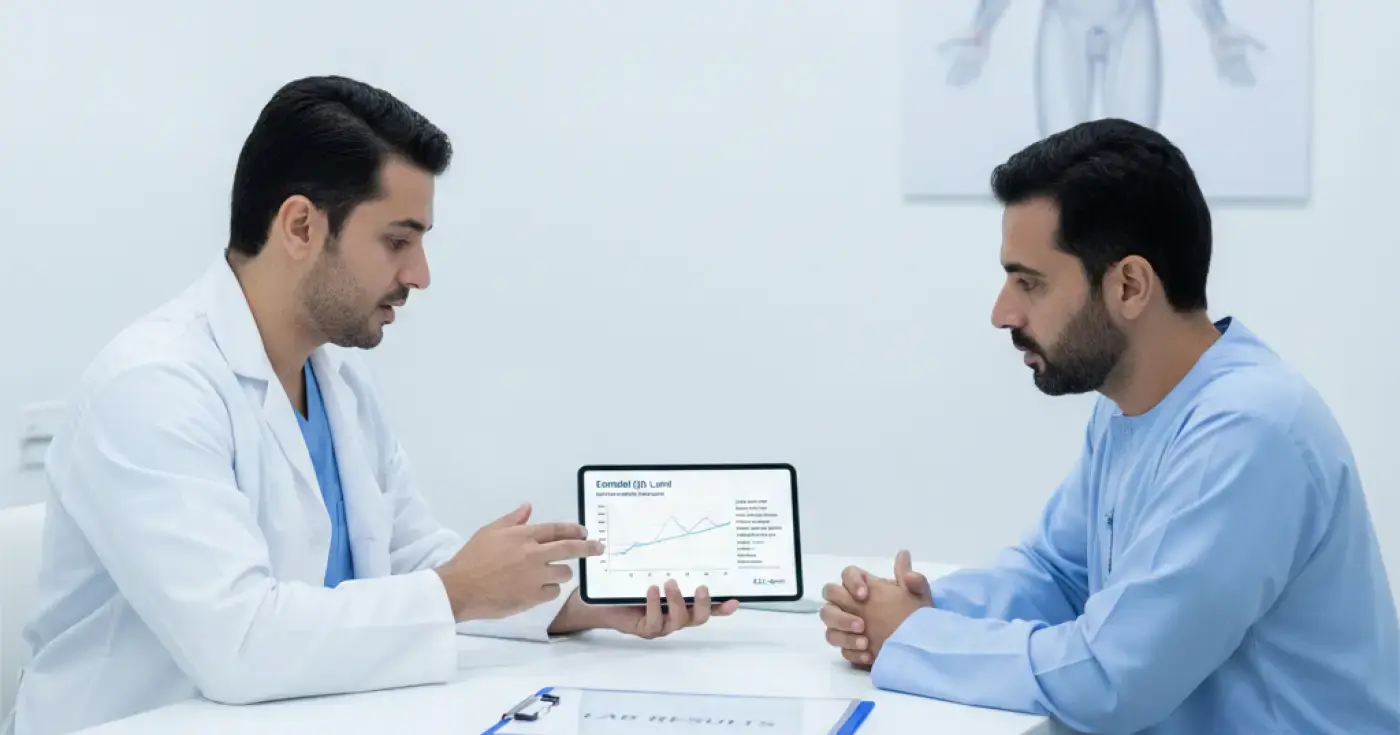
No, gynecomastia in men is not solely caused by elevated blood levels of estradiol. Gynecomastia represents a glandular enlargement of male breast tissue resulting from an imbalance between androgenic (male) and estrogenic (female) hormone actions, rather than just an isolated high number on a lab test. Accurate diagnosis requires a physical clinical evaluation by a physician to assess tissue character, review complete hormone profiles, and exclude secondary causes.
Yes, estrogen—primarily in the form of estradiol (E2)—is naturally present in all men, though at much lower concentrations than in women. Most male estradiol is derived from the peripheral conversion of testosterone by the enzyme aromatase in adipose tissue, muscle, and liver, with a minor portion secreted directly by the testes.
Estradiol performs vital physiological roles in male health, including:
A clinician may order an estradiol E2 test in clinical scenarios such as:
Not necessarily. True gynecomastia arises from an altered androgen-to-estrogen ratio at the tissue level. This imbalance can be caused by:
Differentiating true glandular gynecomastia from pseudogynecomastia (lipomastia) is essential for proper patient counseling and management:
| Feature | True Gynecomastia | Pseudogynecomastia (Fat Accumulation) | Mass Requiring Urgent Medical Evaluation |
|---|---|---|---|
| Tissue Type | Firm glandular tissue concentrated beneath the areola | Soft, diffuse adipose tissue without discrete glands | Hard, irregular, or fixed firm mass |
| Palpation Findings | Rubbery or firm, firm, disk-like tissue button | Soft, smooth, easily compressible fat tissue | Rigid, immobile nodule attached to deep tissues |
| Pain / Tenderness | Frequently associated with tenderness or discomfort | Typically painless upon gentle pressure | May be painless or associated with focal localized pain |
| Symmetry | Can be unilateral or bilateral | Symmetrical and bilateral in most cases | Predominantly unilateral and rapidly changing |
| Primary Etiology | Hormonal ratio imbalance (Androgen/Estrogen) | Generalized weight gain and systemic adiposity | Neoplastic transformation or localized structural pathology |
Exogenous factors and pharmacotherapy can significantly impact circulating estrogen levels and androgen receptors, including:
Testing estradiol in isolation gives an incomplete picture. Clinicians evaluate testosterone levels together with luteinizing hormone (LH) and follicle-stimulating hormone (FSH). This comprehensive hormone panel identifies whether the imbalance originates in the testes (primary) or pituitary gland (secondary), ensuring accurate diagnosis.
Depending on clinical history, additional diagnostic steps may include:
Physiological pubertal gynecomastia often resolves spontaneously within 12 to 24 months. Surgical evaluation or specialized imaging (ultrasound/mammography) is considered when:
Certain red-flag symptoms mandate urgent clinical consultation to exclude non-hormonal breast pathology:
Medical management targets the root underlying etiology rather than normalizing a lab number on paper. Administering anti-estrogenic drugs without clinical indication carries risks of severe side effects, including sexual dysfunction, lipid abnormalities, and loss of bone density. Scheduling an endocrinology consultation ensures a thorough and safe diagnostic approach.
Clear, direct answers
Advertisement
Continue exploring

Explore the causes of elevated prolactin in men, symptoms, impacts on testosterone, and why repeating the test is often necessary.
Read article
Learn about the LH test in men, its role with testosterone and FSH in assessing fertility and hormonal balance, and when to consult a specialist.
Read article
Learn about the FSH test for men, its role in sperm production, and how high or low levels are interpreted alongside semen analysis.
Read articleConnected next steps
 Estradiol (E2) Serum Test for MenStruggling with fatigue or libido changes? Maintaining optimal estradiol levels is crucial for men over 40 to support bone density, sexual function, and emotional well-being for a healthier lifestyle.
 Free Testosterone TestA precise measurement of active male hormone in the blood to evaluate sexual health, muscle strength, and vitality levels, helping diagnose hormone deficiency in men and improve daily life quality.