
Lahalak Medical PlatformDifferentiate Care
Learn about the LH test in men, its role with testosterone and FSH in assessing fertility and hormonal balance, and when to consult a specialist.

Advertisement
Direct Answer: The LH test in men answers how effectively the brain instructs the testes to produce testosterone. Measuring LH levels allows clinicians to determine whether hormonal deficiency or fertility issues stem from a primary testicular dysfunction or a secondary hypothalamic-pituitary concern through comprehensive hormonal pattern evaluation.
The male endocrine control system operates via a tightly regulated feedback loop:
Luteinizing hormone (LH) is a glycoprotein gonadotropin synthesized and secreted by the anterior pituitary gland. Although historically associated with female reproductive physiology, LH serves a foundational function in the male reproductive system.
Its principal target cells are the Leydig cells located in the interstitial tissue of the testes. Upon binding to specific Leydig cell LH receptors, it triggers intracellular pathways that produce testosterone. Testosterone subsequently supports male secondary sexual characteristics, muscle mass preservation, bone density, libido, and erectile physiology.
An isolated LH measurement provides incomplete diagnostic value because its level must be interpreted in the context of circulating testosterone. Evaluating both hormones simultaneously offers a complete picture of HPG axis integrity.
For instance, an LH level within normal numerical limits may actually be inappropriately low if serum testosterone is markedly depressed, as the pituitary would normally increase LH secretion to compensate. Clinicians frequently order an LH, FSH, and total testosterone panel to obtain a balanced clinical assessment.
When laboratory results demonstrate elevated LH alongside subnormal total testosterone, this pattern clinically corresponds to primary hypogonadism (testicular failure).
In this clinical scenario, the pituitary gland attempts to stimulate testicular function by producing higher quantities of LH. However, the testes are unable to respond adequately. Potential underlying causes include previous orchitis, testicular trauma, chemoradiotherapy exposure, or genetic factors. This pattern guides clinical evaluation and does not replace a comprehensive physician assessment.
Conversely, if serum testosterone is low while LH is also low or inappropriately normal, the pattern suggests secondary (central) hypogonadism.
This indicates that testicular tissue is generally capable of hormone production, but central signaling from the pituitary gland or hypothalamus is insufficient. Causes may include severe obesity, chronic systemic disease, severe physiological stress, nutritional deficits, or central pituitary/hypothalamic conditions.
Although both LH and FSH are secreted by the anterior pituitary and act synergistically, they target distinct cellular populations in the testes:
Assessing both gonadotropins differentiates whether endocrine dysfunction affects androgen production, spermatogenesis, or both.
The table below outlines common hormonal patterns used in preliminary clinical evaluation. Important Disclaimer: This table is for educational understanding, not self-diagnosis. Results must be reviewed by a qualified healthcare provider.
| LH Level | Total Testosterone | Educational Interpretation | Standard Clinical Direction |
|---|---|---|---|
| Elevated | Low | Primary Hypogonadism (Testicular Origin) | Evaluate testicular etiology & additional markers. |
| Low / Inappropriately Normal | Low | Secondary Hypogonadism (Central/Pituitary Origin) | Assess pituitary function & systemic factors |
| Normal | Normal | Balanced HPG axis function | Correlate with clinical symptoms if present. |
| Markedly Elevated | Normal or High | Possible androgen resistance or rare patterns | Repeat testing & endocrine specialist consultation |
Yes. Exogenous hormones and certain medications significantly influence LH laboratory measurements. Exogenous testosterone therapy or anabolic-androgenic steroids suppress endogenous LH secretion via central negative feedback.
When external testosterone is detected by central receptors, the pituitary halts LH release, leading over time to Leydig cell inactivity. Additionally, corticosteroids, opioids, and specific psychotropic agents can alter gonadotropin levels. Patients should always inform their physician of all ongoing medications prior to testing.
The hypothalamus and pituitary gland form the primary central control center for gonadotropin regulation. Pulsatile release of GnRH from the hypothalamus drives pituitary LH synthesis. Central nervous system conditions, hyperprolactinemia, severe weight loss, or intense physical stress can suppress GnRH pulsation, leading to reduced LH release.
A serum prolactin test is indicated when low LH coincides with low testosterone, or when patients present with marked libido loss, gynecomastia, or neurological symptoms such as severe headaches. Hyperprolactinemia suppresses hypothalamic GnRH release, secondarily lowering LH and testosterone levels.
An LH test alone does not diagnose the cause of erectile dysfunction (ED). ED is multifactorial and can arise from vascular, neurological, psychogenic, or metabolic causes. Combining LH with total testosterone helps determine if an underlying endocrine disorder contributes to the clinical picture.
When LH values are outside reference ranges, physicians may order follow-up investigations, including free testosterone, sex hormone-binding globulin (SHBG), FSH, semen analysis for fertility workups, and thyroid panels (TSH, free T4) to rule out concurrent endocrine pathology.
Specialist consultation is recommended in cases of persistent abnormal LH or testosterone levels, male infertility, unexplained chronic fatigue with hypogonadal symptoms, or following previous anabolic steroid use requiring medical recovery evaluation.
LahaLak Medical Platform facilitates access to certified laboratory testing and specialist guidance:
Clear, direct answers
Advertisement
Continue exploring

Learn about the FSH test for men, its role in sperm production, and how high or low levels are interpreted alongside semen analysis.
Read article
Learn the differences between total testosterone, free testosterone, and SHBG, and how these lab tests help evaluate male hormonal health accurately.
Read article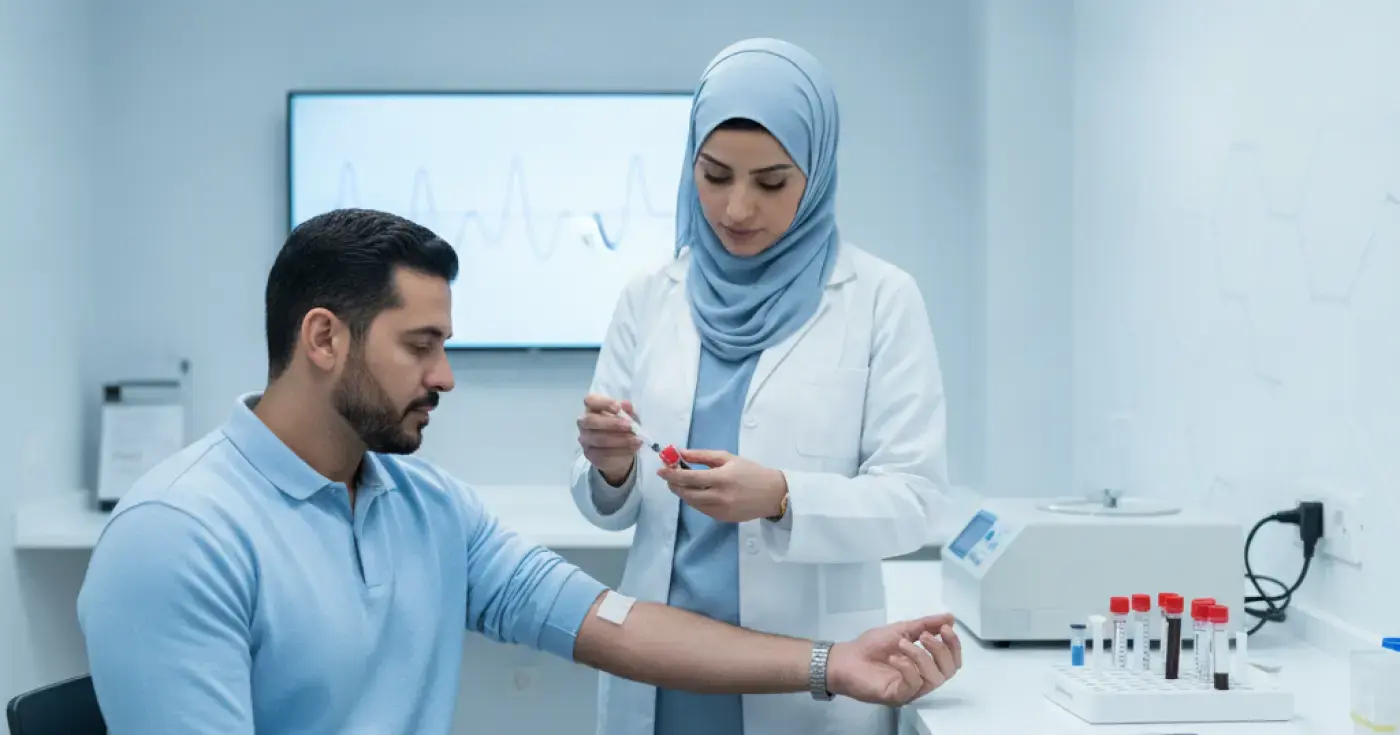
Learn why testosterone test timing matters, why morning samples are required, and how sleep, fasting, and medications affect your lab test results.
Read articleConnected next steps
 Luteinizing Hormone (LH) TestAn essential test to assess reproductive health and monitor ovulation, helping accurately diagnose menstrual cycle disorders and fertility issues in both genders.
 Follicle Stimulating Hormone (FSH) TestFSH testing to evaluate ovarian or testicular function, aiding in the precise diagnosis of fertility issues and hormonal imbalances for couples.
 Free Testosterone TestA precise measurement of active male hormone in the blood to evaluate sexual health, muscle strength, and vitality levels, helping diagnose hormone deficiency in men and improve daily life quality.