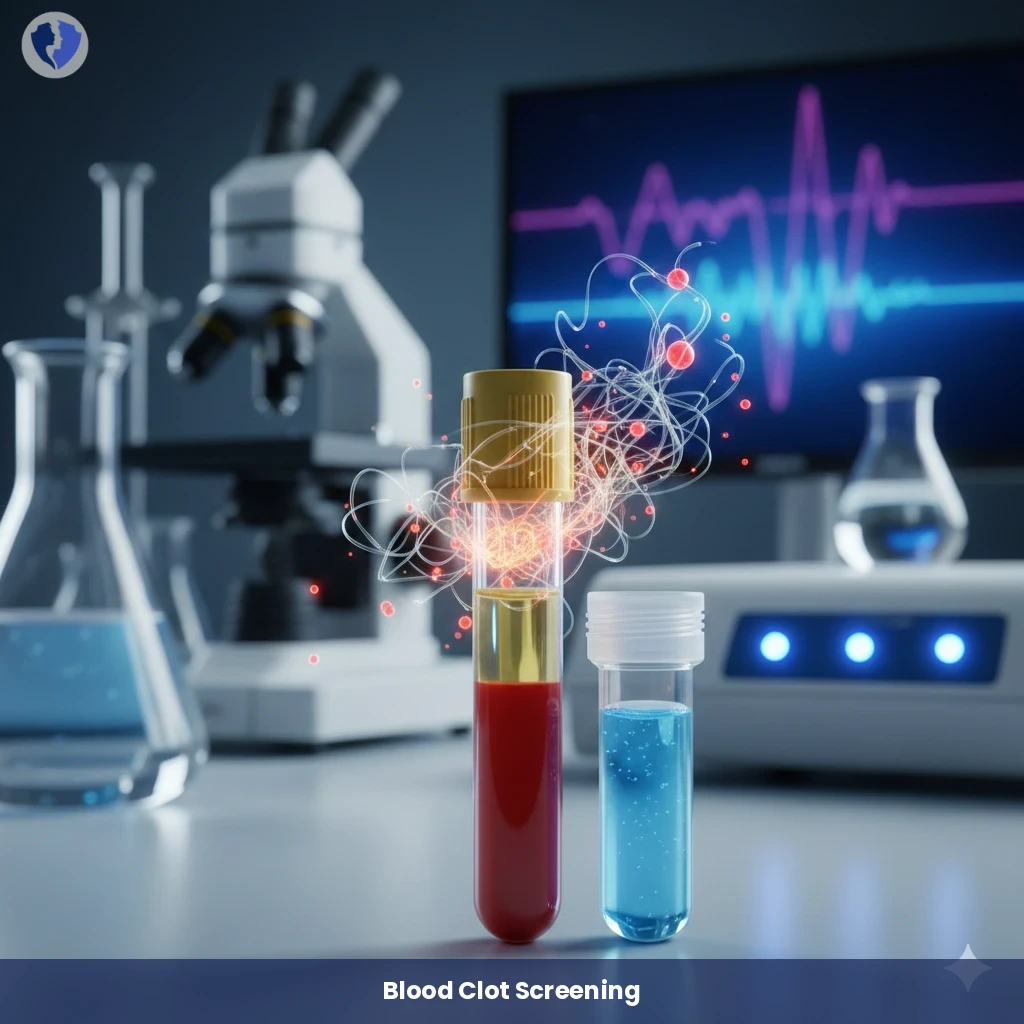
Prothrombin Time (PT) Test Price | Lahalak Platform

A necessary test to evaluate the body's clotting efficiency, used to monitor blood-thinning medication effectiveness and prevent risks of sudden bleeding or clots.

Prices starts from: 35 SAR

Scientific name: Prothrombin Time (PT) Test

The Prothrombin Time (PT) test is a laboratory test used to measure the time it takes for blood to clot. This test is a fundamental tool for evaluating the effectiveness of the body’s coagulation system, as it measures the activity of proteins responsible for blood clotting. This test is recommended for patients who experience unexplained bleeding...

Prothrombin Time (PT) Test
Service type Laboratory test (Blood)
Duration 10-15 minutes
Fasting Fasting is not required
Prices Starting from 35 SAR

Included Services

  • Prothrombin Time - PT Test
  • The optimal health guidance based on the result.
  • Personal support services from Lahalak

Medical Service Information

Test purpose

  • The Prothrombin Time (PT) test is used to detect various aspects of blood coagulation health. Some of the key purposes of this test include:
  • • Diagnosing bleeding disorders: The test helps identify problems in blood clotting, such as hemophilia or von Willebrand disease, which can lead to abnormal bleeding.
  • • Assessing liver function: PT is used as part of liver function evaluation since most clotting factors are produced in the liver. Liver problems can affect prothrombin time.
  • • Monitoring patients on anticoagulant medications: The test is used to monitor the effectiveness of medications like warfarin, helping to determine the appropriate dosage and prevent excessive bleeding.
  • • Evaluating clotting before surgery: PT is used to assess bleeding risk before any surgical procedure, aiding doctors in making informed decisions.
  • • Detecting clotting factor deficiencies: The test can reveal deficiencies in various clotting factors, helping guide proper treatment.

Recommended groups

  • The Prothrombin Time (PT) test is recommended for the following groups:
  • • Patients on anticoagulant medications: Such as warfarin, to monitor treatment effectiveness, determine the correct dosage, and avoid potential risks.
  • • Individuals with bleeding problems: Such as unexplained bleeding or easy bruising, as the test helps identify the underlying cause.
  • • People with a family history of bleeding disorders: For early detection of any hereditary issues.
  • • Patients with liver diseases: PT results can help evaluate liver function and its efficiency in producing clotting factors.
  • • Individuals preparing for surgery: The test is used to assess bleeding risk before surgical procedures, helping doctors make safe decisions.

Indicative symptoms

  • The following symptoms may indicate the need to perform a Prothrombin Time (PT) test:
  • • Unexplained bleeding: Such as frequent nosebleeds or gum bleeding, which may indicate a clotting disorder.
  • • Easy bruising: Appearance of bruises without an obvious cause, or bruises that persist for a long time, which may suggest problems in the coagulation system.
  • • Signs of internal bleeding: Such as abdominal pain or swelling, or the presence of blood in the stool or urine, requiring immediate evaluation.
  • • Family history of bleeding disorders: If family members have conditions such as hemophilia or other clotting disorders.
  • • Medical history of liver disease: Such as hepatitis or liver cirrhosis, which can affect the production of clotting factors in the liver.

FAQs

  • Frequently Asked Questions (FAQs)
  • • What is the Prothrombin Time (PT) test? It is a laboratory test that measures the time it takes for blood to clot and is used to assess the effectiveness of the body’s coagulation system.
  • • Why is the PT test performed? It is conducted to detect bleeding disorders, monitor patients taking anticoagulant medications, and evaluate liver function.
  • • How is the test performed? A blood sample is drawn from a vein, usually in the morning, often after fasting for a few hours.
  • • Are there any special preparations before the test? Typically, no special preparation is needed, but it is recommended to inform your doctor about any medications you are taking, especially anticoagulants.
  • • What factors can affect the test results? Factors such as infections, certain medications, or even physical activity can influence Prothrombin Time results.

Normal levels

  • The normal levels for the Prothrombin Time (PT) test may vary slightly between laboratories, but generally, the following ranges are considered normal:
  • • Prothrombin Time (PT): The typical normal PT range is 11 to 13.5 seconds. In some cases, a PT up to 15 seconds may still be considered within the normal range, but it is recommended to check the reference values provided by the specific laboratory.
  • • International Normalized Ratio (INR): INR is often used to standardize PT results internationally. The normal INR range is 0.8 to 1.1. For patients on anticoagulant therapy, such as warfarin, the target INR is usually 2.0 to 3.0, but this may vary depending on the patient’s condition and treatment plan.
  • • Important Notes: These values can be influenced by multiple factors, including the type of testing equipment and the sample used. It is always best to refer to the reference range provided with your test results and discuss any questions with your doctor to ensure accurate interpretation.

Conditions & Notices

  • The terms and conditions announced on the "Lahalak" medical platform apply.
  • There are no special conditions for the service other than those mentioned.

Medical services you might also like