Newborn Galactosemia Screening | Lahalak Platform
A vital test for early detection of an infant's inability to digest milk sugar, protecting your baby from serious health complications from day one.
Scientific name: Newborn Galactosemia Screening
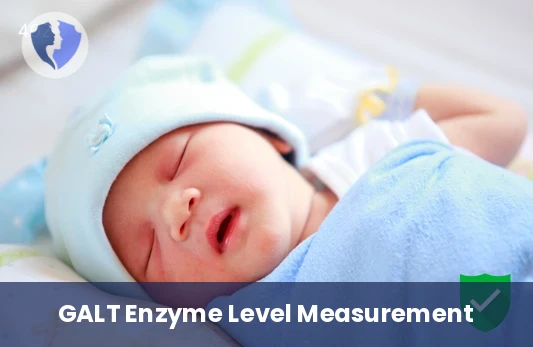
Newborn screening is part of the National Early Detection Program to detect galactosemia. This is an autosomal recessive genetic disorder of galactose metabolism, resulting from a deficiency of the enzyme galactose-1-phosphate uridyltransferase (GALT). If left untreated, it leads to the accumulation of toxic compounds that can cause liver failure,...

Service type
Preventive medical screening (Blood)
Duration
10-15 minutes
Fasting
Fasting is not required
Included Services
- Blood samples were taken from the newborn's heel according to standard medical protocol.
- Testing the activity of the GALT (Galactose-1-Phosphate Uridyltransferase) enzyme in the blood.
- Measuring the total galactose level in the blood.
- Perform a confirmatory test if the initial results are positive (retest using more specific methods).
- Urgent notification and guidance to the family and pediatrician in case of a positive result.
- Personal support services from Lahalak
- Consult with a pediatric metabolic pathologist to interpret the overall results.
Medical Service Information
Conditions & Notices
- There is no requirement for the child to fast, but it is preferable to take the sample at least 48 hours after the start of breastfeeding or formula feeding to ensure activation of metabolic pathways.
- The child should be kept warm to improve blood circulation in the foot before taking the sample from the heel.
- Fill out the basic information form for the child (name, weight, type of feeding, age in hours) accurately.
- The sample is invalid if taken from a child who has recently received a whole blood transfusion, as it may give a false result. In this case, you should wait or use alternative methods of analysis (such as genetic testing).
Medical services you might also like