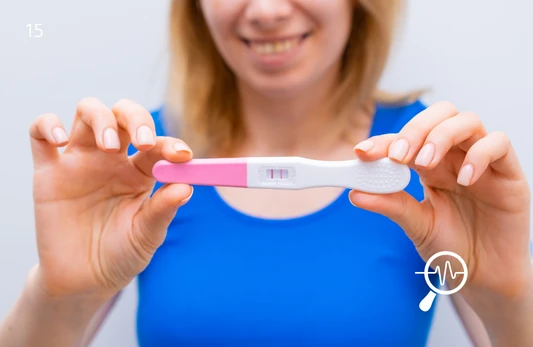
The ideal solution for conception challenges, combining the latest medical techniques and personalized care to increase success rates and achieve your family dream.
Trusted medical contentUpdated: 04-09-2026Views: 83LHL-27
Medical notice: this information is for education and service understanding. It is not a diagnosis or a recommendation for an unnecessary procedure.
About this service
The ICSI Package is the ideal choice for couples facing challenges with natural conception. This package offers advanced solutions combining science and personalized care to achieve the dream of parenthood. With the possibility of gender selection and continuous support services, we ensure a comprehensive experience that meets your needs.
What is intracytoplasmic sperm injection (ICSI)?
ICSI is an advanced technique used in infertility treatment, particularly for cases related to male sperm issues. In this procedure, a single sperm is injected directly into the egg to fertilize it, and then the fertilized egg is implanted into the woman's uterus.
When should I consider intracytoplasmic sperm injection (ICSI)?
1. Severe Male Infertility: When there is severe male infertility, such as low sperm count, poor motility, or abnormal sperm shape, making natural fertilization very difficult or impossible.
2. Failed Previous Artificial Insemination Attempts: If you have tried intrauterine insemination (IUI) and failed to achieve pregnancy, ICSI may be the next most effective step.
3. Unexplained Infertility: Sometimes, doctors cannot identify a specific cause for infertility after multiple attempts. In such cases, ICSI may be a suitable option.
4. Natural Fertilization Issues: If there is an issue preventing sperm from reaching or penetrating the egg, such as the presence of antibodies or abnormal thickening of the egg’s shell.
5. Surgical Sperm Extraction: In certain cases, such as blocked sperm ducts or sperm production issues, sperm may be surgically extracted from the testes and used in ICSI.
6. Advanced Maternal Age: As a woman ages, egg quality and natural conception chances decrease. In such cases, ICSI can be more effective in achieving pregnancy.
7. Couple’s Fertility Issues: For infertility caused by ovulation disorders in women or problems with the fallopian tubes, ICSI may be a suitable option.
How is artificial insemination performed?
1. Ovarian Stimulation: Medications are used to stimulate the ovaries to produce a larger number of eggs.
2. Egg Retrieval: Eggs are retrieved from the woman's ovaries using a special needle, under anesthesia.
3. Sperm Collection and Preparation: Sperm is collected from the male partner. If the sample is insufficient, sperm may be extracted directly from the testes through a minor surgical procedure (additional sperm retrieval).
4. Injection Process: A single sperm is selected and injected directly into each egg using a fine needle.
5. Monitoring Embryo Development: After fertilization in the lab, embryo growth is monitored for 3 to 5 days.
6. Embryo Transfer: The best embryos are selected and transferred into the woman's uterus.
7. Pregnancy Monitoring: After embryo transfer, pregnancy is monitored through pregnancy tests and medical follow-up to ensure the success of the procedure.
Advantages of intracytoplasmic sperm injection (ICSI)
1. Use in Severe Infertility Cases: ICSI can be the optimal solution for couples facing significant fertility problems, such as male infertility or unexplained infertility.
2. Increased Pregnancy Chances: ICSI increases the chances of fertilization, even in cases with weak or poor-quality sperm.
3. High Precision: The best sperm is selected for each egg, which increases the chances of successful fertilization and ultimately, successful pregnancy.
What are the risks, then?
As with any medical procedure, there are some risks, such as failed fertilization or embryo implantation failure. However, ICSI is an extremely effective and successful technique in many cases.
How do we personally support you throughout your journey?
1. Personalized Consultation: Customized Guidelines: We will provide you with personalized guidelines on how to prepare for the procedures and self-care during the IVF process.
2. Emotional and Psychological Support: Psychological Support Services: We understand that ICSI can be an emotional experience, so we offer psychological support services from specialists who help you cope with stress and anxiety related to the process. Support Group: We arrange for you to join a support group where you can share your experiences with other women going through the same journey, creating an encouraging and supportive environment.
3. Continuous Monitoring: Ongoing Monitoring: Our medical team will closely monitor each step of the IVF process to ensure success. We'll track ovarian stimulation and determine the best timing for the procedure. Answering Questions: We are available to answer any questions or concerns that may arise at any time.
4. Practical Support: Providing Information: We offer all the necessary information on how to prepare for each step, what to expect, and the next steps after IVF. Scheduling Appointments: We assist you in scheduling your appointments and procedures to ensure your comfort and ease throughout the process.
5. Additional Services: Gender Selection: If you'd like to choose the gender of your baby, we offer this as an additional service with full explanation of the process (additional fees may apply). Home Medical Care: We provide additional services like home medical care if needed during the follow-up period.
6. Full Privacy and Confidentiality: Ensuring Privacy: We guarantee complete privacy and confidentiality in all aspects of the procedure, including medical and personal information.
7. Full Commitment to Your Success: Ongoing Support: Our team is committed to providing continuous support throughout your journey, with full understanding of your needs and aspirations.
What is included?
✓Initial consultation with a gynecology, obstetrics, and infertility specialist
✓Possibility of gender selection (optional service)
✓Personal support services from Lahalak
Conditions and notices
Fasting required (Case dependent)
Appointments and Examinations: Advance Booking: Appointments must be booked in advance to ensure the specialist is available on the desired dates.
Punctuality: It is recommended to adhere to the scheduled appointment times for visits and examinations to ensure the diagnostic process proceeds smoothly.
Refund Policy: This package cannot be refunded once purchased.
The package value cannot be refunded if it has been used either fully or partially.
Service Coverage: Specified Content: The package covers only the specified tests and procedures.
Additional Fees: If additional procedures such as blood tests or examinations outside the package are required, the patient will be informed of the fees in advance.
Test Results and Recommendations: Treatment Follow-up: Based on the test results, recommendations for the next treatment steps will be provided. If advanced treatment stages such as artificial insemination or intracytoplasmic sperm injection (ICSI) are required, these options will be discussed in detail.
No Guarantee of Results: Although the tests aim to provide an accurate diagnosis, pregnancy cannot be guaranteed as a direct outcome of this package.
Privacy and Confidentiality: Data Confidentiality: The institution is committed to protecting the confidentiality of personal and medical information in accordance with the privacy policy. All health data is handled with complete confidentiality.
Frequently Asked Questions
Short answers to the FAQs published with this service.
• What is Intracytoplasmic Sperm Injection (ICSI)?
ICSI is a technique where a single sperm is injected directly into an egg for fertilization. The fertilized egg is then implanted into the woman's uterus.
• When is ICSI recommended for male infertility?
It is recommended in cases of severe male infertility, including low sperm count, poor sperm motility, or abnormal sperm shape.
• Can ICSI be used after failed IUI attempts?
Yes, if pregnancy was not achieved after intrauterine insemination (IUI), ICSI may be considered as the next step.
• What natural fertilization issues can ICSI address?
Service resources and references
References and additional resources
Reference material and files associated with this service when available.
Scientific references
Palermo, G., Joris, H., Devroey, P., & Van Steirteghem, A. C. (1992). Pregnancies after intracytoplasmic injection of single spermatozoon into an oocyte. The Lancet, 340(8810), 17–18.
Practice Committee of the American Society for Reproductive Medicine. (2018). Intracytoplasmic sperm injection (ICSI) for the treatment of male infertility. Fertility and Sterility, 110(3), 423–432.
Steptoe, P. C., & Edwards, R. G. (1978). Birth after the reimplantation of a human embryo. The Lancet, 312(8085), 366.
Harper, J. C., & Sengupta, S. (2012). Preimplantation genetic diagnosis: State of the art 2011. Human Genetics, 131(2), 175–186.
Service availability
Choose a provider and branch
Each provider has one service price, then you choose from its available branches.
Labeeb & Search Tools
Let us help you
Use Labeeb smart tools to understand reports related to (Fertility & IVF), or search the platform directory directly.
Browse services alphabetically A-Z
LahaLak is here to help
Didn’t find the service?
We can help request the service and prepare your inquiry, or you can ask Labeeb to guide you to the most suitable category or service.
Content on LahaLak is provided for educational purposes only. It is not a medical diagnosis, prescription, or substitute for consulting a qualified clinician. Medical decisions should not be made from this content alone.
Written Authorization: The patient may be required to sign a consent allowing their results to be shared with other doctors if necessary.
Adherence to Specialist Recommendations: Cooperation with the Specialist: To achieve the best results, it is important for the patient to follow the specialist’s recommendations, including taking prescribed medications and following lifestyle-related instructions.
Patient Responsibility: Accountability: The patient should be aware that adhering to tests and appointments is an important part of the diagnostic and treatment process, and any repeated delays or cancellations may affect the effectiveness of the package.
ICSI can address issues that prevent sperm from reaching or penetrating the egg, such as the presence of antibodies or abnormal thickening of the egg’s wall.
• Is fasting necessary for the ICSI procedure?
Fasting requirements for ICSI are case-dependent and vary from patient to patient.
• Is ICSI an option for unexplained infertility?
Yes, ICSI may be a suitable option when a specific cause for infertility cannot be identified after multiple attempts.
Macklon, N. S., & Fauser, B. C. (2000). Aspects of ovarian stimulation in IVF: Maximizing outcome while minimizing risk. Human Reproduction Update, 6(6), 546–555.