Factor IX Coagulation Test | Lahalak Platform

An essential test to measure Factor IX activity, helping diagnose Hemophilia B and ensuring your blood's natural ability to clot properly and safely.

Scientific name: Factor IX Coagulation Activity Test

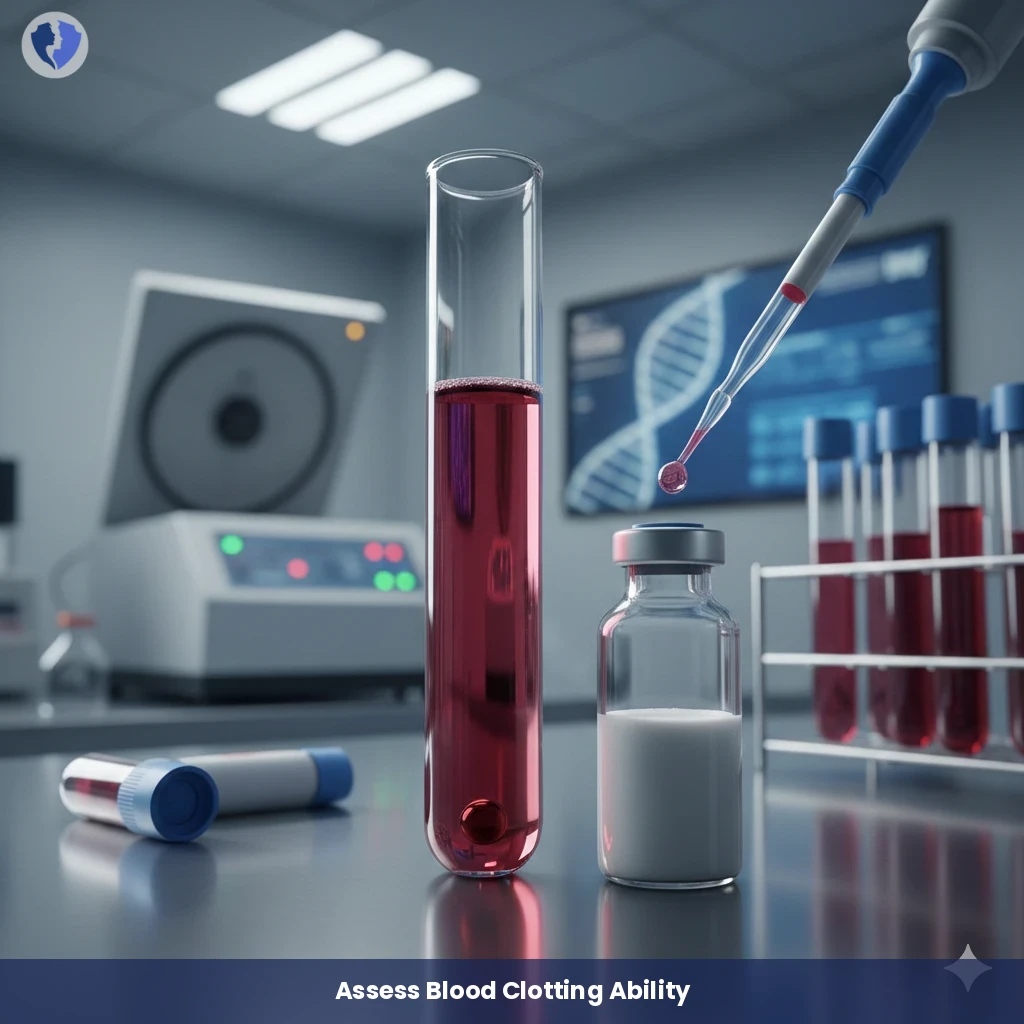
A specific test in the context of evaluating coagulation disorders that measures the functional activity of Factor IX (Factor IX) in plasma, expressed as a percentage of normal activity. Factor IX is a crucial protein in the intrinsic pathway of blood coagulation. Its deficiency or functional defect is the direct cause of Hemophilia B.
Factor IX Coagulation Activity Test - Check Factor IX Clotting
Service type Laboratory test (Blood)
Duration 10-15 minutes
Fasting Fasting is not required

Included Services

  • Factor IX Coagulation Activity Test

Medical Service Information

Purpose Test

  • Diagnosis of Hemophilia B (Factor IX deficiency) and determination of its severity (mild, moderate, severe) based on the percentage of remaining activity.
  • Differentiating between Hemophilia types (A, B) and other clotting disorders in the presence of a family history or bleeding symptoms.
  • Monitoring the effectiveness of Factor IX replacement therapy (in known patients) and ensuring therapeutic levels are reached.
  • Evaluating the cause of prolonged clotting times in tests such as PTT.

Recommended groups

  • Male children (0-12 years): Especially when signs of abnormal bleeding appear (such as large bruises, joint bleeding) or if there is a known family history of Hemophilia.
  • Adolescents and men: Who have been diagnosed with Hemophilia B for follow-up and to assess treatment efficacy.
  • Individuals of both genders: In rare cases, females may be carriers with mild symptoms or in cases of suspected acquired immune disorder against Factor IX.
  • Chronic patients: Those with Hemophilia B who require regular monitoring before and after surgeries or during bleeding events.

Symptoms indicative

  • Family history of Hemophilia or bleeding disorders.
  • Large or deep bruises or easy bruising with minor trauma.
  • Frequent or prolonged bleeding from minor cuts, or after tooth extraction or surgical procedures.
  • Spontaneous joint bleeding (e.g., knees, elbows) causing pain and swelling.
  • Unexplained bleeding from the nose (epistaxis) or gums.
  • Significant prolongation of activated partial thromboplastin time (aPTT) in routine blood tests.

Frequently Asked Questions (FAQs)

  • What is the difference between Hemophilia A and Hemophilia B? Both are inherited bleeding disorders linked to the X chromosome, but they differ in the deficient clotting factor. Hemophilia A (more common) results from a deficiency of Factor VIII, whereas Hemophilia B (Christmas disease) results from a deficiency of Factor IX. The clinical symptoms are similar, and distinguishing between them requires specialized clotting tests.
  • How is Factor IX activity interpreted? The result is given as a percentage of normal activity (100%). Normal: 50-150% Mild Hemophilia: 6-49% (bleeding usually after trauma or surgery). Moderate Hemophilia: 1-5% (occasional spontaneous bleeding, bleeding after minor trauma). Severe Hemophilia:
  • Normal: 50-150%
  • Mild Hemophilia: 6-49% (bleeding usually after trauma or surgery).
  • Moderate Hemophilia: 1-5% (occasional spontaneous bleeding, bleeding after minor trauma).
  • Severe Hemophilia:

Normal Levels

  • 6% - 49%: Mild deficiency.
  • 1% - 5%: Moderate deficiency.
  • Less than 1%: Severe deficiency.

Medical services you might also like