Eye Culture & Sensitivity Test | Lahalak Platform

A precise microbiological test to identify bacteria or fungi causing eye infections and determine the most effective antibiotic for treatment and rapid recovery.

Scientific name: Eye Culture and Sensitivity Test

A microbiological test in which a sample taken from the eye (such as conjunctival secretions, cornea, or anterior chamber) is cultured on specialized media. It aims to isolate and identify pathogenic microorganisms (bacteria, fungi, or rarely viruses) causing eye infections. The test also includes determining sensitivity to antibiotics or antifunga...

Eye Culture and Sensitivity Test - Identify Eye Infection Source
Service type Microbiological Culture
Duration 15-20 minutes
Fasting Fasting is not required

Included Services

  • Eye Culture and Sensitivity Test
  • Consultation for result interpretation with an ophthalmologist.
  • Personal support services from Lahalak

Medical Service Information

Purpose Test

  • Identification of the specific microbial agent responsible for severe external or internal eye infections, such as Keratitis, acute bacterial conjunctivitis, or Endophthalmitis.
  • Guiding effective and appropriate treatment through sensitivity testing for topical or systemic antibiotics, reducing the risk of drug resistance and improving treatment outcomes.
  • Diagnosing infections that have not responded to initial broad-spectrum antibiotic therapy.
  • Assisting in the diagnosis of infections occurring after eye surgeries or injuries, which may be severe and require rapid, targeted intervention.

Recommended groups

  • Children (0-12 years): Who may suffer from recurrent conjunctivitis or infections associated with blocked tear ducts.
  • Contact lens wearers: The use of lenses increases the risk of severe bacterial or fungal keratitis.
  • Chronic patients: Especially those with diabetes or weakened immunity, who are more prone to severe infections and difficult-to-treat conditions.
  • Elderly individuals: And those who have recently undergone eye surgery (such as cataract surgery).
  • Individuals with eye injuries or foreign bodies in the eye.

Symptoms indicative

  • Severe redness in the eye with sharp pain and light sensitivity (Photophobia).
  • Thick, purulent yellow or green discharge from the eye.
  • Sudden or severe vision blurriness.
  • Deep eye pain, especially if occurring after surgery or injury.
  • No improvement in eye infection despite 48-72 hours of topical antibiotics.

Frequently Asked Questions (FAQs)

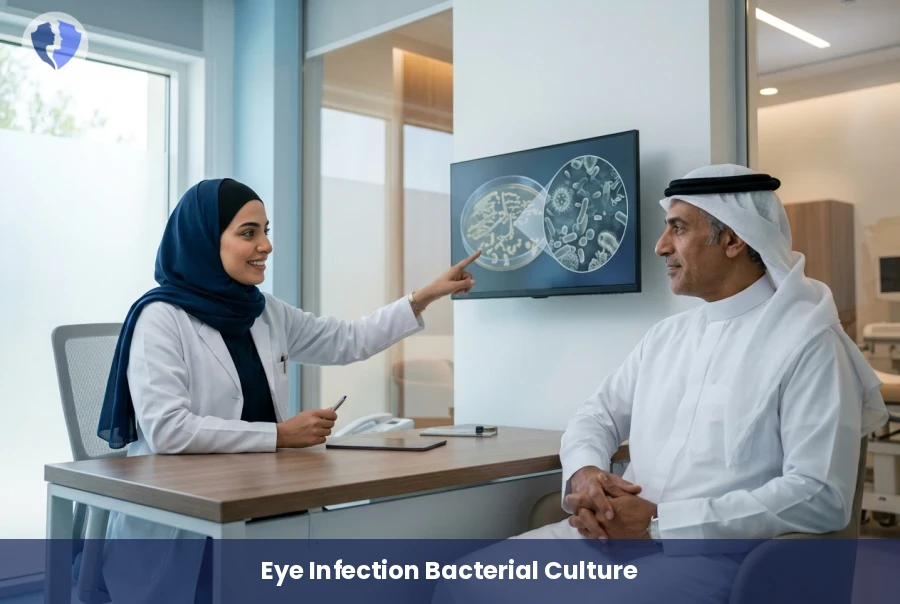
  • How is an eye sample taken for culture? A specialized ophthalmologist takes the sample using sterile and precise instruments. A sterile swab may be used to collect a sample from the conjunctival discharge, or a sample may be taken from the anterior chamber fluid or corneal tissue in deeper cases, under local anesthesia.
  • How long does the culture result take? The preliminary result for bacteria may appear within 24-48 hours. However, full culture and sensitivity testing may take 3-5 days. Fungal cultures may take longer, up to several weeks.
  • Can contact lenses cause an infection that requires culture? Yes. Improper use of contact lenses (such as sleeping in them or cleaning them with tap water) significantly increases the risk of severe bacterial or fungal keratitis, which often requires culture to identify the causative agent and treat it accurately. Some infections (like Pseudomonas or Acanthamoeba) can be severe and require specific treatment.

Normal Levels

  • There are no "normal" numerical values for this test. A result is considered normal (negative) if no pathogenic microorganisms grow in the culture media after the standard incubation period. Any positive growth is interpreted by the ophthalmologist based on the type of organism, its quantity, the site from which the sample was taken, and the clinical condition of the patient. Some bacteria, such as Staphylococcus (Staph), are sometimes part of the normal eye flora but may become pathogenic under certain conditions.

Conditions & Notices

  • Fasting is not required before sample collection.
  • No eye drops (antibiotics or corticosteroids) should be applied for at least 6 hours before sample collection, unless otherwise recommended by the ophthalmologist, to ensure the best result.
  • The sample should be taken by a specialized ophthalmologist in a well-equipped clinic or operating room to ensure it is collected from the correct location and in a sterile manner.
  • It is highly recommended to collect the sample before starting any systemic or topical antibiotic treatment, except in severe emergency cases as determined by the doctor.

Medical services you might also like