Direct Coombs Test Price | Lahalak Medical Platform

A specialized test to detect antibodies attached to red blood cells, helping diagnose autoimmune hemolytic anemia and ensuring the safety of blood transfusions and maternal health.

Scientific name: Direct Coombs Test

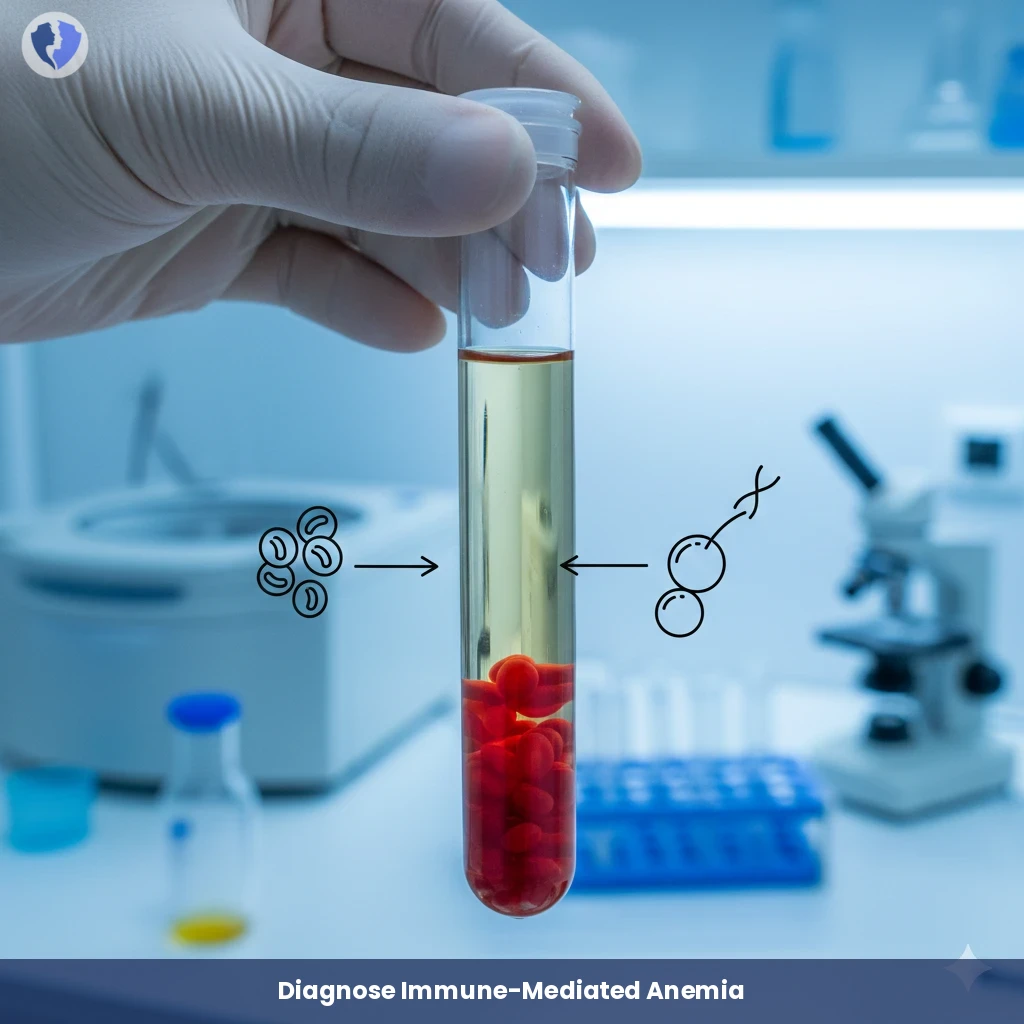
This immunological test aims to detect the presence of IgG antibodies or complement components (C3d) directly attached to the surface of the patient's red blood cells within the body (in the blood vessel). The test is performed by washing the patient's red blood cells to remove any free antibodies, then adding a human serum antibody (anti-IgG and/o...

Direct Coombs Test - Direct Coombs Immunity Test
Service type Laboratory test (Blood)
Duration 10-15 minutes
Fasting Fasting is not required

Included Services

  • Performing the accurate direct Coombs test to detect antibodies attached to red blood cells.
  • Consult a hematologist or immunologist to interpret the results.
  • Personal support services.

Medical Service Information

Purpose Test

  • Diagnosing immune hemolytic anemia, whether primary (autoimmune disease) or secondary (caused by drugs, other diseases, or cancer).
  • Investigating unexplained hemolytic anemia, especially when symptoms like jaundice and unexplained indirect bilirubin elevation are present.
  • Detecting hemolytic transfusion reactions, where recipient antibodies recognize and attack transfused red blood cells.
  • Diagnosing hemolytic disease of the newborn (HDN) caused by blood group incompatibility between mother and fetus (e.g., Rh or ABO incompatibility).

Recommended groups

  • Newborn infants with severe or early jaundice, suspected of blood incompatibility with the mother.
  • Patients with hemolytic anemia symptoms (pallor, jaundice, fatigue) without a clear cause.
  • Patients showing symptoms after blood transfusion (fever, chills, dark urine).
  • Patients diagnosed with diseases associated with immune hemolytic anemia (e.g., lupus, lymphoma, chronic lymphocytic leukemia CLL).
  • Patients taking drugs known to cause drug-induced hemolytic anemia.

Symptoms indicative

  • Severe pallor and unexplained fatigue.
  • Yellowing of the eyes and skin (jaundice).
  • Dark-colored urine (tea-colored or cola-colored).
  • Fever or back pain after a recent blood transfusion.
  • Enlarged spleen.

Frequently Asked Questions (FAQs)

  • Direct (DAT): Detects antibodies actually attached to the patient’s red blood cells in the body. It answers the question: "Is your immune system attacking your red blood cells?"
  • Indirect (IAT): Detects free antibodies in the patient’s serum that could attack foreign red blood cells (e.g., transfused blood). It is used before transfusion to ensure compatibility.
  • After a recent blood transfusion.
  • After certain medications (e.g., some antibiotics).
  • In some diseases that cause nonspecific protein binding to red blood cells. These positive results are often “weak” and not associated with clinical symptoms.

Normal Levels

  • The normal result is negative, meaning no agglutination of red blood cells occurs after adding anti-human serum. This indicates that no IgG antibodies or complement components (C3d) are abnormally attached to the red blood cells.
  • A positive result is usually reported with the reaction strength (weak, moderate, strong) and the type of coating (IgG only, C3d only, or both), which helps in determining the underlying cause.

Conditions & Notices

  • Fasting is not required.
  • Full Children Package (Child Health Tests Package)
  • The doctor and laboratory must be informed of the history of any recent blood transfusion (within the past two months) or any medications the patient is taking.
  • The sample must be transported to the laboratory and processed within 24-48 hours to obtain an accurate result, as antibodies may detach from cells over time.

Medical services you might also like