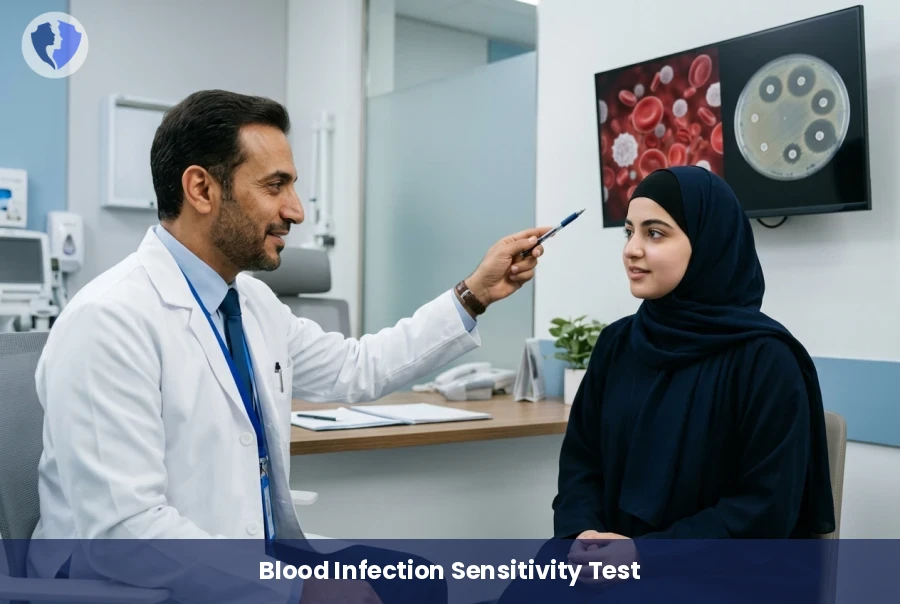
Culture and Sensitivity Test Price | Lahalak Platform

A precise laboratory test to identify the specific microbe causing infection and select the most effective antibiotic, ensuring rapid recovery and avoiding unnecessary drug resistance.

Scientific name: Culture and Sensitivity Test

An integrated microbiological test consisting of two stages: Culture: The clinical sample (blood, urine, pus, etc.) is placed on specific growth media under suitable conditions (aerobic, anaerobic) to stimulate the growth of any present bacteria or fungi. The microorganism is then isolated and identified. Susceptibility Testing: Testing the sensiti...
Culture and Sensitivity Test - Identify Optimal Infection Treatment
Service type Culture and sensitivity test
Duration 10-15 minutes
Fasting Fasting is not required

Included Services

  • Culture and Sensitivity Test
  • Perform an antimicrobial susceptibility test against the isolated organism.
  • Consultation for result interpretation with a microbiologist or an infectious disease specialist.
  • Personal support services from Lahalak

Medical Service Information

Purpose Test

  • Isolate and identify the causative bacteria or fungi definitively
  • Guide antibiotic/antifungal therapy precisely by determining the most effective (sensitive) and ineffective (resistant) antibiotics, ensuring appropriate treatment and reducing unnecessary use of broad-spectrum antibiotics
  • Combat antibiotic resistance by promoting targeted therapy
  • Monitor local resistance patterns (Antibiogram) to assist in formulating appropriate empirical treatment policies in hospitals or communities

Recommended groups

  • Any patient suspected of having a bacterial or fungal infection that requires precise treatment (such as urinary tract infections, pneumonia, sepsis, wound infections)
  • Patients who do not respond to initial empirical antibiotic therapy
  • Immunocompromised patients (such as cancer patients, organ transplant recipients)
  • To identify carriers of certain resistant bacteria (such as MRSA) in healthcare settings

Symptoms indicative

  • Persistent high fever or chills
  • Symptoms of infection at a specific site (burning and pain during urination, cough with purulent sputum, redness and swelling in a wound)
  • Signs of severe inflammation or sepsis (increased heart rate, low blood pressure)
  • Abnormal discharge (pus) from any part of the body

Frequently Asked Questions (FAQs)

  • How long does it take to get the culture and sensitivity result? Initial result (microbial growth): May appear within 24-48 hours for many common bacteria Complete sensitivity result: May take an additional 24-48 hours after confirming growth, totaling 2-4 days Some slow-growing bacteria (such as Mycobacterium tuberculosis) or fungi may take weeks
  • What does it mean for a microorganism to be "resistant" to an antibiotic? It means that the antibiotic is ineffective in treating the infection caused by this microorganism at standard safe doses. Using it in this case will fail to eradicate the infection and may worsen it. The doctor will focus on choosing another antibiotic listed as "sensitive"
  • Can the culture result be "negative" despite signs of infection? Yes, and this could be due to: Taking antibiotics before collecting the sample The sample being unrepresentative (not taken from the actual site of infection) Improper transport or handling of the sample in the laboratory The infection being caused by a virus or a type of bacteria that does not grow on routine media Thus, the negative result is always interpreted alongside the clinical picture
  • Taking antibiotics before collecting the sample
  • The sample being unrepresentative (not taken from the actual site of infection)
  • Improper transport or handling of the sample in the laboratory

Normal Levels

  • Identification of the isolated organism.
  • A list of tested antimicrobial agents and the microorganism's susceptibility to each: S (Sensitive) I (Intermediate) R (Resistant)
  • S (Sensitive)
  • I (Intermediate)
  • R (Resistant)

Conditions & Notices

  • • Fasting is not required; it depends on the type of sample collected.
  • • The sample should be collected before starting antibiotic treatment if possible; otherwise, the laboratory should be informed.
  • • The sample should be collected in a sterile manner (usually by a healthcare professional) to avoid contamination with normal skin bacteria.
  • • Rapid transport of the sample to the laboratory (within 30 minutes to 2 hours depending on the type) to preserve the viability of the microorganisms.
  • • The source of the sample should be clearly indicated on the test request (urine, blood, pus, etc.).

Medical services you might also like